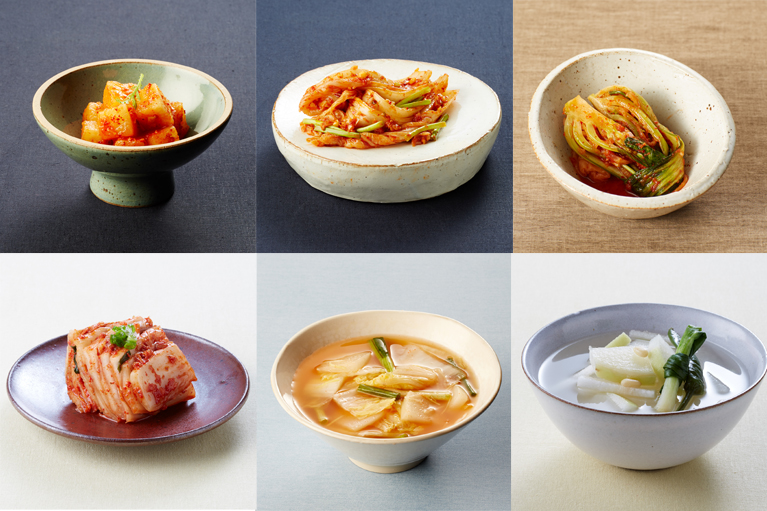
Kimchi is the heart of the Korean table: napa cabbage salted, coated in a fiery red seasoning paste, and left to ferment into something tangy, spicy, funky, and deeply savory. Making your own is a genuinely rewarding project, and it is not hard, just a matter of salting, mixing, and waiting while fermentation does its work. A jar of homemade kimchi keeps for weeks and gets more complex as it ages, ready to eat on its own, pile onto rice, or cook into stews and pancakes. This is the classic napa cabbage version.
Korea’s National Dish
Kimchi is Korea’s most iconic food, a family of salted and fermented vegetable dishes with a history stretching back thousands of years, rooted in the need to preserve vegetables through long, cold winters. Traditionally it was packed into earthenware jars and buried in the ground to ferment and keep. There are hundreds of varieties, made with different vegetables and by season and region, but the most common is baechu kimchi, made with napa cabbage. It is served as a banchan, a side dish, at virtually every Korean meal, and the fermentation gives it both its flavor and beneficial probiotics.
Salting the Cabbage
The first and most important step is salting the napa cabbage. Cut it up, salt it heavily, and let it sit for a couple of hours, turning it now and then, until the leaves wilt and soften and release their water. This salting draws moisture out of the cabbage, which keeps it crisp in the final kimchi and creates the conditions for proper fermentation. Then rinse it thoroughly to wash off the excess salt, and drain it well, since leftover water dilutes the seasoning. Get the salting right and the kimchi ferments cleanly and stays crunchy; rush it and the texture suffers.
The Seasoning Paste
The flavor of kimchi comes from its seasoning paste, built on gochugaru, Korean red chili flakes, which give the kimchi its red color and its heat. Into the chili go garlic, ginger, and umami-rich savory elements: fish sauce and often salted shrimp (saeujeot), plus a little sugar to feed the fermentation and balance the heat. Some cooks add a cooked rice or flour porridge to bind the paste and boost fermentation. This pungent, savory, spicy paste is what coats and transforms the cabbage. For a vegan kimchi, replace the fish sauce and shrimp with soy sauce or a seaweed-based seasoning.
Mixing and Coating
Add julienned Korean radish and pieces of scallion to the paste, then coat the cabbage. Wear gloves for this: gochugaru stains your hands and can burn, and gloves let you get in and rub the paste thoroughly into and between every leaf. Coat the cabbage completely, working the seasoning into all the layers so it ferments evenly and every bite is flavored. This is a hands-on, slightly messy step, and doing it well is what makes the kimchi taste consistent throughout. Massage the paste in rather than just tossing it, so it clings to the leaves.
Fermenting
Pack the coated cabbage tightly into a jar or container, pressing it down to remove air pockets and to submerge it in its own juices, and leave some headroom since it bubbles as it ferments. Let it sit at room temperature for one to two days to kick off fermentation; you will see bubbles and smell the sourness developing. Taste it, and once it is pleasantly tangy, move it to the fridge, where fermentation slows and the flavor continues to deepen slowly. How long you ferment at room temperature is to taste: warmer and longer makes it more sour, faster. Cold storage keeps it for weeks.
Using Your Kimchi
Fresh kimchi is crisp and bright; aged kimchi is sour, soft, and intensely savory, and each has its uses. Eat it fresh as a side dish with rice and Korean meals. As it ages and sours, it becomes ideal for cooking: kimchi stew (kimchi jjigae), kimchi fried rice, and kimchi pancakes all rely on well-fermented, tangy kimchi. So do not throw out old kimchi; that is when it is best for cooking. It keeps for weeks, even months, in the fridge, evolving the whole time. A jar of homemade kimchi is a supply that keeps giving across many meals.
Common Questions
Can I make it vegan?
Yes. Replace the fish sauce and salted shrimp with soy sauce, a seaweed (kombu) broth, or a vegan fish-sauce substitute. The cabbage, gochugaru, garlic, and ginger carry the flavor, and it ferments the same way. Many traditional temple versions are meat-free.
How long does it need to ferment?
Leave it at room temperature one to two days until it tastes tangy and starts to bubble, then refrigerate. It keeps fermenting slowly in the fridge, deepening over weeks. Warmer and longer makes it more sour, so taste and move it to the cold when you like it.
What is gochugaru?
Gochugaru is Korean red chili flakes, essential for kimchi’s color and heat. It is milder and fruitier than many chili powders. It is sold at Korean and Asian groceries. There is no exact substitute, so it is worth buying for authentic kimchi.
Kimchi is Korea's iconic fermented vegetable dish with a history stretching back thousands of years; the common form, baechu kimchi, is made from napa cabbage seasoned with chili and fermented.