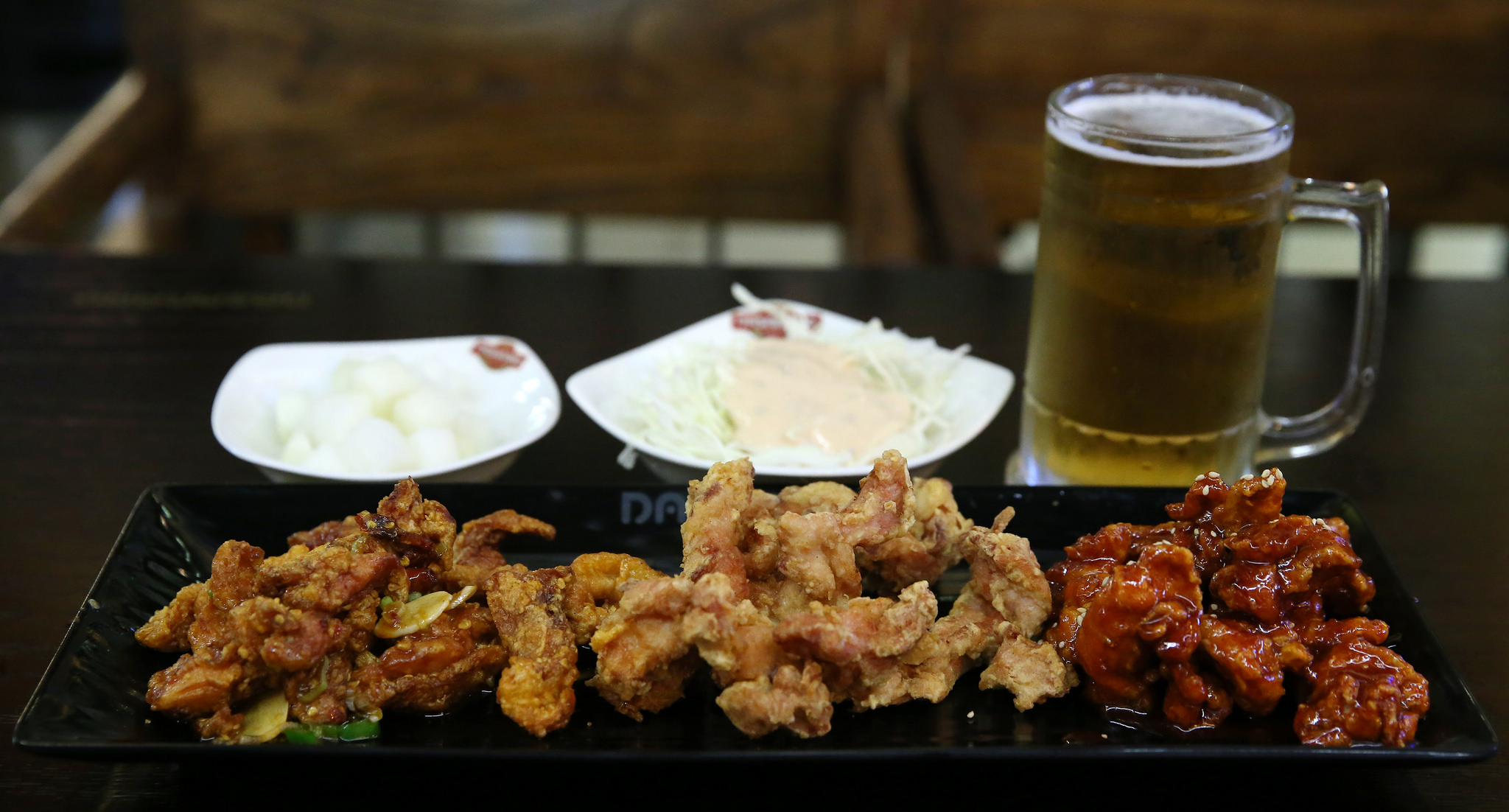
Korean fried chicken is a different animal from the American kind: a thin, glassy, shatteringly crisp crust over juicy meat, glazed in a sticky sweet-spicy or soy-garlic sauce. The secret is double frying, which drives out moisture and builds a crust that stays crunchy even under a wet sauce. It is the food of chimaek, chicken and beer, and it is genuinely addictive. Making it at home takes a little oil and patience for the two fries, but the crackle and the glaze are worth every minute.
The Other KFC
Korean fried chicken, called chikin in Korea, is a family of fried chicken dishes developed in South Korea in the late twentieth century. Deep-fried chicken spread in Korea after being introduced through the American military presence following the Korean War, and the first modern fried chicken franchise opened in 1977. The famous sweet-spicy version, yangnyeom chicken, was created in Daegu in 1982, when a cook coated the fried chicken in sauce to soften its hard crust. Paired with beer, the combination is called chimaek, from chicken and maekju, the Korean word for beer. It has since gone global.
Double Frying Is the Secret
The single technique that defines Korean fried chicken is double frying. The chicken is fried once at a lower temperature to cook it through, rested, then fried a second time at a higher temperature to crisp the outside. This second fry drives off remaining moisture and builds the thin, crackly, long-lasting crust that Korean fried chicken is known for, the kind that stays crunchy even after it is sauced. A single fry cannot achieve the same texture. It takes a little more time and oil, but double frying is not optional; it is the heart of the whole dish.
Potato Starch for Crunch
The coating is the other key to that signature crust. Korean fried chicken uses potato starch, often mixed with a little flour, rather than a thick flour breading. Potato starch fries up into a thin, light, glassy crust that shatters and stays crisp, quite unlike the thick, craggy crust of American fried chicken. Season the chicken well before coating, since the crust itself is thin. A common trick is a 1:1 mix of potato starch and flour for a crust that is both crisp and sturdy. This light starch coating, plus the double fry, is what gives the chicken its distinctive delicate crunch.
The Sauces
Korean fried chicken comes in two classic glazes, and you can do half and half, banban. Yangnyeom is the famous sweet-spicy red sauce, built on gochujang, the fermented chili paste, with rice syrup or honey for sweetness and stickiness, ketchup, garlic, and soy. The other is soy garlic, ganjang, a sweet-savory, garlicky soy glaze that is milder and just as popular. Both are simmered into a glossy sauce and tossed or brushed onto the fried chicken. Adjust the heat of the yangnyeom to taste with more or less gochujang. Make both and let people choose, the way Korean chicken shops do.
Saucing at the Right Time
Timing the sauce protects the crust you worked for. Toss or brush the sauce onto the chicken just before serving, not ahead of time, since the crisp crust starts to soften the moment it meets the wet glaze. Many Korean chicken shops hand-brush the sauce on rather than tossing, which keeps the crust crunchier and lets you control the amount on each piece. Whichever way, do it at the last minute and serve right away. If you want to keep some pieces plain, sauce only what you will eat immediately and leave the rest crisp and unsauced, or serve the sauce on the side for dipping.
Serving Korean Fried Chicken
Serve Korean fried chicken hot and fresh, sprinkled with sesame seeds and maybe sliced scallion, with the classic sides: cubed pickled radish, chicken-mu, whose crisp sourness cuts the richness, and cold beer for the full chimaek experience. It is snack, appetizer, and meal all at once, meant to be shared. It is at its best right after saucing, while the crust is still crisp, so cook and serve in batches rather than letting it sit. Leftovers lose their crunch but reheat acceptably in a hot oven. Make a big platter and gather people around it.
Common Questions
Why fry the chicken twice?
The first fry at a lower temperature cooks the chicken through; the second at a higher temperature drives off moisture and crisps the crust. Double frying is what gives Korean fried chicken its thin, shatteringly crisp, long-lasting crust. A single fry will not match it.
Why potato starch instead of flour?
Potato starch fries into a thin, light, glassy crust that stays crisp even under sauce, unlike a thick flour breading. Many recipes use a mix of potato starch and flour for a crust that is both crisp and sturdy. It is central to the texture.
Yangnyeom or soy garlic?
Both are classic. Yangnyeom is the sweet-spicy red gochujang sauce; soy garlic is a milder, garlicky sweet-savory soy glaze. You can serve half and half (banban). Make whichever you prefer, or both, and toss or brush it on just before serving.
Korean fried chicken is double-fried for a thin, crackly crust; the modern dish developed in the late twentieth century, with the sweet-spicy yangnyeom sauce created in Daegu in 1982.