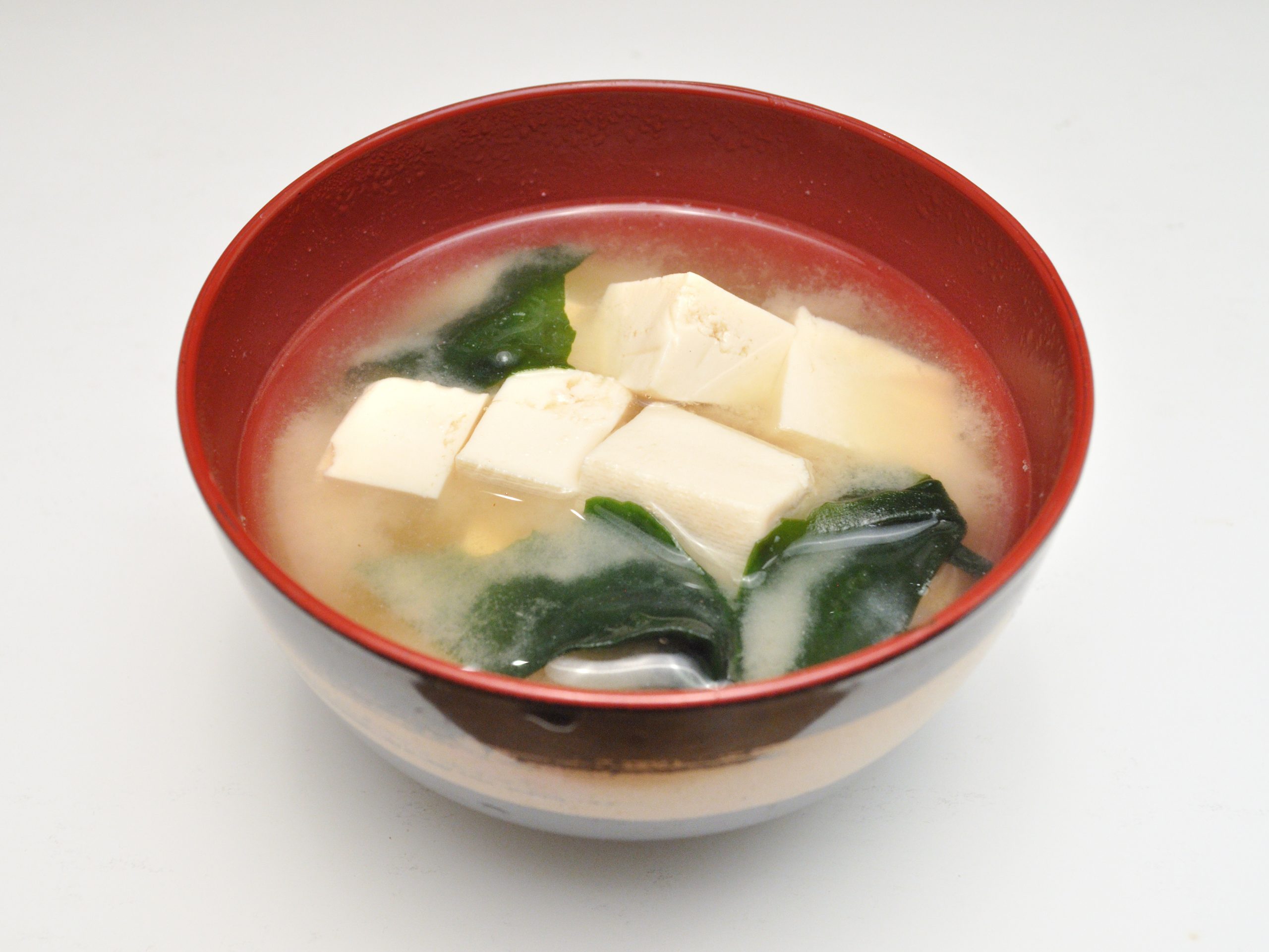
Miso soup is the quiet backbone of Japanese meals: a light, savory, deeply comforting broth that comes together in minutes. At its simplest it is just two things, dashi stock and miso paste, dressed up with silky tofu, wakame seaweed, and scallions. It is the soup served alongside breakfast, lunch, and dinner across Japan, warming and restorative without being heavy. Once you have dashi on hand, a bowl of miso soup is one of the fastest homemade things you can make, and it belongs with almost any Japanese meal.
An Everyday Staple
Miso soup, misoshiru, is a fixture of the Japanese table, eaten at any meal including breakfast. It is built on two foundations: dashi, the Japanese stock, and miso, the fermented soybean paste that gives the soup its savory, umami-rich depth. A traditional Japanese meal often pairs rice with a bowl of miso soup and a few side dishes, and the soup is considered part of the everyday balance of the diet. Simple as it is, it is endlessly variable, since the type of miso and the additions change the character of the bowl completely.
Dashi, the Foundation
Everything starts with dashi, the clear Japanese stock that gives miso soup its savory base. The classic dashi is made from kombu (dried kelp) and katsuobushi (dried bonito flakes) steeped in water, which yields a light, smoky, umami-packed broth in about fifteen minutes. For speed, instant dashi granules dissolve in hot water and make a perfectly good everyday soup; most Japanese home cooks keep them on hand. A kombu-only dashi makes a vegetarian version. Whichever route you take, dashi is what separates real miso soup from just miso stirred into water, so it is worth doing.
Choosing the Miso
Miso is the soul of the soup, and there are several types. White miso (shiro) is mild, sweet, and mellow; red miso (aka) is stronger, saltier, and more intense in flavor; and there are blended and barley varieties in between. Each makes a distinctly different soup, so the choice is a matter of taste. White miso makes a gentle, everyday bowl, while red gives a deeper, more intense one. Start with a mild white or a blended miso if you are unsure. Miso is a living, fermented food, so keep it refrigerated and stir it into the soup off the heat to preserve its flavor.
Dissolving the Miso
Adding the miso correctly is the one technique that matters. Do not just drop the paste into the pot, where it clumps. Instead, put the miso in a ladle or small bowl, add a little of the hot stock, and whisk it into a smooth slurry, then stir that back into the soup. This dissolves the miso evenly without lumps. Crucially, add the miso off the boil and do not let the soup boil afterward, because boiling dulls miso’s flavor and aroma and can make it grainy. Gentle heat keeps the soup fragrant and smooth. This last-minute, low-heat step is what keeps miso soup tasting fresh.
The Classic Additions
The standard trio of add-ins is tofu, wakame, and scallions. Soft silken tofu, cut into small cubes, adds protein and a delicate texture; add it gently so it does not break. Wakame, a mild seaweed, is sold dried and rehydrates in seconds into tender green ribbons. Sliced scallions go in at the end for a fresh, sharp finish. Beyond these, miso soup takes all kinds of additions, mushrooms, clams, potato, spinach, fried tofu, depending on the season and what you have. Keep the additions light so the broth stays the focus. The tofu-wakame-scallion version is the everyday classic.
Serving Miso Soup
Serve miso soup hot, in small bowls, as part of a Japanese meal alongside rice and other dishes, or on its own as a light, warming starter. In Japan it is drunk directly from the bowl, lifting it to sip the broth, with chopsticks to catch the tofu and seaweed. It is best made fresh and served right away, since it should not sit and boil; the tofu and wakame also soften over time. If you keep dashi ready in the fridge, a bowl of miso soup takes only minutes, which is why it is such a constant on the Japanese table.
Common Questions
What is dashi and can I use a shortcut?
Dashi is the Japanese stock made from kombu kelp and bonito flakes, the savory base of the soup. Instant dashi granules dissolved in hot water are a common, reliable shortcut used in many home kitchens. A kombu-only dashi makes it vegetarian.
Why shouldn’t I boil it?
Boiling the soup after the miso is added dulls its flavor and aroma and can turn it grainy. Add the miso off the boil and keep the soup at a gentle heat. Miso is a fermented food that is best treated gently.
Which miso should I buy?
White miso is mild and sweet, red miso is stronger and saltier, and blended types sit in between. Each makes a different soup. For an easy everyday bowl, start with a mild white or blended miso, then explore from there.
Miso soup is a staple of Japanese meals, a broth of dashi stock seasoned with fermented soybean miso paste, typically with tofu, wakame seaweed, and scallions.