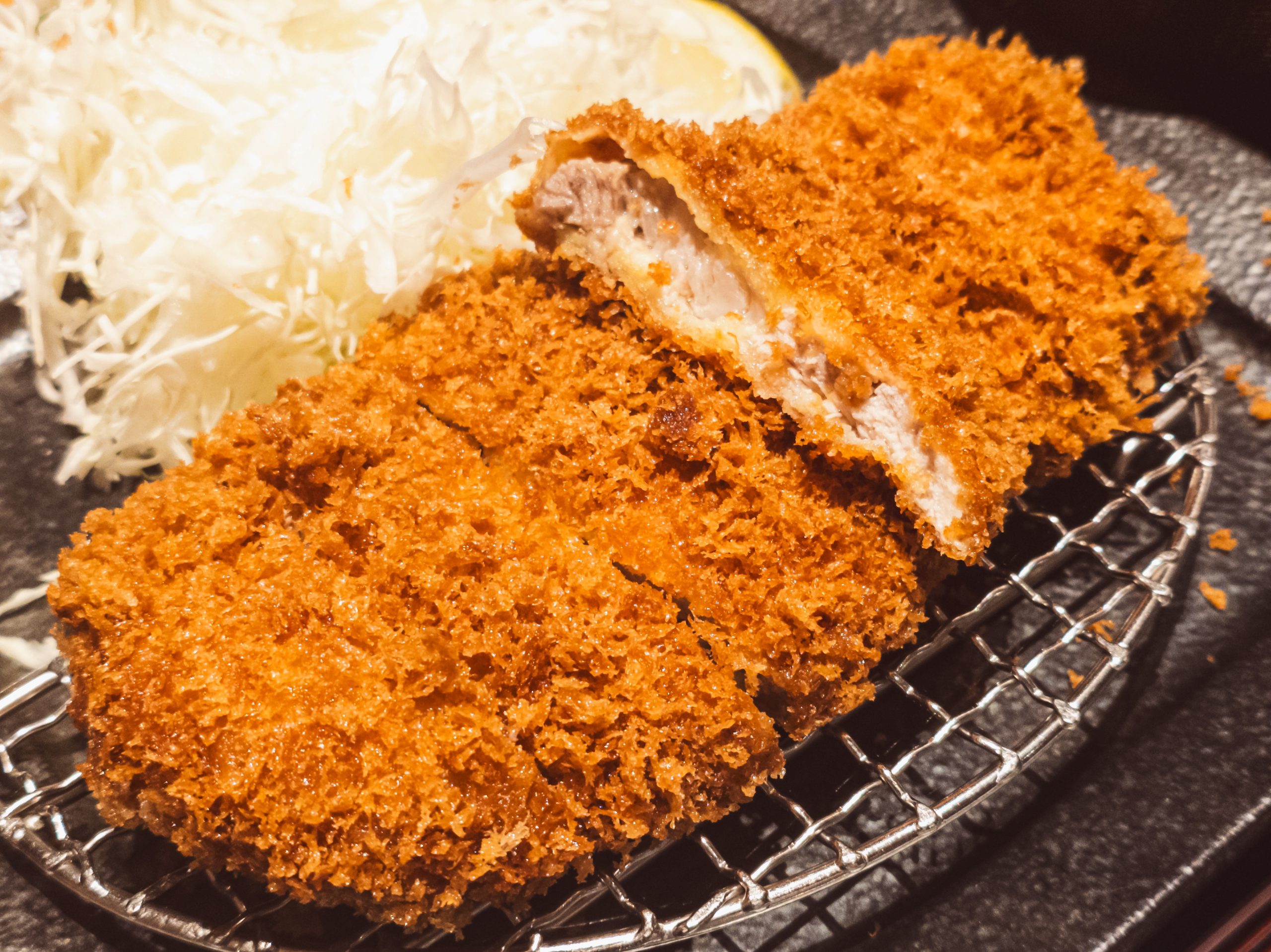
Tonkatsu is Japan’s great fried cutlet: a pork chop coated in airy panko breadcrumbs and deep-fried to a golden, shattering crust, then sliced into strips and served with a mound of shredded cabbage and a tangy brown sauce. The crust is the whole point, light and crackling rather than heavy, and panko is what makes it. It is comfort food, served everywhere from specialist tonkatsu restaurants to home kitchens, and it is the base for a whole family of dishes from katsudon to katsu curry.
A Western Dish Made Japanese
Tonkatsu belongs to yoshoku, the category of Western-influenced Japanese dishes that emerged as Japan opened to the world in the late nineteenth century. The breaded, deep-fried pork cutlet is credited to a Tokyo restaurant, Rengatei, around 1899, at a time when pork was still an unusual meat in Japan. It was served with rice and shredded cabbage, a pairing that stuck. The word joins ton, meaning pork, with katsu, from cutlet. Over time it became fully Japanese and spawned variations, and the same breading method is used for chicken katsu and other cutlets.
The Pork
Tonkatsu is made from a thick boneless pork chop, usually loin for a leaner cutlet or a fattier cut for more richness, around three quarters of an inch thick. Two preparation steps matter. Score the band of fat and connective tissue along the edge of the chop, which stops it curling up in the oil and cooking unevenly. Then pound it lightly to an even thickness so it cooks through at the same rate. Season with salt and pepper before breading. A cutlet of even thickness fries evenly, with the inside just cooked as the crust turns golden.
Panko Is the Secret
The crust is what separates tonkatsu from any breaded cutlet, and it comes from panko, the coarse, airy Japanese breadcrumb. Panko fries into a light, craggy, shattering crust that stays crisp, where fine breadcrumbs give a dense, heavy coating. Set up a standard breading line: flour first, so the egg sticks, then beaten egg, then a firm press into the panko so it coats thickly and evenly. Press the crumbs on well so they adhere and build a generous layer. Do not substitute regular breadcrumbs here, since the texture of the panko crust is the entire character of the dish.
Frying
Deep-fry the cutlets in oil held around 340 F, a moderate temperature that cooks the pork through while the panko turns golden without burning. Too hot and the crust darkens before the inside is done; too cool and it drinks oil and turns greasy. Fry one or two cutlets at a time so the oil temperature does not crash, turning once, for about five to six minutes until deep golden and cooked through. Drain them on a rack, not paper, so the bottom crust stays crisp, and let them rest a few minutes before slicing so the juices settle.
Cabbage and Sauce
Tonkatsu is always served with a big pile of finely shredded raw cabbage, and this is not a garnish. The cool, crisp cabbage cuts the richness of the fried pork and refreshes the palate between bites. Shred it as finely as you can and keep it in cold water to stay crisp, then drain. The sauce is tonkatsu sauce, a thick, tangy, fruity brown sauce similar to a sweet Worcestershire, sold bottled or easily mixed from Worcestershire, ketchup, and a little sugar and soy. Slice the cutlet into strips so it is easy to pick up and dip.
Beyond the Cutlet
Tonkatsu is the foundation of several beloved dishes. Lay it over rice with onions and egg simmered in a sweet-savory broth and it becomes katsudon, a rice bowl. Serve it with Japanese curry over rice and it is katsu curry, one of the most popular meals in Japan. Cut into a sandwich with soft white bread, it makes katsu sando. Master the cutlet itself, the scoring, the panko, the frying temperature, and these variations open up. Serve the classic version first, with cabbage, sauce, rice, and miso soup, then branch out from there.
Common Questions
Why use panko instead of breadcrumbs?
Panko is coarse and airy, so it fries into a light, shattering crust that stays crisp. Regular fine breadcrumbs give a dense, heavier coating. The panko crust is the defining texture of tonkatsu, so it is worth using.
What oil temperature should I use?
Around 340 F. That cooks the pork through while the crust turns golden. Hotter burns the panko before the inside is done; cooler makes the cutlet greasy. A thermometer helps keep it steady while frying.
Can I make chicken katsu the same way?
Yes. The same flour, egg, and panko breading and frying method work with chicken, usually boneless thighs or breast pounded even. Chicken katsu is a common variation served the same way with cabbage and sauce.
Tonkatsu is a Japanese breaded, deep-fried pork cutlet that emerged as a Western-influenced dish in the late nineteenth century and is credited to a Tokyo restaurant, served with shredded cabbage and a tangy sauce.