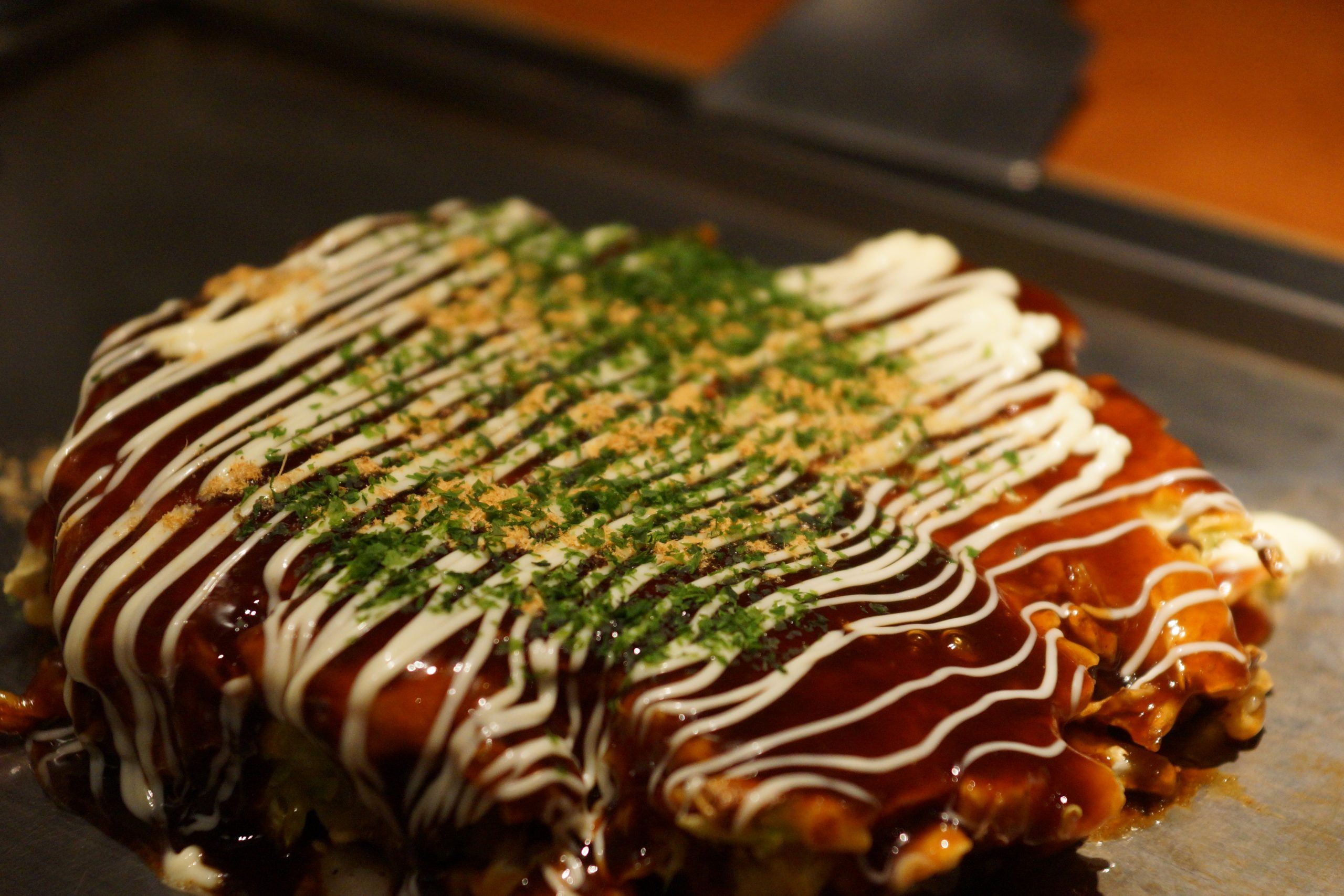
Okonomiyaki is a thick, savory pancake packed with cabbage, griddled until golden, and finished with a lavish topping of sweet-savory sauce, mayonnaise, dancing bonito flakes, and seaweed. Often called Japanese pizza or Osaka soul food, it is hearty, customizable, and a lot of fun to make. The name means grilled how you like it, so the fillings are up to you. It is street food and home food both, cooked on a griddle at the table or in a pan, and the pile of toppings is half the joy.
Grilled How You Like It
The name okonomiyaki joins okonomi, meaning how you like, with yaki, meaning grilled, and that is the spirit of the dish: a savory pancake you fill and top to taste. It first appeared under this name in Osaka in the 1930s and became known as Osaka soul food. There are two main regional styles. The Kansai or Osaka style, the most widespread, mixes the ingredients into the batter. The Hiroshima style layers them instead, often with noodles. This recipe follows the Osaka style, which is the easier and more common one to make at home.
Cabbage Is the Main Event
The defining ingredient of okonomiyaki is cabbage, and lots of it. Finely shredded cabbage makes up the bulk of the pancake; it is not a filler but the main component, and it is what gives okonomiyaki its light, moist, almost fluffy interior rather than a dense, doughy one. Shred it fine so it folds evenly into the batter and cooks through. The batter itself, flour, egg, and dashi, is really just enough to bind all that cabbage together. Use plenty of cabbage relative to batter; a pancake that is mostly batter misses the point of the dish entirely.
The Batter and Fillings
The batter is a simple mix of flour, egg, and dashi (or water), which adds a savory depth. Some cooks add grated nagaimo yam, which makes the pancake even lighter and fluffier, though it is optional. Fold the shredded cabbage and scallions into the batter until well coated. Then choose your fillings: thin slices of pork belly laid on top are the classic, but shrimp, squid, and other additions are common, which is where the how you like it name comes in. Keep the mixture loose and cabbage-heavy. The batter binds; the cabbage and fillings are the substance.
Cooking on the Griddle
Cook okonomiyaki on a hot, oiled griddle or a large pan. Spoon the cabbage-batter mixture on and shape it into a thick round, then lay the pork belly slices across the top. Let the bottom cook until golden and set before flipping, so it holds together, then cook the pork side. Resist the urge to press it flat like a burger; keeping it thick is what gives the fluffy inside, though a gentle press after the flip helps it cook evenly. It takes a few minutes per side. The pancake is done when both sides are golden and the pork is cooked and crisp.
The Toppings
The toppings are essential to okonomiyaki, not optional extras, and there are four. Okonomiyaki sauce, a thick, sweet-savory brown sauce similar to a fruity Worcestershire, is drizzled over the top. Japanese mayonnaise, creamy and tangy, goes on in stripes across it. Then a shower of katsuobushi, dried bonito flakes, which curl and wave from the heat of the pancake, and a sprinkle of aonori, green seaweed flakes. Together they make the sweet, savory, umami-rich finish the dish is known for. Pickled ginger is a common addition. Do not skip these; the loaded top is the signature of okonomiyaki.
Serving Okonomiyaki
Serve okonomiyaki hot off the griddle, cut into wedges, while the bonito flakes are still waving and the toppings are fresh. In okonomiyaki restaurants it is often cooked on a griddle built into the table, which makes it a social, interactive meal, so a tabletop griddle at home turns it into an event. It is filling enough to be a meal on its own. Make the pancakes one at a time and serve them as they come off the heat, since okonomiyaki is at its best straight from the griddle, crisp outside and fluffy within.
Common Questions
What is okonomiyaki sauce?
It is a thick, sweet-savory brown sauce similar to a fruity Worcestershire sauce, sold bottled at Asian groceries. You can approximate it by mixing Worcestershire, ketchup, and a little sugar and soy. It is one of the essential toppings.
Can I make it vegetarian?
Yes. Leave out the pork and add more vegetables, mushrooms, or corn. Use a kombu dashi or water in the batter and check that the toppings suit, since bonito flakes are fish. The cabbage-heavy pancake works well without meat.
Why is my okonomiyaki dense?
Too much batter and not enough cabbage, or pressing it flat while cooking. Use plenty of finely shredded cabbage with just enough batter to bind, and keep the pancake thick rather than pressing it down, which keeps the inside light.
Okonomiyaki is a Japanese savory pancake of wheat batter and shredded cabbage cooked on a griddle, its name meaning grilled how you like it; the dish first appeared in Osaka in the 1930s.