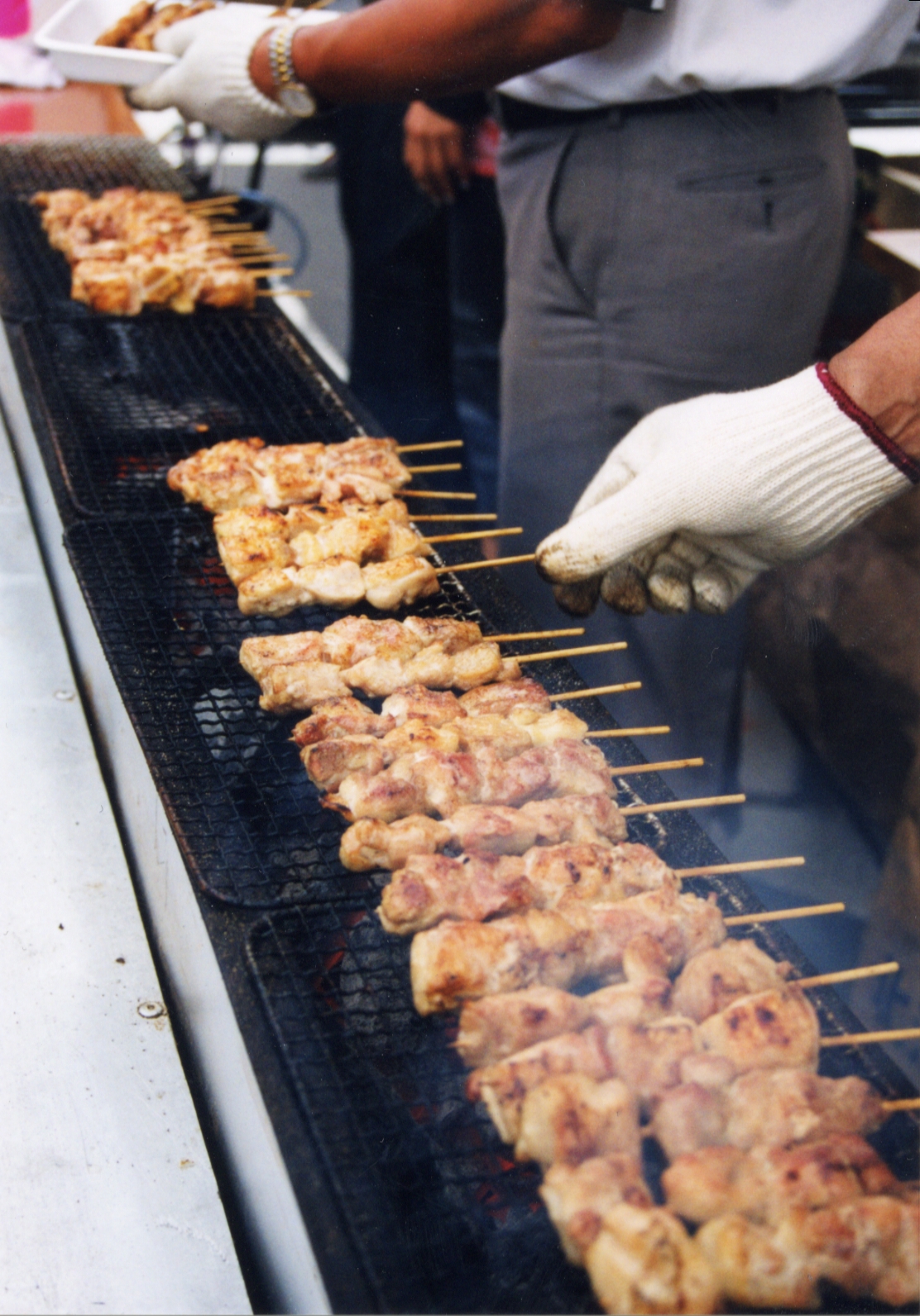
Yakitori is Japan’s great grilled snack: bite-size pieces of chicken threaded onto skewers, grilled over high heat until smoky and charred, and glazed with a glossy sweet-savory sauce. It is the food of izakaya pubs, eaten with cold beer, and it is simple enough to make at home on a grill or even a hot pan. The two classic styles, salt and tare sauce, use the same skewers cooked two ways. Juicy chicken, a little char, and that caramelized glaze make yakitori endlessly satisfying.
Grilled Bird
Yakitori literally means grilled bird, and at its core it is skewered chicken grilled over charcoal. In Japan it is a fixture of izakaya, the casual pubs where people gather after work over drinks and small plates, and of festival street stalls. Specialist yakitori restaurants grill every part of the chicken, from thigh and skin to liver and heart, over binchotan charcoal. The seasoning is deliberately simple, either salt or a sweet-savory tare sauce, to let the chicken and the smoke shine. It is inexpensive, social food, and this recipe keeps to the approachable thigh-and-scallion version.
Salt or Tare
Yakitori comes two ways, and both are traditional. Shio, salt, is the purist option: the skewers are simply salted and grilled, letting the flavor of the chicken and the char come through clean. Tare is the sweet-savory glaze, a mix of soy sauce, mirin, sake, and sugar simmered until slightly syrupy, brushed on in layers as the skewers cook. Tare skewers end up glossy, caramelized, and a little sweet; salt skewers are lighter and smokier. Many people order some of each. This recipe gives you the tare, which is the crowd favorite, with the salt version as a simple alternative.
Use Thighs
Boneless chicken thigh is the cut for yakitori. It stays juicy and tender over the high, fast heat of grilling, where lean breast tends to dry out. The little bit of fat in the thigh also helps it brown and take on the glaze. Cut the thigh into even, bite-size chunks so the skewers cook uniformly. The classic negima skewer alternates chunks of chicken with pieces of scallion, which soften and sweeten against the heat and add freshness between the meat. Thread the pieces snugly but not crushed together, so the heat can reach all sides.
Grill, Then Glaze
The order of operations matters with tare. Grill the skewers first over high heat, turning them, until the chicken is nearly cooked and has some char. Only then start brushing on the tare, returning the skewers to the heat between coats so each layer caramelizes. Brushing sugary tare onto raw chicken from the start just burns the sugar before the meat cooks. Building the glaze in layers near the end gives that glossy, sticky, caramelized coating without scorching. Charcoal gives the best smoky flavor, but a hot grill, grill pan, or broiler all work. Watch closely, since the sugar in the tare browns fast.
The Skewers
If you use bamboo skewers, soak them in water for a while before threading, so they do not burn up on the grill before the chicken is done. Metal skewers skip that step. Keep the exposed ends away from the hottest part of the fire, or shield them with foil. Thread the chicken and scallion snugly. Beyond the classic chicken-and-scallion skewer, the same method works for chicken meatballs (tsukune), mushrooms, and vegetables, so a mixed platter is easy to put together. Prep all the skewers before you light the grill, since yakitori cooks fast once the heat is up.
Serving Yakitori
Serve yakitori hot off the grill, straight from the skewer, as a snack, an appetizer, or a casual meal with rice. A squeeze of lemon brightens the salt skewers, and a sprinkle of togarashi, Japanese chili pepper, adds heat to either style. Cold beer is the classic pairing, which is the whole izakaya spirit. Make a big batch of tare and it keeps in the fridge for weeks, ready for the next round, and it works as a glaze on other grilled meats too. Set out a platter of mixed skewers and let everyone graze.
Common Questions
Can I make yakitori without a grill?
Yes. A grill pan or a broiler both work well, giving good browning. Charcoal adds the traditional smoky flavor, but a hot pan or broiler makes fine yakitori at home. Cook over high heat and glaze near the end either way.
What is tare made of?
Tare is a sweet-savory glaze of soy sauce, mirin, sake, and sugar, simmered until slightly thickened. It is brushed on the skewers in layers near the end of grilling so it caramelizes. It keeps for weeks in the fridge.
Why thighs instead of breast?
Thighs stay juicy and tender over the high heat of grilling and brown better, while breast dries out quickly. The fat in the thigh also helps it take the char and glaze. Cut it into even, bite-size pieces for the skewers.
Yakitori means grilled bird, skewered chicken cooked over charcoal and seasoned simply with salt or a sweet-savory tare sauce, a staple of Japanese izakaya pubs and street stalls.