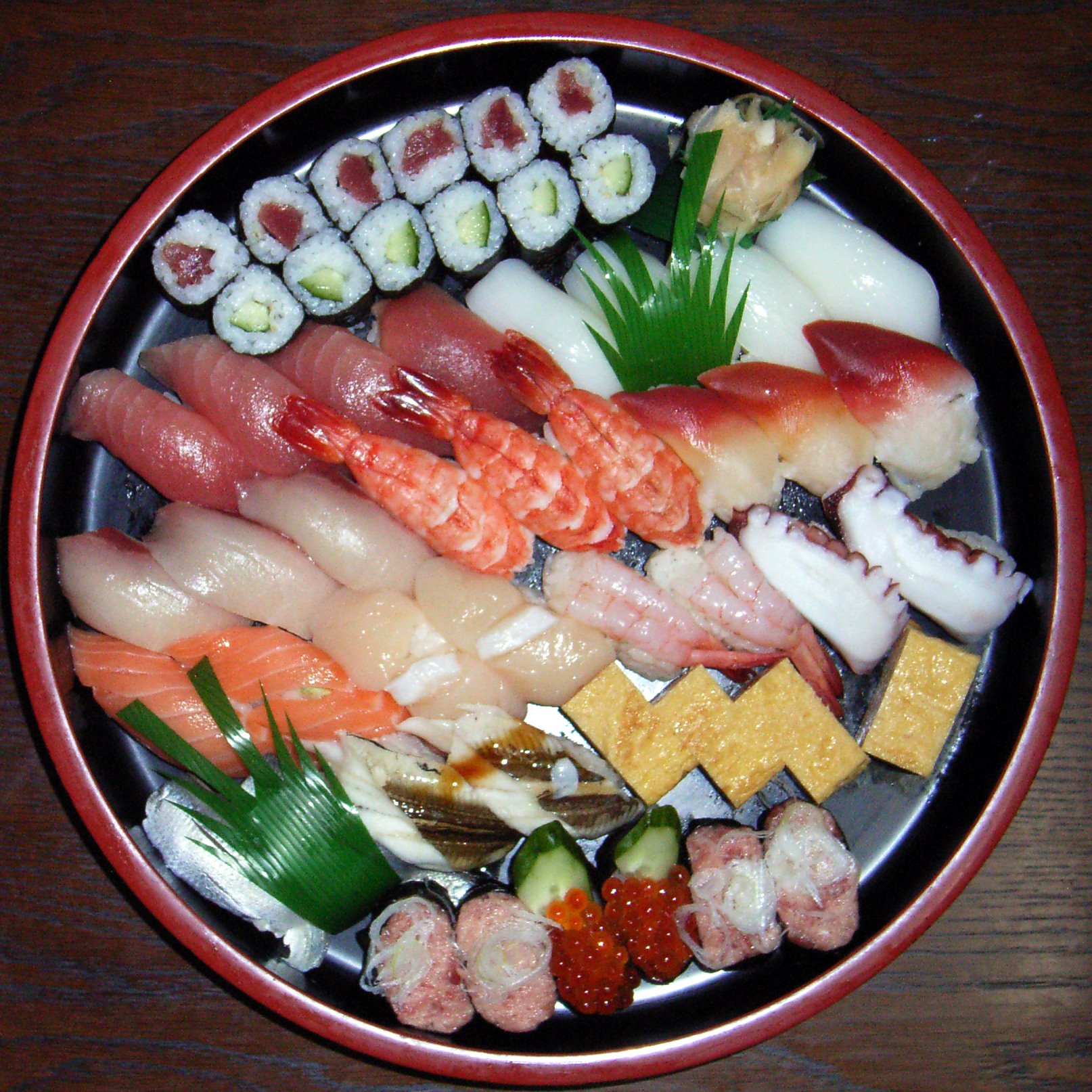
Homemade sushi rolls look impressive and taste fresh, and they are far more achievable than most people think. The whole thing comes down to one skill: making good sushi rice. Get the rice right, seasoned, sticky, and cooled, and rolling maki is just a matter of spreading, filling, and rolling with a bamboo mat. You control the fillings, so you can keep it simple with cucumber and avocado or go all in with fresh fish. A platter of hand-rolled sushi is a satisfying thing to put on the table.
What Maki Is
Maki, or makizushi, means rolled sushi: vinegared rice and fillings wrapped in a sheet of nori seaweed with the help of a bamboo mat called a makisu. The defining element of all sushi is the vinegared rice, not raw fish, so many rolls contain no raw fish at all. The rolled form developed in Japan during the Edo period, after sheet nori became widely available in the eighteenth century. The familiar California roll, with rice on the outside, is a later Western invention. This recipe covers the standard roll with nori on the outside, the place to start.
The Rice Is Everything
Sushi lives or dies by the rice, so this is where to focus. Use short-grain Japanese sushi rice, which is sticky enough to hold together; other rice will not work. Rinse it well, cook it, and then, while it is still warm, fold in a seasoning of rice vinegar, sugar, and salt, cutting it through the rice gently with a spatula rather than mashing it. Let the rice cool to room temperature before rolling, since hot rice makes the nori soggy and limp. Properly seasoned, glossy, slightly sticky rice at the right temperature is the foundation every roll is built on.
Fillings
Here is where you make it your own. Classic fillings include cucumber, avocado, and cooked crab or imitation crab, which need no special sourcing and make excellent rolls. If you want raw fish, buy sushi-grade fish from a trusted fishmonger and keep it cold; do not use ordinary supermarket fish raw. Other good fillings are cooked shrimp, tamago (sweet omelet), pickled radish, and tuna. Keep the fillings cut into long, thin strips so they line up neatly across the rice. Do not overfill, since too much stuffing makes the roll impossible to close. A few well-chosen fillings beat a crowded one.
Rolling
Lay a sheet of nori shiny side down on the bamboo mat. Wet your hands and spread a thin, even layer of rice over the nori, pressing gently, but leave a bare strip along the top edge with no rice; this strip is what seals the roll. Lay the fillings in a line across the rice near the bottom. Then lift the edge of the mat and roll it forward over the fillings, pressing gently to shape a tight cylinder, and continue rolling until the bare nori edge wraps around and seals. A dab of water on that edge helps it stick. Firm, even pressure gives a tight roll that holds.
Slicing and Serving
Cutting the roll cleanly makes it look professional, and the trick is a wet, sharp knife. Dampen the blade with water before each cut and wipe it clean, which lets it slice through the nori and rice without dragging, tearing, or squashing the roll. Cut each roll into six or eight even pieces. Arrange them cut side up on a plate. Serve sushi with the classic trio of soy sauce for dipping, a dab of wasabi for heat, and pickled ginger to cleanse the palate between pieces. Eat the rolls soon after making them, while the nori is still slightly crisp and the rice is fresh.
Making a Sushi Spread
Sushi rolls scale beautifully for a group, and a fun way to serve them is to make it a hands-on meal. Set out bowls of seasoned rice, sheets of nori, and an array of prepared fillings, and let everyone roll their own, which turns dinner into an activity. This also lets people who avoid raw fish build rolls they like. Beyond maki, the same rice makes temaki, hand rolls shaped into cones, which skip the mat entirely and are the easiest form of all. Once the rice is made, the possibilities open up, so make a big batch and experiment.
Common Questions
Do I need raw fish?
No. Many rolls use cucumber, avocado, cooked crab, shrimp, or omelet, no raw fish at all. Sushi is defined by the vinegared rice, not raw fish. If you do want raw fish, buy sushi-grade fish from a trusted source and keep it cold.
What rice should I use?
Short-grain Japanese sushi rice, which is sticky enough to hold the rolls together. Rinse it, cook it, then season it with vinegar, sugar, and salt while warm. Long-grain rice will not stick properly and will not work for sushi.
Why does my roll fall apart?
Usually too much filling, rice spread too thickly, or not enough pressure when rolling. Use a thin, even layer of rice, keep fillings modest, leave a bare nori strip to seal, and press firmly with the mat to form a tight cylinder.
Maki, or rolled sushi, is vinegared rice and fillings wrapped in a sheet of nori with a bamboo mat; the rolled form developed in Japan during the Edo period after sheet nori became available.