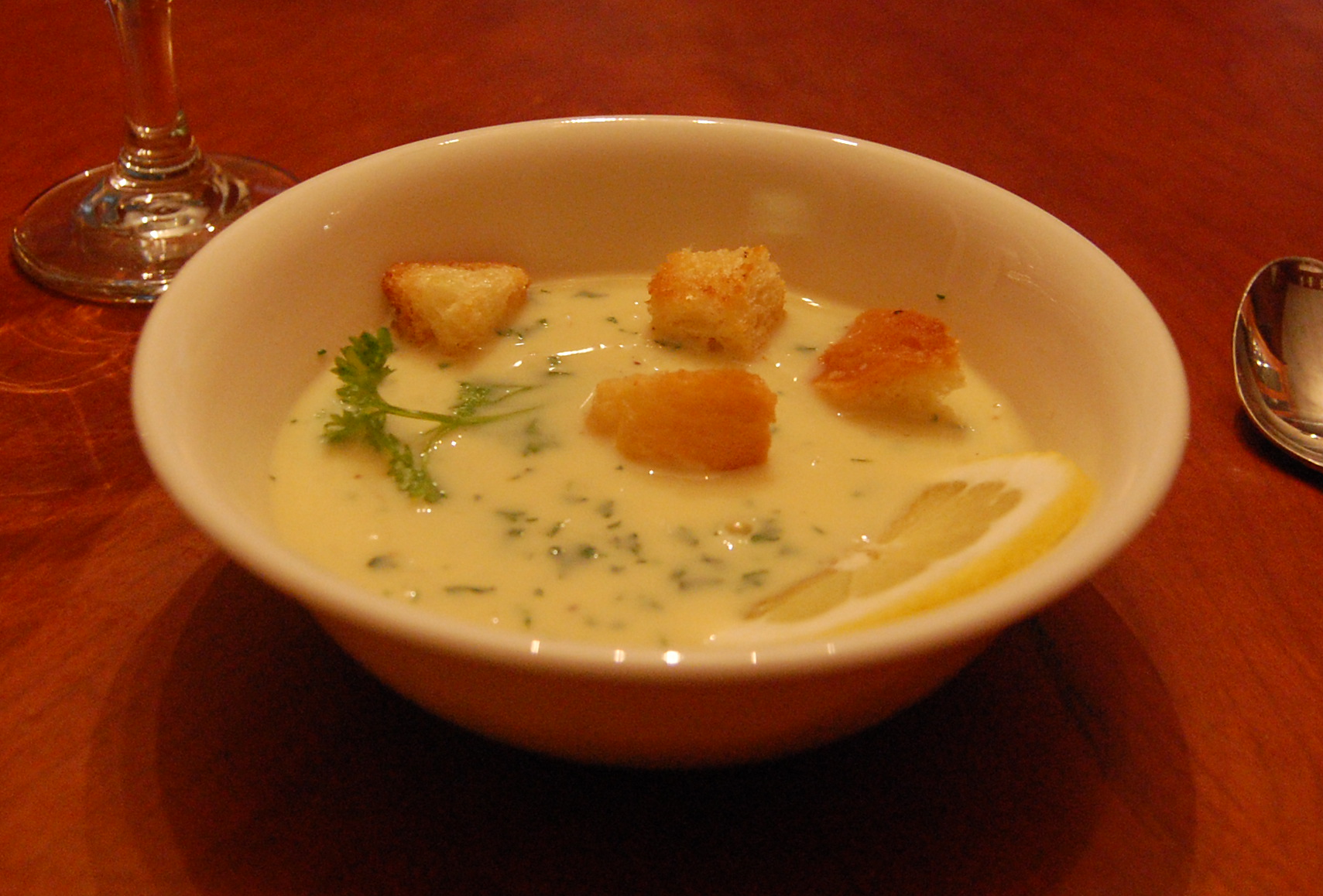
Avgolemono is Greece’s answer to chicken soup, and it is something special: a silky, velvety bowl of chicken broth and rice, thickened and brightened with a whisk of eggs and fresh lemon. There is no cream in it; the luxurious texture comes entirely from eggs beaten with lemon and tempered into the hot broth. The result is comforting and tangy at once, restorative and elegant. The one technique to master is tempering the eggs so they thicken the soup silkily instead of scrambling, and once you have it, avgolemono is quick and easy.
Egg and Lemon
Avgolemono means simply egg-lemon, and it names both a technique and the dishes made with it. As a sauce, the egg-lemon mixture is spooned over dolmades, meatballs, and vegetables; as a soup, it thickens a chicken and rice broth into the beloved bowl described here. The method, using beaten eggs and lemon or another acid to thicken and enrich a broth, appears across Greek and eastern Mediterranean cooking. It is a clever, old technique that turns a plain chicken soup into something silky and tangy without any cream or flour. This is home cooking and comfort food at its most classic.
The Broth and Rice
The base is a good chicken broth. Simmer chicken in stock until cooked, then shred the meat and return it later, keeping the flavorful broth as the foundation. Into this broth goes rice, usually short-grain, or orzo, the rice-shaped pasta that is a common choice, cooked until tender. The starch from the rice adds body and helps the soup feel substantial. A good, well-seasoned broth is the backbone here, so use a rich homemade or quality stock. The chicken, rice, and broth together are essentially a simple chicken and rice soup, until the egg-lemon transforms it.
Tempering the Eggs
Here is the heart of avgolemono, and the step that intimidates people needlessly. Whisk the eggs with the lemon juice until frothy. Then temper them: slowly whisk ladlefuls of the hot broth into the egg mixture, one at a time, which gently warms the eggs so they do not seize when they hit the heat. Once the egg mixture is warm and loosened, pour it back into the pot off the heat, stirring constantly. Tempering is what lets the eggs thicken the soup into silk rather than curdling into scrambled egg. Go slowly and keep whisking, and it works every time.
Do Not Boil
The single rule that protects your soup: once the eggs are in, never let it boil. Boiling curdles the tempered eggs and turns the silky broth grainy and split, undoing all your careful work. After adding the egg-lemon mixture, warm the soup gently over low heat if needed, return the shredded chicken, and serve, but keep it below a simmer. The soup turns smooth, pale, and creamy-looking without a drop of cream. If you are reheating leftovers, do it gently for the same reason. Low, careful heat is what keeps avgolemono silky.
Lemon Forward
Avgolemono should taste distinctly of lemon; the bright, tangy citrus is the defining flavor, not a shy background note. Use plenty of fresh lemon juice, and taste at the end to adjust, adding more if the soup needs lifting. The balance of rich, eggy broth and sharp lemon is what makes the soup so craveable. Fresh dill is a common finish, adding a green, herbal note that suits the lemon. Serve it hot, with lemon wedges on the side so each person can sharpen their own bowl. A generous hand with the lemon is the difference between good and great here.
Serving Avgolemono
Avgolemono is served hot, as a starter or a light main, and it is exactly the soup Greeks reach for when someone is under the weather or the day is cold. Crusty bread alongside is all it needs. It is best fresh, since the eggs and the texture do not survive hard reheating well, so make what you will eat, and reheat any leftovers very gently over low heat. The rice or orzo also drinks up broth as it sits, so leftovers thicken; loosen them with a splash of stock. Simple, tangy, and comforting, it is a bowl of pure home cooking.
Common Questions
How do I keep the eggs from curdling?
Temper them: whisk hot broth into the beaten eggs a ladle at a time to warm them slowly, then stir the mixture back into the pot off the heat. And never boil the soup after the eggs go in. Both steps keep it silky.
Rice or orzo?
Both are traditional. Short-grain rice gives a heartier soup and extra starch; orzo, the rice-shaped pasta, is a popular alternative. Use whichever you prefer, cooking it in the broth until tender before adding the egg-lemon.
Can I make it vegetarian?
Yes. Use a good vegetable broth in place of chicken stock and skip the chicken, keeping the rice, eggs, and lemon. The egg-lemon technique thickens any broth. The result is a lighter but still silky, tangy lemon soup.
Avgolemono is a Greek egg and lemon mixture used as both a sauce and a soup; as a soup it thickens chicken broth with rice, eggs, and lemon into a silky, tangy bowl.