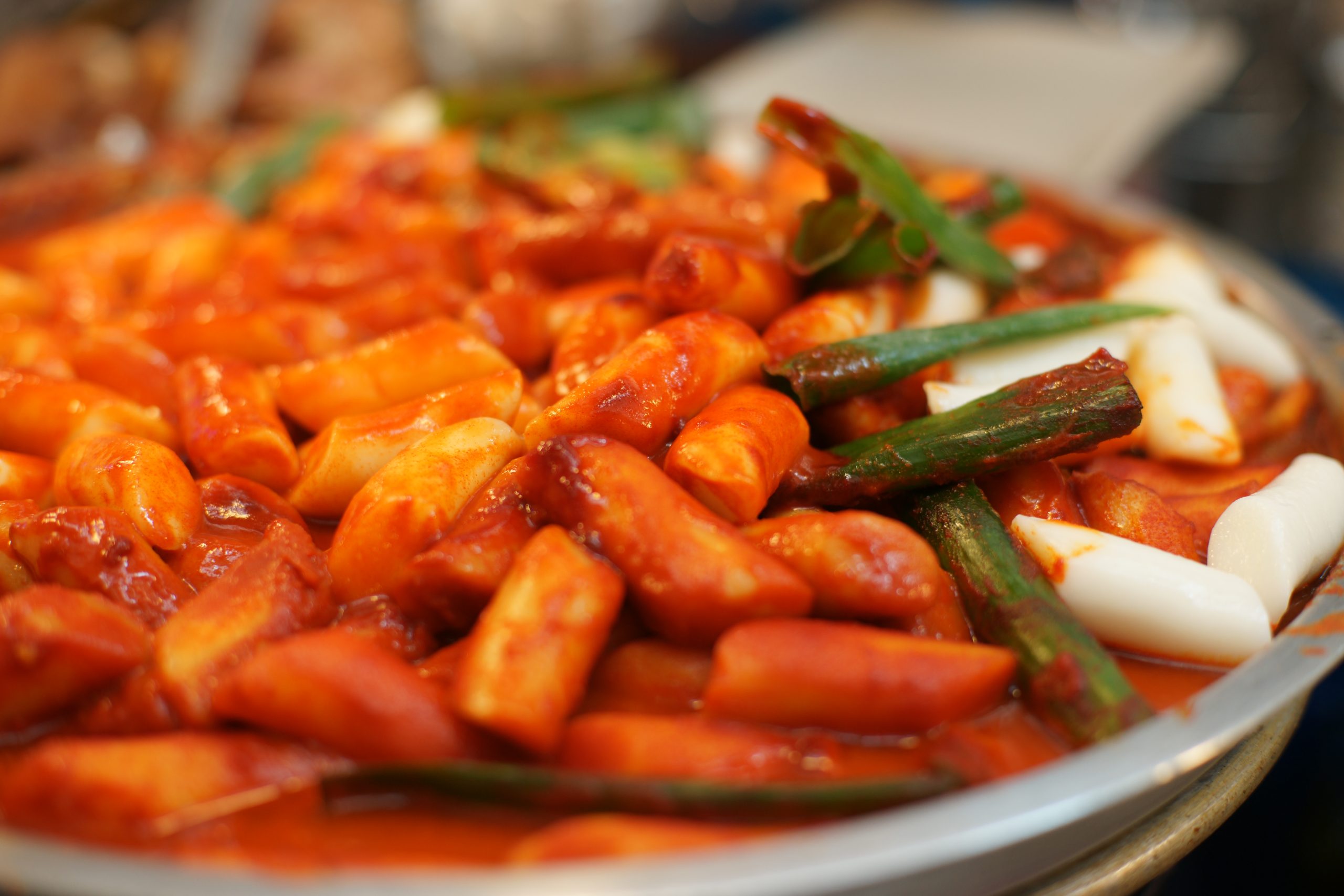
Tteokbokki is Korea’s favorite street food: chewy cylindrical rice cakes simmered in a glossy, sweet-and-spicy gochujang sauce with fish cakes and scallions. It is hot, comforting, a little addictive, and it comes together in one pot in about twenty minutes. Sold from street stalls and snack bars across Korea and made constantly at home, it is the kind of thing you crave. The balance is the key, sweet and spicy at once, with the soft, springy chew of the rice cakes soaking up the thick red sauce.
From Royal Court to Street Stall
The spicy tteokbokki everyone knows today is a relatively modern dish; the gochujang-based spicy version spread from the 1950s and became Korea’s signature street food. Before that, there was an older royal court dish called gungjung tteokbokki, seasoned with soy sauce rather than chili, since chili peppers arrived in Korea only in the mid-Joseon era. That non-spicy soy version, made with beef and vegetables, still exists. The red, spicy tteokbokki of the street stalls, though, is what most people mean by the name now, and it has grown into countless variations with cheese, noodles, and more.
The Rice Cakes
The star is tteok, Korean rice cakes, specifically the cylindrical garaetteok used for this dish. Made from rice flour, they are dense, soft, and wonderfully chewy, and they soak up the sauce as they simmer. Fresh or frozen rice cakes are sold at Korean groceries; if yours are firm or refrigerated, soak them in warm water for a few minutes first so they soften evenly and do not stay hard in the center. Separate any that are stuck together before cooking. The chewy, springy texture of the rice cakes is the whole appeal, so they are worth sourcing properly.
The Sweet-Spicy Sauce
The sauce is what defines tteokbokki, and it hinges on gochujang, the fermented Korean chili paste, often boosted with gochugaru, Korean chili flakes, for more heat and color. The important thing is balance: sugar is not optional but essential, because tteokbokki is meant to be sweet and spicy together, not just hot. Soy sauce and garlic round it out. Many cooks build the sauce in an anchovy or kelp stock rather than plain water, which adds a savory depth that lifts the whole dish. Adjust the sugar and chili to your taste, keeping both in play.
Simmering It Down
Cooking tteokbokki is simple. Bring the stock and sauce to a boil, add the rice cakes, and simmer, stirring often so they do not stick, until they soften and turn chewy and the sauce reduces. As it cooks, the sauce thickens and the rice cakes release a little starch that helps it cling. The dish is ready when the sauce is glossy and coats the rice cakes rather than sitting watery around them; if it is thin, simmer a few minutes longer. Do not overcook the rice cakes into mush, but do let the sauce reduce properly.
The Add-Ins
Classic tteokbokki includes sliced fish cake, eomuk, which soaks up the sauce and adds savory chew, and scallions stirred in near the end. Hard-boiled eggs are a common addition, simmered briefly so they take on color. Beyond the basics, tteokbokki takes endless additions: a handful of ramen noodles turns it into rabokki, a blanket of melted cheese makes cheese tteokbokki, and dumplings, boiled eggs, and vegetables all find their way in. Start with the classic fish cake and scallion version, then add whatever you like once you know how the base tastes.
Serving Tteokbokki
Tteokbokki is served hot, straight from the pan, as a snack, a street-food-style meal, or part of a spread. It is often eaten with other snack-bar foods like fried dumplings or seaweed rolls, and a boiled egg on the side is traditional to temper the heat. It is best fresh, since the rice cakes firm up and absorb the sauce as they cool; reheat leftovers with a splash of water to loosen the sauce and soften the cakes again. Simple, cheap, and satisfying, it is comfort food at its most direct.
Common Questions
Where do I find rice cakes?
Korean and Asian groceries sell tteok, the cylindrical rice cakes, fresh or frozen. Soak firm or refrigerated ones in warm water before cooking so they soften evenly. Fresh rice cakes are softest; frozen ones work well after soaking.
How do I make it less spicy?
Reduce the gochugaru chili flakes and keep the gochujang and sugar, which lowers the heat while keeping the flavor. Adding more sugar or a slice of cheese also tames it. A boiled egg on the side cools each bite.
Can I make it without fish cake?
Yes. The rice cakes and sauce are the core. Leave out the fish cake for a simpler or vegetarian version, using a kelp stock instead of anchovy, and add vegetables or a boiled egg instead.
Tteokbokki are Korean rice cakes in a sauce, best known today in the spicy gochujang version that spread from the 1950s, though an older non-spicy royal court version came first.