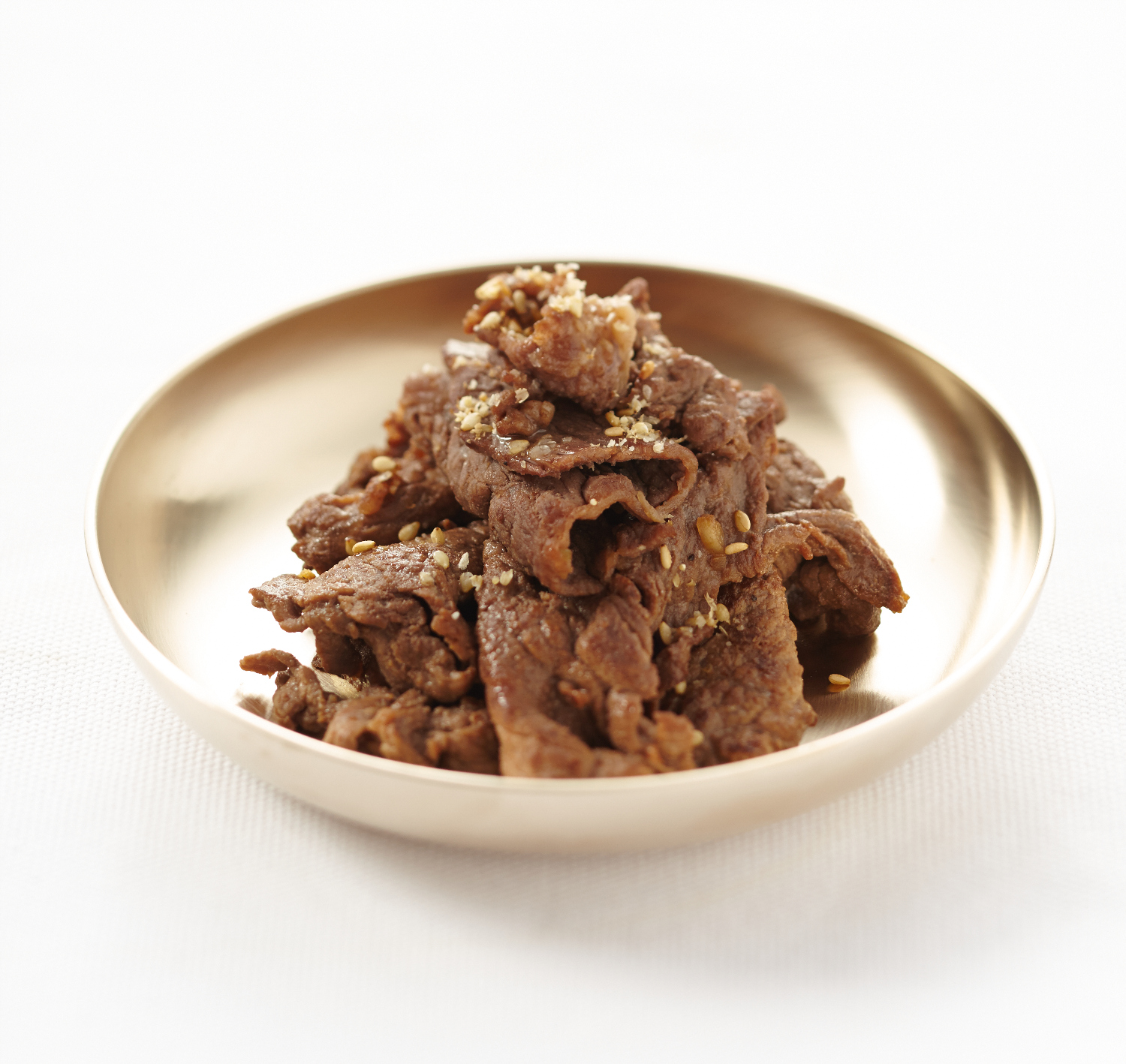
Bulgogi is Korea’s beloved marinated beef: paper-thin slices soaked in a sweet-savory sauce of soy, sesame, garlic, and grated pear, then seared hard and fast until the edges caramelize. It is tender, deeply flavored, and quick to cook once the beef has marinated. The name means fire meat, and it is a cornerstone of Korean barbecue and home cooking alike. Wrapped in lettuce with rice and a dab of sauce, or piled over a bowl of rice, it is one of the most approachable and crowd-pleasing Korean dishes.
Fire Meat
Bulgogi joins bul, meaning fire, and gogi, meaning meat, a name that points to its grilled origins. It is traditionally made with thinly sliced prime beef like sirloin or ribeye, marinated and cooked quickly over high heat. It appears at Korean barbecue restaurants, where it is grilled at the table, and in home kitchens, where it is stir-fried in a pan. While beef is the classic, pork bulgogi and chicken bulgogi are common variations using the same style of marinade. It is one of the dishes that introduced Korean flavors to the wider world.
The Thin Slice
Bulgogi depends on very thin slices of beef, which cook in seconds and soak up the marinade fast. The easiest way to slice beef paper-thin at home is to freeze it partially first, until firm but not solid, which lets you cut clean, even slices that would be impossible with soft meat. Many Korean groceries also sell beef pre-sliced for bulgogi, which saves the trouble. Ribeye and sirloin are the usual cuts, tender and marbled enough to stay juicy over high heat. The thinner the slice, the more tender and flavorful the result.
The Marinade and the Pear
The marinade is the soul of bulgogi: soy sauce for salt and depth, brown sugar for sweetness and caramelization, sesame oil for aroma, and plenty of garlic and ginger. The traditional secret ingredient is grated Asian pear, which does two things at once. Its natural enzymes tenderize the beef, and its clean sweetness balances the salty soy without the heaviness of extra sugar. If you cannot find an Asian pear, a regular pear, apple, or even kiwi stands in as a tenderizer. Marinate the sliced beef for at least thirty minutes, or up to a few hours for deeper flavor.
Cooking Hot and Fast
Bulgogi wants high heat and a light touch. Get a grill, griddle, or heavy pan very hot, then cook the beef in a single layer in batches. Crowding the pan is the common mistake: piled-up beef releases its juices and steams into a gray, watery braise instead of searing. Cooked in batches on high heat, the thin slices brown and the sugars in the marinade caramelize at the edges, which is where the flavor is. It takes only a minute or two per batch. Add sliced onion toward the end to soften and sweeten in the pan.
How to Serve It
Bulgogi is served two classic ways. The first is ssam, wrapping: pick up a lettuce or perilla leaf, add a bite of beef, a little rice, and a dab of ssamjang, the savory dipping paste, then fold it into a parcel and eat it in one bite. The second is simply over a bowl of hot rice, letting the sweet-savory juices soak in, as a bulgogi rice bowl. Either way, kimchi and other banchan side dishes round out the meal. Finish the beef with sesame seeds and scallions, and serve it hot from the pan.
Make Ahead and Variations
Bulgogi is friendly to planning. The beef can marinate for a few hours or overnight, and marinated bulgogi freezes well raw, so a batch portioned and frozen gives quick weeknight meals; it cooks straight from thawed in minutes. Beyond beef, the same marinade works on thinly sliced pork or chicken for a change, and the leftovers are excellent in fried rice, tucked into a sandwich, or over noodles. Because it cooks so fast, bulgogi rewards having the marinade and sliced meat ready to go, turning dinner into a few minutes at a hot pan.
Common Questions
How do I slice the beef so thin?
Freeze the beef partially, until firm but not rock solid, then slice it thinly against the grain with a sharp knife. Firm meat cuts into clean, even slices. Many Korean groceries also sell pre-sliced bulgogi beef.
What does the pear do?
Grated Asian pear tenderizes the beef through natural enzymes and adds a clean sweetness that balances the soy. It is the traditional ingredient. A regular pear, apple, or kiwi can substitute as a tenderizer if needed.
Can I use pork or chicken?
Yes. Pork bulgogi and chicken bulgogi are common, using the same style of marinade. Pork bulgogi is often made spicier with gochujang. Cook them the same hot-and-fast way, adjusting time for the thicker cut.
Bulgogi means fire meat, a Korean dish of thinly sliced beef marinated in a sweet and savory soy-based sauce, then grilled or stir-fried over high heat.