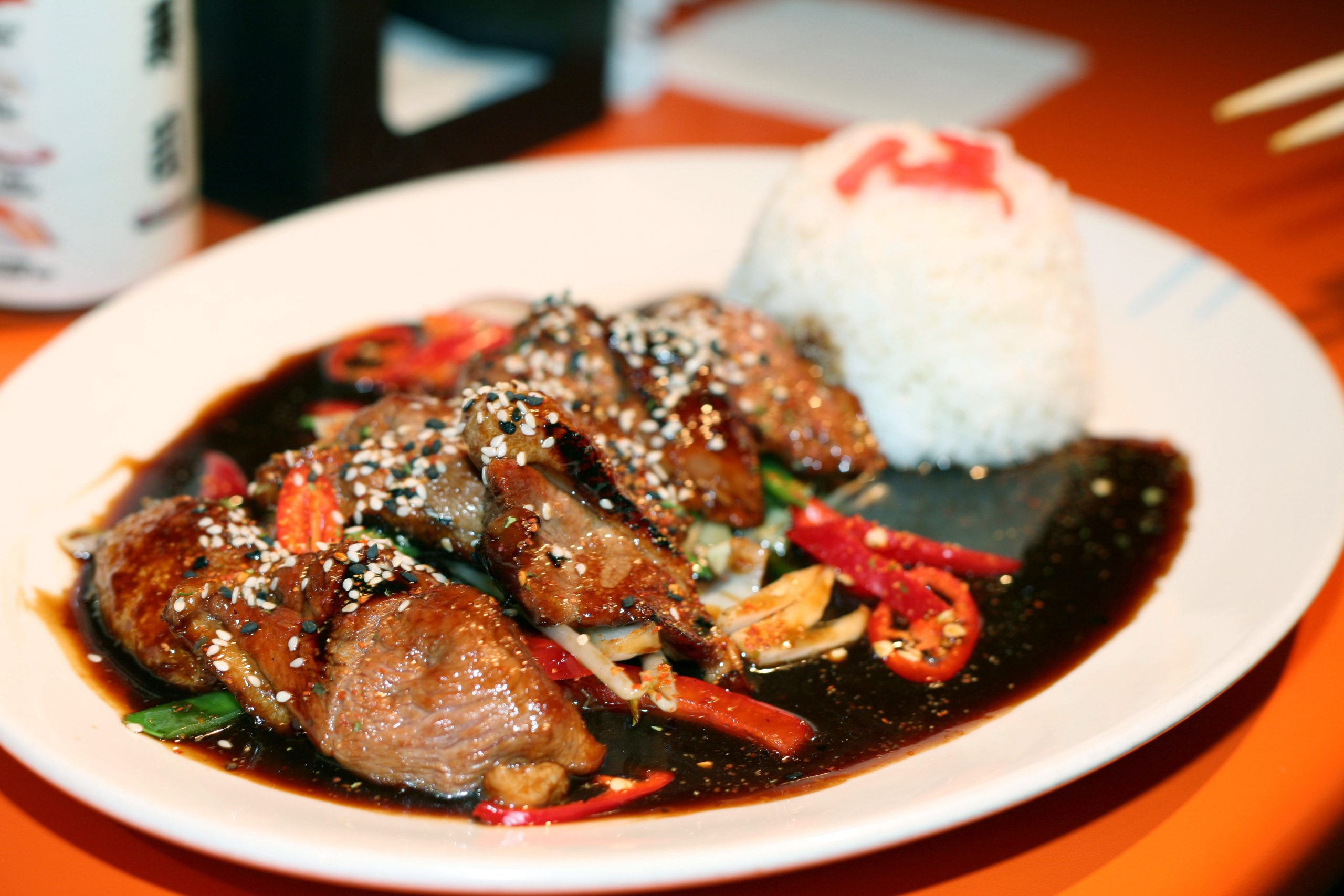
Real chicken teriyaki is not chicken drowned in a thick bottled sauce. It is chicken cooked until the skin is crisp, then glazed in the pan with a simple sauce of soy, mirin, sake, and sugar that reduces to a glossy, savory-sweet coating. The word teriyaki describes exactly this: a shine, produced by reducing the sauce until it clings and gleams. It takes one pan and about twenty minutes, and the difference between this and the takeout version is night and day.
Teriyaki Is a Method
Teriyaki is a Japanese cooking technique rather than a specific sauce in a jar. The name joins teri, meaning luster or shine, with yaki, meaning grilled or pan-cooked, and it describes food glazed with a soy-based sauce and cooked until it takes on a glossy sheen. Traditionally the glaze is a balanced mix of soy sauce, mirin, and sugar or sake. In Japan the method is applied often to fish such as yellowtail as much as to chicken. The thick, sweet bottled teriyaki sauce common abroad is a later adaptation, not the original.
The Four-Ingredient Sauce
Authentic teriyaki sauce is four ingredients in balance: soy sauce for salt and depth, mirin for sweetness and shine, sake for aroma, and a little sugar to round it out and help it glaze. That is the whole thing. No cornstarch, no thickener, no bottle; the sauce thickens naturally as it reduces and the sugars concentrate. Mirin is the key ingredient, a sweet rice wine that gives teriyaki its characteristic gloss and gentle sweetness, sold at Asian groceries and worth seeking out. If you lack sake, add a little more mirin; the sauce is forgiving of small adjustments.
Use Thighs
Boneless, skin-on chicken thighs are the cut for teriyaki. They stay juicy through cooking where breast dries out, and their skin crisps into a savory layer that soaks up the glaze. Cook them skin side down first, without moving them, until the skin renders and turns deep golden and crisp, then flip and finish cooking the meat through. Pour off the excess fat before the sauce goes in, or the glaze turns greasy. If you must use breast, slice it thinner and watch it closely so it does not overcook, but thighs give a far better result.
Building the Glaze
Once the chicken is cooked and the fat poured off, add the sauce to the hot pan. It will bubble up, and as it simmers the liquid reduces and the sugars concentrate into a glaze. Turn the chicken to coat it on all sides, spooning the thickening sauce over the top, until it clings in a glossy layer. Watch it closely at the end: reduce it only until it coats a spoon, since going too far burns the sugar and turns the glaze bitter and sticky. The sauce should end up shining and syrupy, not dried out or scorched.
Serving It
Slice the glazed chicken and lay it over a bowl of steamed white rice, spooning any extra pan glaze on top so it runs into the rice. Finish with toasted sesame seeds and sliced scallions for crunch and freshness. A side of steamed or quick-pickled vegetables rounds out the plate in the Japanese style. This is the standard teriyaki don, a homey rice bowl. The same glaze works on salmon, yellowtail, or tofu, so once the technique is in hand it becomes a quick weeknight method for many proteins, not just chicken.
Making It Your Own
The base sauce takes small additions well. A slice of grated ginger or a clove of garlic in the glaze adds warmth, common in home versions. A little more sugar makes it sweeter for those who like it that way, and a splash of water lets you stretch the glaze if the pan runs dry before the chicken is coated. Keep the soy, mirin, and sake as the backbone and adjust around them. The one thing not to do is reach for a thick bottled sauce, since the whole point is the fresh glaze made in the pan.
Common Questions
Is teriyaki sauce just soy sauce?
No. Teriyaki sauce balances soy sauce with mirin, sake, and sugar, then reduces into a glaze. Soy sauce alone is only salty; the mirin and sugar give teriyaki its shine, sweetness, and body.
Can I use chicken breast?
You can, but thighs stay juicier and their skin crisps better. If using breast, slice it thinner and cook it gently so it does not dry out. The glaze and method stay the same.
What is mirin, and can I substitute it?
Mirin is a sweet Japanese rice wine that gives teriyaki its gloss and gentle sweetness. It is sold at Asian groceries. If you cannot find it, a mix of a little sugar and sake or water approximates it, though the shine is not quite the same.
Teriyaki names a Japanese cooking method in which food is glazed with a sauce of soy, mirin, and sugar and cooked until it shines, from teri, meaning luster, and yaki, meaning grilled.