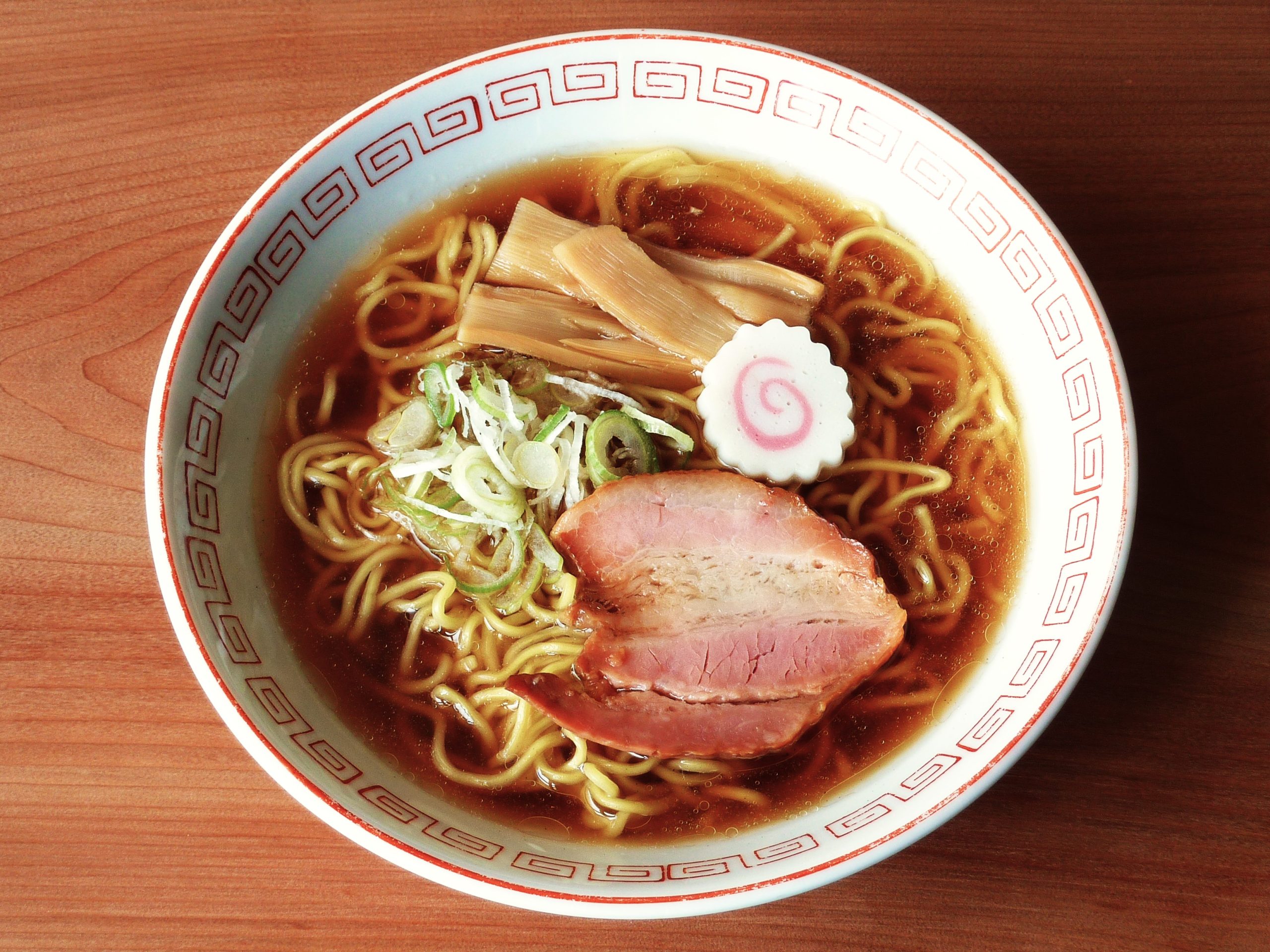
Ramen is Japan’s great noodle soup, and a good bowl has four moving parts: springy wheat noodles, a savory broth, a concentrated seasoning base, and toppings. This home-style shoyu ramen builds a soy-flavored broth with tender pork belly, a jammy marinated egg, and scallions. It takes an afternoon, but none of it is difficult once you understand how the parts fit together. The trick that ramen shops use, and that this recipe follows, is to season each bowl with a concentrated base rather than salting the whole pot.
From China to Japan’s National Dish
Ramen has Chinese origins and developed into a Japanese dish, tracing to the Chinese noodle shops of Yokohama in the late nineteenth and early twentieth centuries. It was a niche food until after the Second World War, when wheat became plentiful and returning soldiers and street vendors spread it across the country; instant ramen, invented by Momofuku Ando in 1958, carried it further still. Today it is considered a national dish, with strong regional identities: the soy-based shoyu of Tokyo, the pork-bone tonkotsu of Kyushu, the miso ramen of Hokkaido, and the salt-based shio. This recipe makes a home-style shoyu bowl.
The Broth and the Tare
The single most useful thing to understand about ramen is that flavor is built in two parts. There is the broth, a stock that carries body and richness, and there is the tare, a concentrated seasoning base that goes into the bottom of each bowl and provides most of the salt and flavor. For shoyu ramen the tare is soy-based, warmed with mirin, sake, and a little kombu and bonito for depth. Keeping them separate lets you season each bowl precisely and is exactly how ramen shops work. A full tonkotsu broth takes many hours; this chicken-stock version is a faster home route.
The Noodles
Ramen noodles are wheat noodles made with kansui, an alkaline mineral water that gives them their springy, chewy bite and yellow color and sets them apart from other noodles. Fresh ramen noodles from an Asian grocery give the best result; dried ramen noodles work too, and in a pinch the noodles from instant packets can stand in, discarding the seasoning packet. Cook the noodles in a separate pot of boiling water, not in the broth, and drain them well before adding them to the bowl. Boiling them in the broth releases starch that turns it cloudy and gummy.
Chashu Pork
The classic topping is chashu, pork belly rolled and simmered until meltingly tender, then sliced into rounds. Simmering it slowly in stock with aromatics cooks it through and flavors the broth at the same time, which is efficient. The rolled belly slices into neat spirals of soft meat and fat that soften further in the hot soup. If pork belly is too rich, pork shoulder works and is leaner. Slice the chashu just before serving and lay it over the noodles, where the heat of the broth warms it through and releases its fat into the bowl.
The Marinated Egg
The ramen egg, ajitama, is a small project worth the effort. Soft-boil eggs so the yolk stays jammy and slightly runny, around six to seven minutes, then peel them carefully and marinate them in some of the soy tare for a few hours or overnight. The marinade seasons the white and tints it brown while the yolk stays soft and custardy. Halved and set on top of the bowl, it is one of the signatures of a good ramen. Make the eggs ahead, since they need marinating time, and they keep several days in the marinade.
Assembling the Bowl
Assembly is fast, so have everything ready. Put a spoonful or two of soy tare in the bottom of each heated bowl, pour in the hot broth and taste for seasoning, then add the drained noodles. Arrange the toppings on top rather than stirring them in: sliced chashu, a halved egg, scallions, a sheet of nori standing at the edge, and menma bamboo shoots. Serve immediately, while the noodles are hot and springy and before they soften in the broth. Ramen waits for no one, so call everyone to the table the moment the bowls are built.
Common Questions
Do I have to make tonkotsu broth?
No. Tonkotsu, the milky pork-bone broth, takes many hours of boiling. This recipe uses a lighter chicken stock seasoned with a soy tare, a shoyu-style bowl that is far faster and well suited to home cooking.
What noodles should I use?
Fresh ramen noodles made with kansui are best, sold at Asian groceries. Dried ramen noodles work well too. In a pinch, use the noodles from instant packets and discard the seasoning. Regular pasta is not a good substitute.
Can I make the parts ahead?
Yes, and it helps. The chashu, tare, and marinated eggs all keep for days and improve with time. Make them ahead, then cook the noodles and heat the broth fresh at serving, which is quick.
Ramen is a Japanese noodle soup of Chinese origin that developed in Japan and became a national dish after the Second World War, with regional broths from soy-based shoyu to pork-bone tonkotsu.