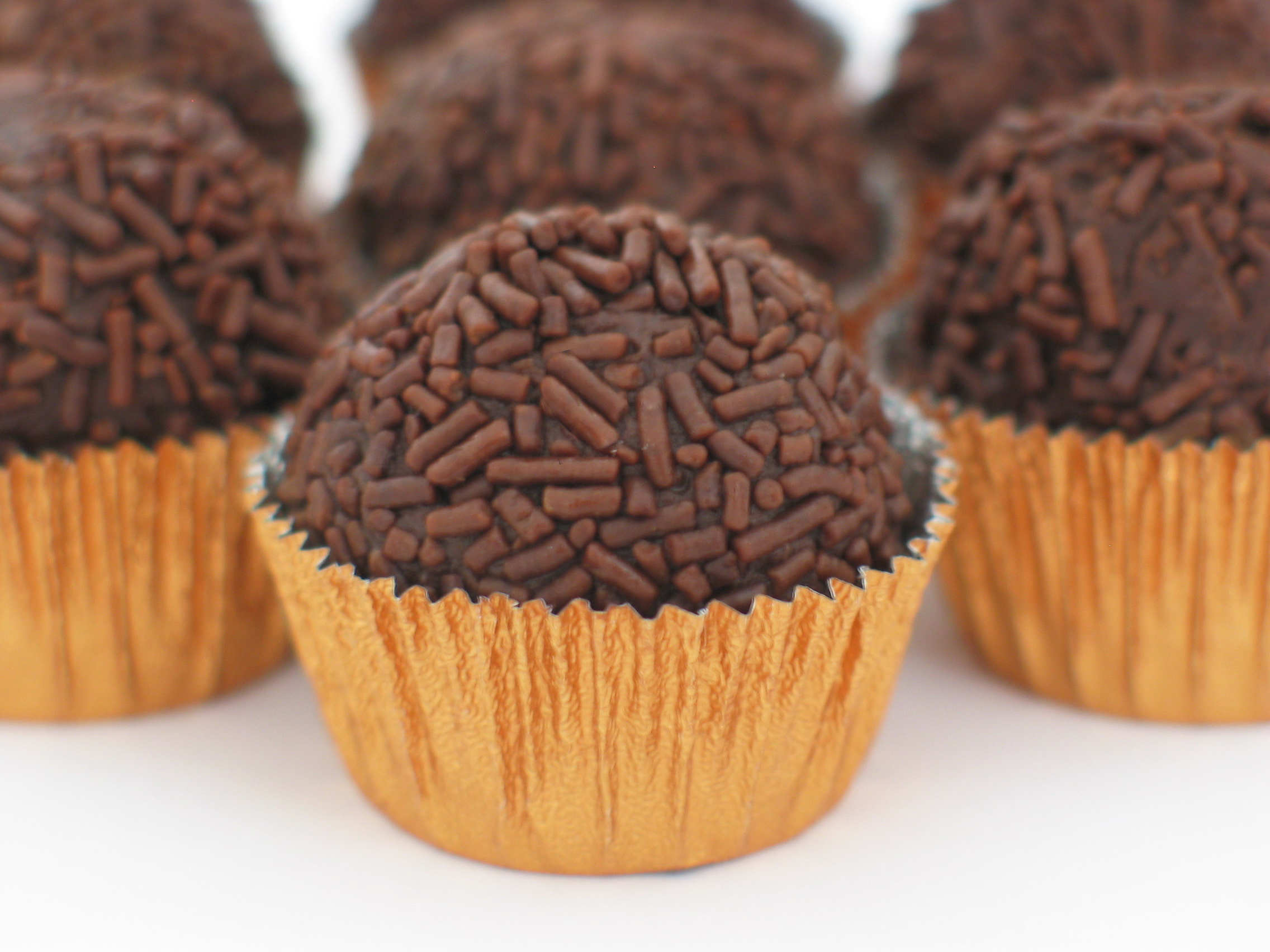
Brigadeiro is the chocolate candy that ends every Brazilian birthday party: a soft, fudgy ball made from sweetened condensed milk cooked down with cocoa and butter, then rolled in chocolate sprinkles. It sits somewhere between a truffle and caramel, chewy and rich, and it takes four ingredients and about fifteen minutes of stirring. Children make it, grandparents make it, and it appears in little paper cups at nearly every celebration in the country.
A Candy Named for a Candidate
The name comes from the 1940s. Brigadier Eduardo Gomes ran for president of Brazil, and supporters sold these sweets to raise money for his campaign, calling them brigadeiros after his rank. He lost the election, but the candy won a permanent place in Brazilian life. The story is well documented and repeated at parties across the country, one of the rare cases where a food’s origin is both charming and clearly recorded.
Four Ingredients, No More
The recipe is short by design. Sweetened condensed milk is the base and the sweetener. Unsweetened cocoa powder gives the chocolate flavor. A spoon of butter adds shine and keeps the candy from sticking too hard. A pinch of salt sharpens the sweetness. Chocolate sprinkles, called granulado in Brazil, coat the outside. Good cocoa makes a real difference here, since there is nothing else to hide behind, so use the best unsweetened cocoa you can find.
The One Technique That Matters
Making brigadeiro is entirely about cooking the mixture to the right point. Whisk the condensed milk, cocoa, butter, and salt together off the heat until smooth, then set the pan over medium-low. From there you stir constantly with a spatula, scraping the bottom the whole time so nothing scorches. The mixture thickens slowly, then more quickly. It is done when you drag the spatula across the pan and the candy pulls away in a mass, leaving a clean line on the bottom for a moment before it flows back. That is the entire test.
Cooling and Rolling
Pour the hot candy onto a greased plate and spread it a little so it cools evenly. Let it come fully to room temperature, which takes 30 minutes or so; rolling it warm is a sticky mess. When it is cool and firm enough to hold a shape, butter your hands, scoop out small amounts about the size of a cherry, and roll each into a ball between your palms. If the mixture is still too soft to handle, chill it for half an hour and try again.
The Sprinkle Coat
Roll each ball through a bowl of chocolate sprinkles until it is fully coated, then set it in a small paper candy cup. The classic coating is chocolate granulado, but party tables often show a range: colored sprinkles, chopped nuts, shredded coconut, or a dusting of cocoa for a plainer look. The coating is not just decoration; it keeps the sticky candy from clinging to fingers and gives a little crunch against the soft center.
Variations Worth Knowing
Leave out the cocoa and you have beijinho, the white coconut version rolled in shredded coconut with a clove pressed on top. Cook the mixture a little less and you get brigadeiro de colher, a softer version eaten straight from a cup with a spoon, popular when nobody wants to roll balls. Gourmet shops in Brazil now sell brigadeiros in flavors from pistachio to passion fruit, but the plain chocolate original remains the one that defines a birthday.
Serving at a Party
Brigadeiro is party food first, and it scales easily. One can of condensed milk yields around 25 small candies, so multiply the batch for a crowd and cook each pan separately rather than doubling in one pot, which slows the thickening. Set the finished balls in small paper cups on a tray, the way Brazilian party tables present them, and offer a second flavor such as the coconut beijinho for variety. They travel well in a single layer, which makes them a good thing to bring to someone else’s celebration. The softer spoon version, brigadeiro de colher, works when you are short on time and nobody wants to roll a hundred balls by hand.
Common Questions
How do I know when it is cooked enough?
Drag the spatula across the pan bottom. When the candy holds together and pulls away, leaving a clear line for a second before flowing back, it is ready. Undercook it and the balls will not hold; overcook it and they turn hard.
Can I make it ahead?
Yes. Rolled brigadeiros keep at room temperature for two days in a covered container and longer in the fridge. Bring them back to room temperature before serving so the centers are soft.
Why is my mixture too sticky to roll?
It was either undercooked or still warm. Chill it for 30 minutes and butter your hands well before rolling. If it is still loose, it needed another minute or two on the stove.
Brigadeiro appeared in Brazil in the 1940s and took its name from a brigadier who ran for president. The candy outlasted the campaign and became the sweet at every Brazilian birthday.