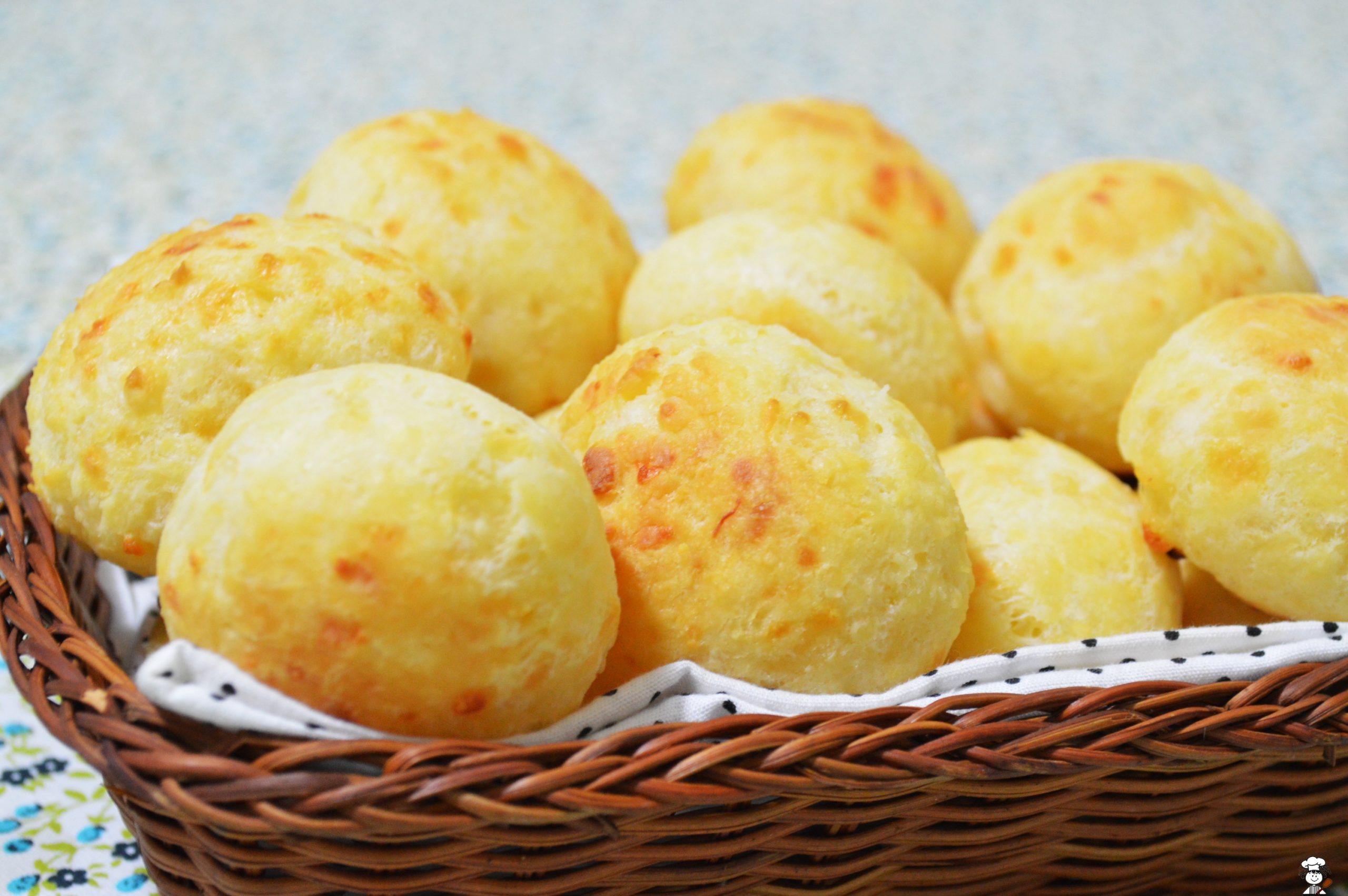
Pao de queijo is the small cheese bread that Brazil eats at breakfast, with afternoon coffee, and straight off the tray before dinner. The rolls are crisp on the outside and stretchy, almost chewy, inside, thanks to tapioca starch rather than wheat flour. That single swap makes them naturally gluten free, and it gives them a texture no wheat roll can copy. They take about half an hour start to finish, and the batter comes together in one bowl.
Where the Rolls Come From
The rolls belong to Minas Gerais, the inland state whose name means general mines. Cassava grew well there and wheat did not, so cooks leaned on cassava starch, called tapioca or polvilho, for baking. Cheese from the region’s dairy farms went into the dough, and a snack was born that spread across the whole country. Today pao de queijo is sold at every Brazilian bakery and bus station, and frozen bags of it sit in supermarket freezers nationwide.
Sweet Starch or Sour Starch
Tapioca starch comes in two forms, and the choice changes the roll. Sweet starch, polvilho doce, gives a milder, smoother bread. Sour starch, polvilho azedo, is fermented and lends a slight tang and a chewier, more open interior that many Brazilians consider the real thing. Latin groceries stock both, often side by side. A blend of the two is a good place to start if you cannot decide, and plain sweet starch alone still makes a very good roll.
The Cheese Question
In Minas the cheese is queijo minas, a semi-firm, mildly salty cow’s cheese. Outside Brazil it is hard to find, so cooks reach for what is available. A mix of parmesan for salt and sharpness with a milder melting cheese gives a balanced result. Aged cheeses bring more flavor, fresh ones bring more stretch, and most home versions abroad use parmesan alone with good results. Grate it fine so it works evenly into the dough.
Making the Dough
The method is a scald. You bring milk, water, oil, and salt to a boil, then pour the hot liquid over the tapioca starch all at once and stir hard. The starch seizes into a thick, gluey, stringy mass that looks wrong the first time you see it. That texture is exactly right. Let it cool until it is warm rather than hot, or the eggs you add next will cook on contact. Beat the eggs in one at a time, then knead in the cheese until the dough is soft, sticky, and holds together when squeezed.
Shaping and Baking
Oil your hands, because the dough is sticky, and roll it into balls a little smaller than a golf ball. Space them on a lined tray, since they puff as they bake. A hot oven, around 375 F, gives them 20 to 25 minutes to rise, set, and take on a pale gold color. Pull them while the outside is barely colored and the inside is still soft. They deflate a little as they cool, which is normal. Eat them warm, when the contrast between the crisp shell and the elastic center is at its best.
Serving and Storing
Pao de queijo needs nothing beyond a cup of coffee, though butter melted into a torn-open roll is a common indulgence. They are best in the first hour out of the oven and go firm once fully cool. The smart move is to freeze the raw shaped balls on a tray, bag them once solid, and bake straight from the freezer whenever you want a few, adding a couple of minutes to the time. Fresh, hot rolls on demand beat a reheated batch every time.
Making It in Advance
Pao de queijo rewards a little planning. The raw dough keeps in the fridge for a day, and shaped balls freeze for a month with no loss of quality. Bakeries in Brazil rely on this, pulling frozen rolls into the oven as customers arrive so the counter always has warm ones. At home the same trick means you are ten minutes from fresh cheese bread whenever a craving hits. Bake only what you plan to eat, since the rolls are at their best in the first hour and go firm once they cool. A quick reheat in a hot oven revives day-old rolls better than a microwave, which turns them chewy in the wrong way.
Common Questions
Can I use regular flour instead of tapioca starch?
No. Tapioca starch is what gives pao de queijo its chewy, stretchy inside and its gluten-free nature. Wheat flour produces an ordinary bread roll, a different food entirely. The starch is the point of the recipe.
Why did my rolls come out flat?
Usually the dough was too wet or the oven too cool. Add starch a spoonful at a time if the dough will not hold a ball, and make sure the oven is fully preheated so the rolls set as they rise.
What cheese works best abroad?
Parmesan alone works well and is easy to find. For more stretch, blend it with a mild melting cheese such as a young mozzarella or a soft farmer cheese. Grate everything fine so it distributes through the sticky dough.
Pao de queijo grew out of Minas Gerais, where cassava starch was plentiful and wheat was not. Home cooks baked small cheese rolls that were naturally gluten free long before anyone used the phrase.