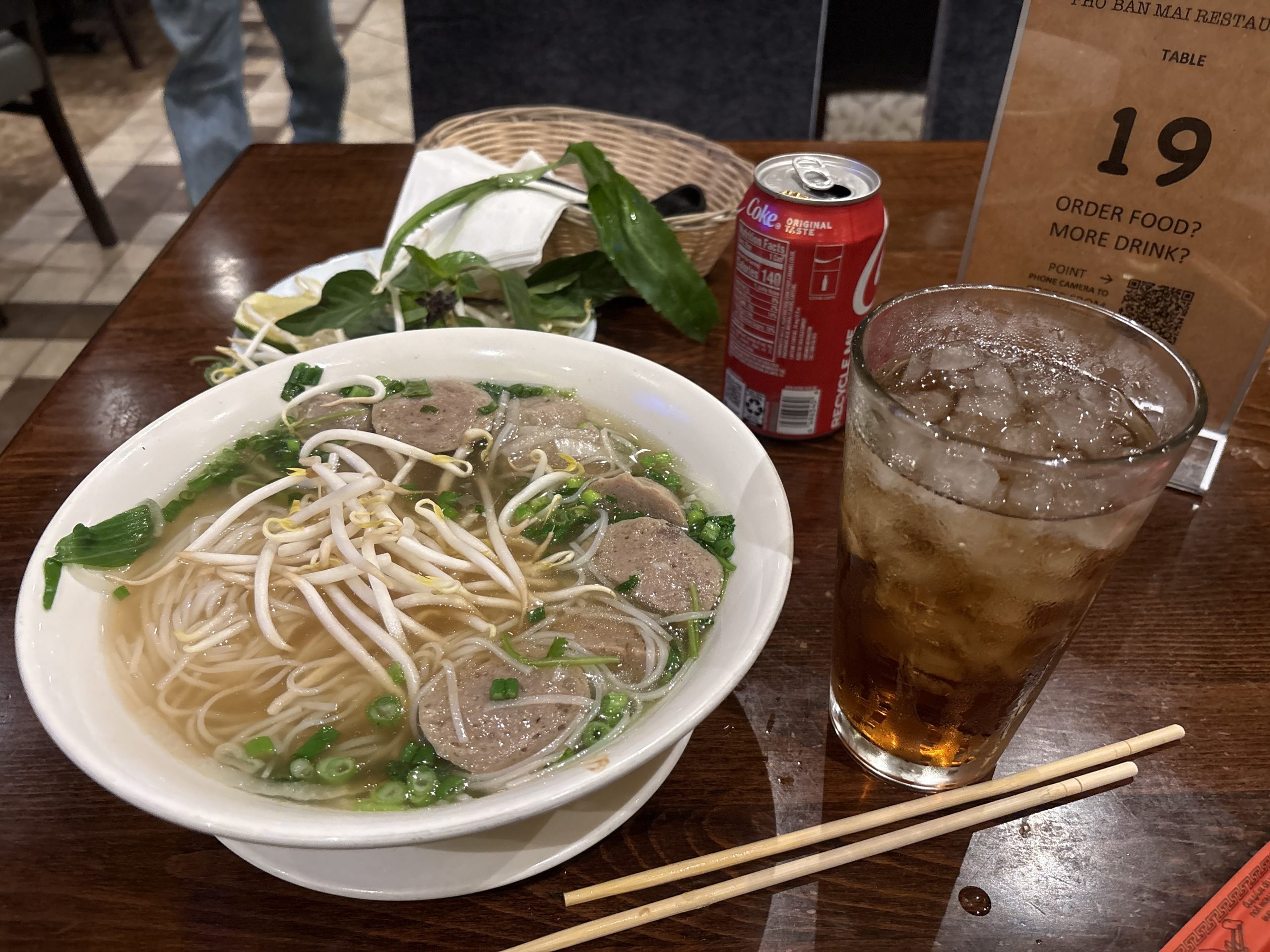
Pho bo is Vietnam’s beef noodle soup, and it is proof that a short ingredient list can produce an enormous flavor when time does the work. Marrow bones simmer for three hours with charred onion and ginger, star anise, cinnamon, and fish sauce until the broth turns clear, aromatic, and quietly powerful. Ladled boiling hot over flat rice noodles and paper-thin raw beef, which cooks in the bowl before your eyes, it becomes the dish Vietnamese people eat for breakfast, lunch, and late at night, and the one dish most of the world now knows Vietnam by.
From Hanoi to Everywhere
Pho emerged in northern Vietnam around the early twentieth century, in and around Hanoi, where street vendors carried the soup on shoulder poles through the city. The northern original is austere and broth-focused, with few garnishes. As the dish traveled south to Saigon in the mid-twentieth century, it picked up the plate of herbs, bean sprouts, lime, and sauces that most restaurants outside Vietnam now serve. This recipe follows the southern style with the garnish plate, because building your own bowl at the table is half the pleasure. Both styles agree on the fundamentals: honest bones, patient simmering, and a broth clean enough to see through.
Charring the Onion and Ginger
Before anything simmers, the halved onion and the split piece of ginger go under a broiler or directly over a gas flame until their surfaces blacken and blister. This charring is not optional. It cooks out the raw harshness, adds a gentle smokiness, and contributes the amber tint that a good pho broth carries. Scrape off the loose burnt skin, rinse briefly, and drop both into the pot. Vietnamese cooks have done this over open coals for a century; a broiler achieves the same result in ten minutes.
Clean Bones, Clear Broth
The second non-negotiable technique is parboiling the bones. Cover the marrow bones with cold water, bring to a hard boil for five minutes, then drain, rinse the bones, and scrub the pot. This throws away the scummy first water and is the difference between a murky broth and a clear one. Refill with fresh cold water and begin the real simmer, keeping the heat low enough that the surface barely trembles. A rolling boil emulsifies fat into the liquid and clouds it. Skim occasionally, add the spices in the final hour so they perfume rather than dominate, and season with fish sauce and rock sugar near the end.
The Spices in the Pot
Star anise and cinnamon carry the signature aroma of pho, supported by cloves. Many cooks toast the whole spices in a dry pan for a minute first to wake them up, then tie them in cheesecloth or drop them in a mesh ball for easy removal. Rock sugar, sold in Asian groceries as pale yellow lumps, rounds the broth with a smoother sweetness than granulated sugar, though regular sugar substitutes fine. Fish sauce supplies the salt and the savory floor of the soup. Season gradually and taste; the broth needs to be assertive because the noodles dilute it.
The Raw Beef Trick
The sliced beef in a bowl of pho tai goes in raw and cooks in seconds under the boiling broth. Getting slices thin enough is easy with one trick: freeze the sirloin for thirty to forty-five minutes until firm, then slice against the grain with your sharpest knife. Aim for slices you can nearly read through. Arrange them over the noodles, pour the broth directly on top, and by the time the bowl reaches the table the beef is rosy and tender. Cooked brisket from the pot, sliced, can join it in the bowl for a two-beef version common in Vietnamese restaurants.
Noodles, Garnishes, and Assembly
Banh pho, the flat rice noodles, cook in seconds; soak or boil them per the package just before serving and never let them sit in the broth pot. Warm the serving bowls with hot water first, a small step that keeps the soup steaming longer. At the table, set out Thai basil, mint, cilantro, bean sprouts, lime wedges, and sliced chilies, with hoisin and sriracha on the side. Each person tears herbs into the bowl and adjusts to taste. Purists sip the broth plain first, and after three hours of simmering, you will want to.
Common Questions
Can I make the broth ahead?
Yes, and it improves for it. The broth keeps four days refrigerated and three months frozen. The fat cap that forms on top in the fridge seals it; skim or stir back in as you prefer.
Can I use a pressure cooker?
A pressure cooker extracts the bones in about ninety minutes and makes a very good weeknight pho. The broth comes out slightly less clear than the slow-simmered version but loses little in flavor.
What is the right beef for slicing raw?
Sirloin balances tenderness and flavor at a fair price. Eye of round is the lean traditional choice, and ribeye makes a rich upgrade. Whichever you choose, slice it thin and against the grain.
Pho is the soul of Vietnamese cuisine, a dish born in the early 20th century in northern Vietnam, blending local rice noodles and herbs with the French colonial influence of beef consumption. The secret to a great Pho lies entirely in the broth. It requires patience—simmering beef bones for hours while skimming impurities to achieve a crystal-clear liquid. The broth is infused with charred onions and ginger, along with warm spices like star anise, cinnamon, and cloves. Served with a mountain of fresh herbs, lime, and chilies, it is a highly customizable, interactive meal.