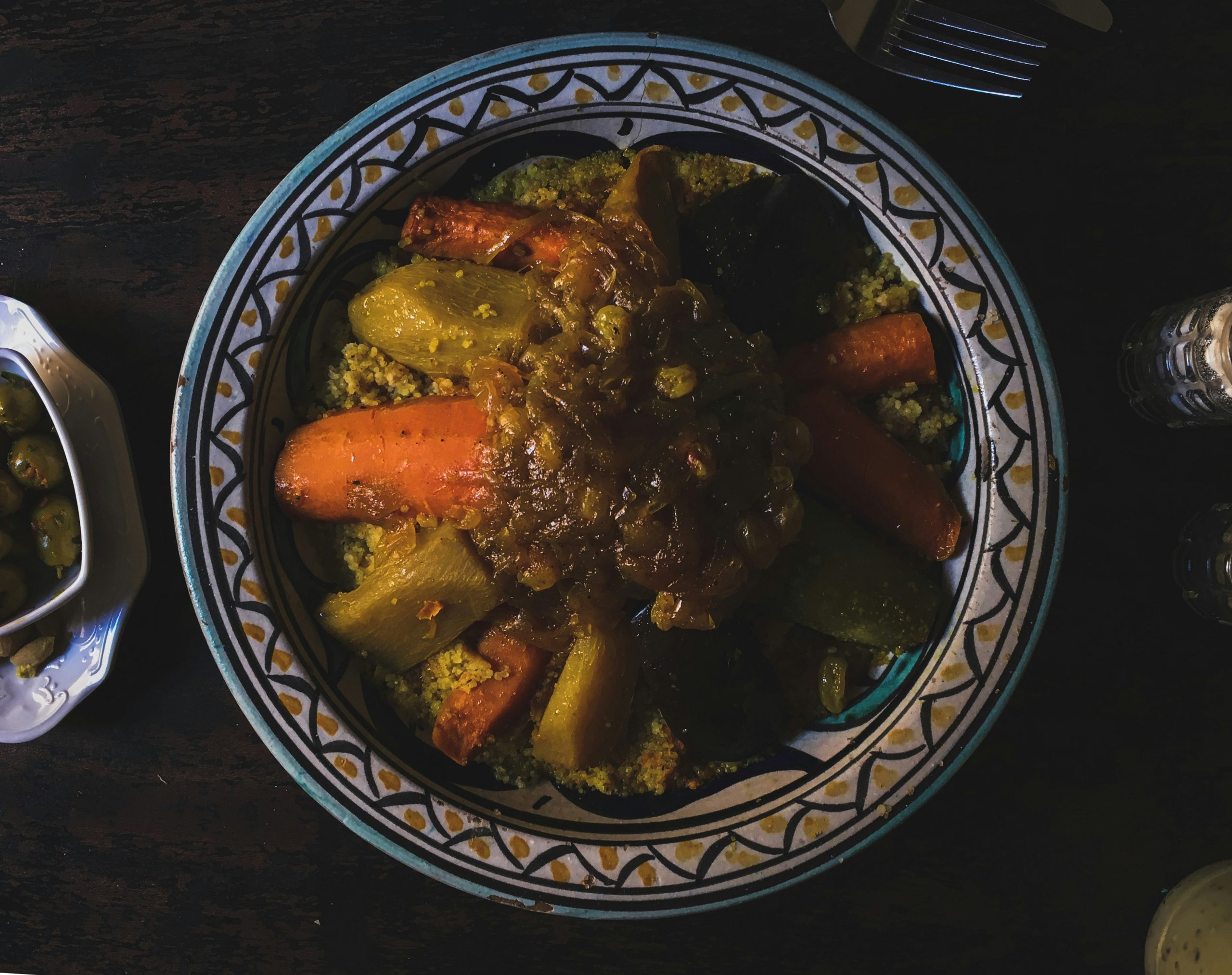
A tagine is both a pot and the dish cooked inside it. The pot is the shallow clay base with a tall conical lid that has defined North African cooking for centuries; the dish is a slow braise in which meat, spices, and aromatics cook gently in their own steam. This version, chicken with preserved lemons and green olives, is one of the most loved tagines in Morocco. The chicken turns tender enough to pull apart with bread, the sauce thickens around soft onions and saffron, and the preserved lemon threads the whole pot with a salty, floral tang that nothing else replicates.
Preserved Lemons, the Defining Ingredient
Preserved lemons are whole lemons packed in salt and left to cure for weeks until the rind softens and the bitterness fades. In Moroccan kitchens they are a staple, and in this dish they are non-negotiable. Fresh lemon juice tastes sharp and one-dimensional by comparison; the preserved version delivers a rounded, fermented citrus depth. Most of the flavor lives in the rind. Rinse the lemon, scrape away the pulp if you find it too intense, quarter the rind, and add it during the braise. Jars of preserved lemons are sold in Middle Eastern groceries and well-stocked supermarkets, and making your own requires nothing more than lemons, salt, and a month of patience.
The Spice Foundation
This tagine leans on ginger, turmeric, and saffron rather than the heavier cinnamon and cumin of other Moroccan braises. Ground ginger gives warmth, turmeric supplies an earthy base and a golden color, and crumbled saffron threads perfume the sauce. Bloom the saffron in a spoonful of warm water before it goes into the pot to draw out its color and aroma. Moroccan cooks often rub the chicken with part of the spice mixture and let it sit while the onions cook, which seasons the meat beneath the skin instead of only the sauce.
Onions Become the Sauce
There is no flour and no cream in a tagine. The body of the sauce comes from two large onions, finely chopped and cooked down slowly until they collapse into the liquid. By the end of the braise they have nearly dissolved, leaving a sauce with real texture. Chop them finer than feels natural; large pieces stay distinct instead of melting. Garlic and fresh cilantro join later, and a final scatter of chopped cilantro just before serving keeps the herb flavor bright.
Cooking Without a Clay Tagine
The conical lid of a traditional tagine condenses steam and drips it back over the food, which lets the dish cook with very little added liquid. A heavy Dutch oven with a tight lid reproduces the effect well. Keep the heat low, resist lifting the lid, and let the chicken braise for a full hour. If you do own a clay tagine, use a heat diffuser over a gas or electric burner, because direct high heat can crack unglazed clay. Either way, the goal is a lazy simmer, never a boil.
Choosing and Preparing the Chicken
A whole chicken cut into eight pieces gives the best result, because bone-in pieces stay juicy through the long braise and the bones enrich the sauce. Thighs and drumsticks alone work well if you prefer dark meat. Brown the pieces in olive oil before the braise begins; the browned skin adds a roasted depth that steamed chicken never develops. Skin-on pieces also protect the meat from drying out during the hour of cooking.
Olives and Final Assembly
Green olives go in during the last fifteen minutes so they warm through and season the sauce without turning mushy. Moroccan cooks favor cracked green olives with some bitterness left in them, but any firm, pitted green olive works. Taste before adding salt at the end. Between the preserved lemon and the olives, the dish usually needs far less than expected.
What to Serve With It
In Morocco, tagine is eaten with khobz, a round crusty bread used to scoop up chicken and sauce by hand. Contrary to what many restaurant menus suggest, couscous is traditionally its own dish rather than a bed for tagine, though the pairing has become common and no one will object. A simple salad of tomatoes and cucumber, or cooked carrots dressed with cumin and lemon, rounds out the table. Mint tea afterward is customary.
Common Questions
Can I substitute regular lemon for preserved lemon?
In a pinch, use strips of lemon zest simmered in the sauce plus a squeeze of juice at the end. The flavor will be brighter and less complex, but the dish still works.
Does it reheat well?
Very well. Refrigerate for up to three days and reheat gently on the stove with a splash of water. The flavors settle and deepen overnight.
Is this dish spicy?
No. It is warm and aromatic rather than hot. If you want heat, serve harissa on the side so each person adjusts their own plate.
The tagine is both the name of the dish and the iconic conical clay pot it is cooked in. This particular tagine, featuring chicken, preserved lemons, and olives, is perhaps the most famous Moroccan export. The magic lies in the preserved lemons—cured in salt and their own juices for months, they impart a deeply savory, floral citrus note that fresh lemons simply cannot replicate. Slow cooking allows the ginger, turmeric, and saffron to permeate the chicken, creating a rich, aromatic sauce meant to be scooped up with fresh, crusty bread.