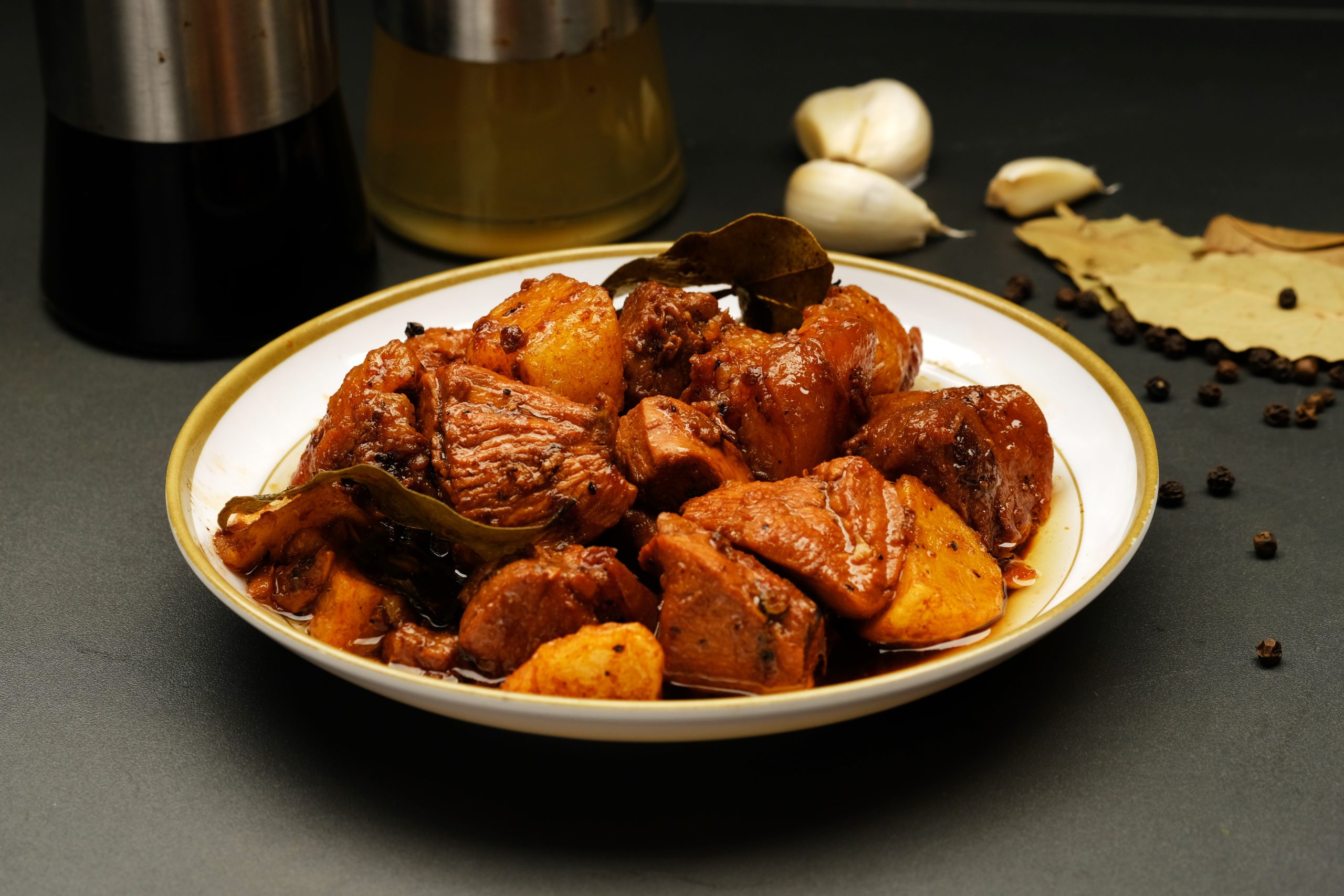
Ask a dozen Filipinos how to make adobo and you will get a dozen answers delivered with total confidence. That is the nature of the dish most often called the unofficial national dish of the Philippines: chicken braised in vinegar, soy sauce, garlic, bay leaves, and black peppercorns until the meat is spoon-tender and the sauce turns dark and glossy. The ingredient list fits on a sticky note, the technique forgives almost every mistake, and the result tastes far bigger than the sum of its parts. It is the first dish many Filipino cooks learn and the one they return to for life.
Older Than Its Name
The technique behind adobo existed in the Philippine islands long before Spanish colonization. Cooking meat in vinegar and salt preserved it in a tropical climate with no refrigeration, and communities across the archipelago developed their own versions. When Spanish colonizers encountered the dish, they named it after their own word adobar, meaning to marinate, and the name stuck while the dish stayed Filipino. Soy sauce entered later through Chinese trade, giving the modern version its color and salt. The vinegar-first logic remains: adobo keeps remarkably well at room temperature by the standards of cooked food, which made it a traveler’s meal for generations.
The Vinegar Question
Filipino cane vinegar is the traditional acid, milder and rounder than Western white vinegar. It is sold in Asian groceries under brands like Datu Puti. Plain white vinegar substitutes at the same volume, and rice vinegar or apple cider vinegar produce gentler results. One rule matters more than the choice of vinegar: after the vinegar goes into the pot, let it come to a boil before stirring. Filipino cooks hold that stirring too early leaves a raw, harsh vinegar taste, and letting it boil undisturbed first cooks off the sharpest notes. The finished sauce tastes tangy, not sour.
A Whole Head of Garlic Is Correct
The recipe calls for a full head of garlic, crushed, and that is not a typo. Long simmering transforms garlic from pungent to sweet and mellow, and the softened cloves nearly dissolve into the sauce. Some cooks fry half the garlic until golden and save it to scatter on top at serving time, adding a toasty layer over the braised depth. Whole black peppercorns, left intact rather than ground, release slow heat through the simmer and are pleasant to bite. Three bay leaves perfume the pot; dried ones from the Philippines or the Mediterranean both work.
Braising and Reducing
Chicken thighs and drumsticks handle the forty-minute simmer far better than breast meat, staying juicy while soaking in the sauce. Brown the pieces in oil first for extra depth, then add the liquids and aromatics and simmer, partially covered. The last stage is reduction: uncover the pot and let the sauce boil down until it thickens enough to coat the chicken. A spoonful of brown sugar balances the salt and acid without making the dish sweet. Some households take it further and fry the braised pieces until the skin crisps, then pour the reduced sauce back over, a version worth trying once you know the base recipe.
Regional Variations Worth Knowing
Adobo is less a recipe than a family of recipes. Adobong puti, the white adobo of older tradition, skips soy sauce entirely and leans on vinegar and salt. In parts of southern Luzon, coconut milk enriches the pot in adobo sa gata. Pork adobo, often using belly, is as common as chicken, and mixing the two meats in one pot is standard practice. Adobong pusit uses squid, adobong kangkong applies the treatment to water spinach. Once you understand the vinegar-soy-garlic framework, the variations become a lifetime of cooking.
Serving and Storing
Adobo demands plain white rice, full stop. The sauce is seasoned to flavor the rice, and generous spooning is expected. A fried egg on the side turns leftovers into a complete breakfast, and day-old adobo chopped and fried with garlic rice becomes adobo fried rice, which some people prefer to the original dish. Refrigerated, adobo keeps for four to five days and tastes better on day two as the meat absorbs the sauce. It freezes cleanly for two months.
Common Questions
My sauce tastes too salty. What went wrong?
Reduction concentrates the soy sauce, so a sauce that tastes right before reducing ends up salty after. Balance with a splash of water and a little extra sugar, and next time reduce less or use a low-sodium soy sauce.
Can I make adobo in a slow cooker?
Yes. Cook on low for six hours, then reduce the sauce in a pan on the stove at the end, since a slow cooker cannot concentrate liquids.
Do I have to marinate the chicken first?
No. Marinating for an hour deepens the flavor slightly, but the long braise seasons the meat thoroughly on its own, which is why this recipe skips the step.
Before refrigeration, Filipinos preserved their meats by cooking them in vinegar and salt. When Chinese traders introduced soy sauce, it replaced the salt, creating the Adobo we know today. The word \'adobo\' comes from the Spanish word for marinade, given by colonizers who observed this indigenous cooking method. Despite the Spanish name, the dish is entirely Filipino. The magic of Adobo lies in the balance of salty soy sauce, sharp cane vinegar, pungent garlic, earthy bay leaves, and the subtle heat of whole black peppercorns.