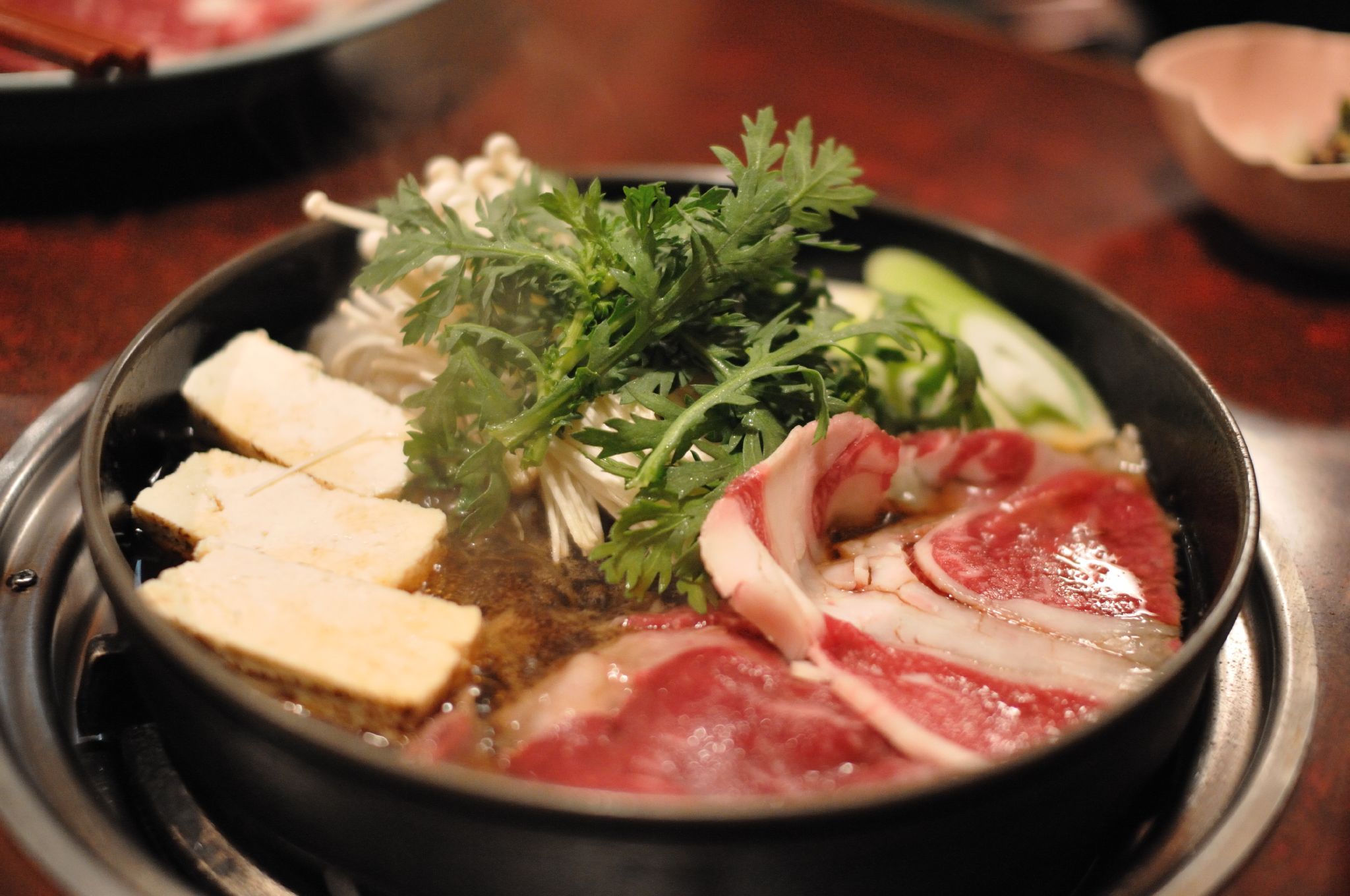
Sukiyaki is dinner cooked in the middle of the table: paper-thin slices of well-marbled beef, tofu, mushrooms, leeks, and greens simmered in a sweet-savory soy broth in a shallow iron pot, lifted out piece by piece and dipped in a bowl of beaten raw egg. Everyone cooks, everyone reaches in, and the sauce grows richer as the meal goes on. It is winter food and celebration food, and the cooking is so simple that the whole thing runs on conversation instead of technique.
Beef and the Meiji Era
Sukiyaki is barely older than modern Japan. Meat eating had been restricted for roughly twelve centuries under Buddhist influence, going back to an imperial prohibition in the seventh century, and beef was not part of ordinary Japanese cooking. That changed with the Meiji Restoration: the ban was formally lifted in 1871, and Emperor Meiji ate beef publicly in 1872, an act reported in the newspapers that gave the country permission to follow. Beef hot pot restaurants multiplied in Tokyo within a few years, and eating one became a marker of being modern, captured in the period saying that a man who does not eat beef pot does not advance civilization.
Gyunabe and Sukiyaki
The dish carried two names. In the Kanto region around Tokyo it was gyunabe, beef pot, which spread from Yokohama where foreign residents lived, and early versions used miso-heavy broths to mask the unfamiliar smell of beef. In Kansai, around Osaka, the same idea was called sukiyaki. When the Great Kanto Earthquake of 1923 destroyed most of Tokyo’s gyunabe restaurants, Kansai sukiyaki establishments expanded east, and since the two dishes were so similar, the Kansai name took over nationally. The styles still differ, and both are considered correct by their respective regions.
Kanto Style and Kansai Style
Kanto style uses warishita, a sauce mixed in advance from soy sauce, mirin, sake, sugar, and sometimes dashi, poured into the pot so meat and vegetables simmer together in it. Kansai style skips the premixed sauce: the beef is seared first in the hot pot, seasoned directly with sugar and soy sauce, and the vegetables follow, with sake or water added as the liquid reduces. Kansai cooks consider theirs closer to the original form. The Kanto method is more forgiving for a first attempt, since the seasoning is already balanced before anything hits the pot.
What Goes in the Pot
The beef is the centerpiece and it must be sliced paper-thin, which is how sukiyaki-cut beef is sold at Japanese and Korean markets. Well-marbled cuts such as ribeye or chuck are preferred, since the fat melts into the sauce. Around it go yaki-dofu, the grilled firm tofu that holds its shape, shirataki noodles, negi or leeks cut on a long diagonal, shiitake and enoki mushrooms, napa cabbage, and shungiku, the chrysanthemum greens whose slight bitterness cuts the sweetness. Arrange everything on a platter before you start, since the cooking happens in front of everyone.
The Raw Egg
Each person gets a small bowl with a raw egg beaten in it, and every piece lifted from the pot is dipped before eating. The custom has a practical explanation from the early days, when the cold egg was said to temper the smell of beef and stop diners burning their mouths on food straight from a boiling pot. It survived because it works: the egg cools each bite and coats it in a mild richness that softens the salty-sweet sauce. Use very fresh eggs, and pasteurized ones if raw egg is a concern where you live.
Eating Sukiyaki
Set the pot on a portable burner in the middle of the table and cook in waves rather than filling it all at once, adding beef and sauce as things are eaten so nothing overcooks and the broth concentrates through the meal. Steamed rice on the side is essential, and many families finish by cooking udon noodles or rice in the remaining sauce, which by then is intensely flavored. Sukiyaki is winter and special-occasion food in Japan, eaten at year-end gatherings and family celebrations, and its appeal is as much the shared pot as the beef.
Common Questions
What beef should I buy?
Well-marbled ribeye or chuck sliced paper-thin. Japanese and Korean markets sell it labeled for sukiyaki or shabu-shabu. Otherwise, freeze a piece for about an hour until firm and slice it as thinly as you can against the grain with a sharp knife.
Do I have to use raw egg?
It is traditional and it genuinely improves each bite, cooling and enriching the salty-sweet beef. Skip it if raw egg concerns you, or use pasteurized eggs. The sukiyaki still tastes good without it, just saltier and more direct.
How is sukiyaki different from shabu-shabu?
Sukiyaki simmers thin beef and vegetables in a sweet soy sauce broth. Shabu-shabu swishes the beef briefly through a plain kombu dashi and serves it with sesame or ponzu dipping sauces. One is sweet and rich, the other clean and light.
Sukiyaki is a Japanese beef hot pot that rose with the Meiji era, when the long prohibition on eating meat was lifted in 1871 and Emperor Meiji publicly ate beef in 1872.