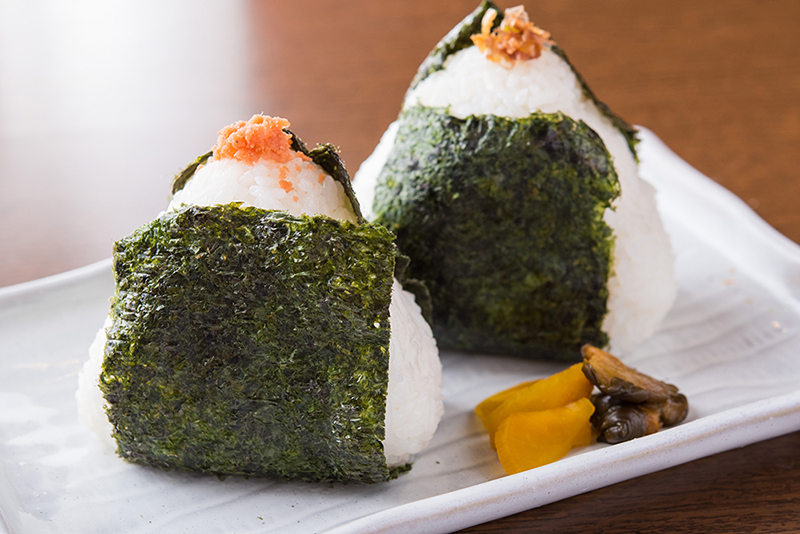
Onigiri are rice balls shaped by hand, usually into neat triangles, with something salty tucked in the middle and a strip of nori wrapped around the base. They are Japan’s lunchbox staple, picnic food, convenience store bestseller, and the thing a parent makes when a child needs feeding quickly. Nothing about them is complicated, but the details matter: the right rice, warm not hot, wet salted hands, and a filling assertive enough to season the plain rice around it.
Rice You Can Carry
Onigiri, also known as omusubi or nigirimeshi, are among the oldest forms of portable food in Japan, made long before the nori wrapper became standard. That wrapper is comparatively recent: sheet nori was developed around 1750, and nori-wrapped onigiri followed shortly after. The salt on the outside and the salty fillings inside were originally practical, helping the rice keep longer in a warm climate, which is why the traditional fillings are preserved foods such as pickled plum, salted salmon, and simmered kelp. Today they are sold everywhere in Japan, with convenience store versions using ingenious packaging that keeps the nori separate until the moment you open it.
The Rice
Everything depends on using Japanese short-grain rice, sometimes labeled sushi rice. Its high starch content is what makes the grains cling together when pressed, and long-grain varieties such as basmati or jasmine simply will not hold a shape. Rinse the rice several times until the water runs nearly clear, cook it, then let it rest covered so the moisture distributes evenly. Work with it warm rather than hot or cold: hot rice burns your hands and steams inside the wrapper, while refrigerated rice turns hard and refuses to stick. Unlike sushi rice, onigiri rice gets no vinegar.
Wet Hands, Salted
The technique that makes shaping possible is a bowl of water and a small dish of salt beside you. Wet both palms, rub a pinch of salt between them, and only then pick up the rice. The water stops the grains sticking to your skin, and the salt seasons the outside of the finished onigiri, which is why plain rice tastes right in a well-made one. Re-wet and re-salt your hands between each ball. Working without this step is the single most common reason a first attempt ends with rice stuck to everything except itself.
The Fillings
The filling is small and strongly flavored, since a spoonful has to season a whole handful of rice. The classics are salted grilled salmon flaked into pieces, umeboshi (the intensely sour pickled plum), katsuobushi mixed with soy sauce, tarako or mentaiko cod roe, and simmered kombu. The modern favorite across Japan is canned tuna mixed with Japanese mayonnaise, which is unapologetically popular. Place a hollow in the center of the rice, add the filling, then close the rice over it so nothing shows. Mixed onigiri, with seasonings stirred through the rice instead, are equally traditional.
Shaping
The triangle is the familiar shape, formed by cupping one hand into a V and turning the ball a third of a turn between presses, squeezing firmly but not hard. The goal is a shape that holds together in a bag without becoming a compressed brick, so keep some air between the grains. Cylinders and simple rounds are equally correct and easier for beginners. Plastic onigiri molds exist and produce tidy results, and a sheet of plastic wrap in your palm works as a substitute if the rice is too warm to handle comfortably.
Serving and Keeping
Wrap the nori around the base just before eating so it stays crisp, since nori applied early goes soft against the damp rice. If you are packing them for later, carry the nori separately in a small bag. Onigiri are best the day they are made and keep best at room temperature rather than refrigerated, because cold turns the rice hard and chalky. They pack into any lunchbox alongside pickles and a piece of fruit, and grilled onigiri, brushed with soy sauce and seared until crusty, make a fine use for any that go slightly stale.
Common Questions
Can I use any rice?
No. Japanese short-grain rice is required, since its starch makes the grains stick together when pressed. Long-grain rice such as basmati or jasmine falls apart. Short-grain rice sold as sushi rice works perfectly, without adding any vinegar.
Why does the rice stick to my hands?
Your hands were dry. Wet both palms with water and rub salt between them before touching the rice, repeating between each onigiri. A sheet of plastic wrap in your palm is a good alternative, especially when the rice is still very warm.
How long do onigiri keep?
They are at their best the same day, kept at room temperature. Refrigeration hardens the rice, so avoid it if you can. Salty preserved fillings such as umeboshi or salted salmon hold up better than mayonnaise-based ones over a long day.
Onigiri, also called omusubi or nigirimeshi, are Japanese rice balls of white rice shaped into triangles or cylinders and wrapped in nori; nori-wrapped onigiri appeared after sheet nori was developed around 1750.