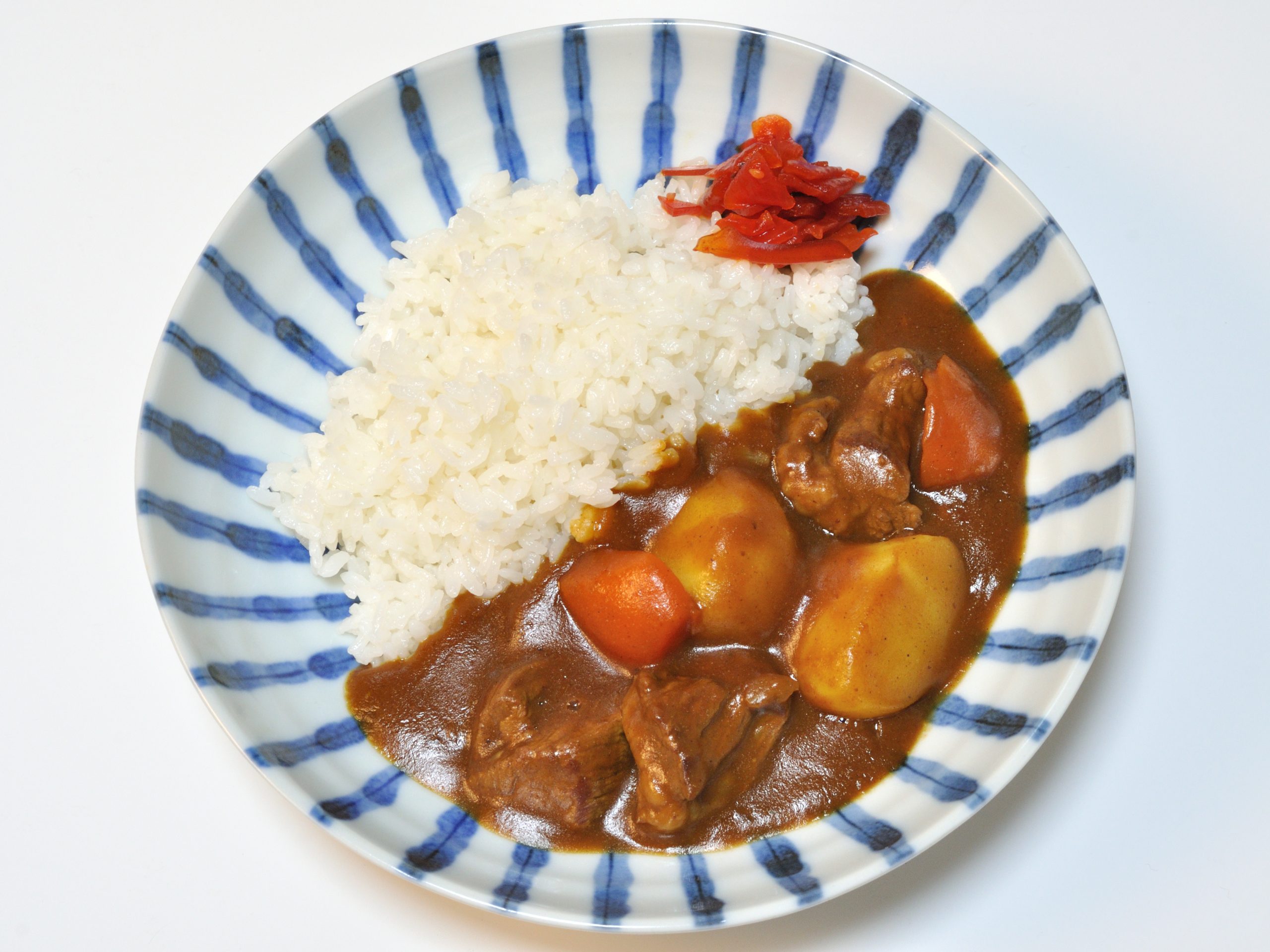
Japanese curry is thick, glossy, faintly sweet, and comforting in a way that has nothing to do with heat. Tender beef, sweet slow-cooked onion, carrot, and potato sit in a smooth brown sauce ladled over a mound of short-grain rice, with a bright red pickle on the side. It is one of the most eaten dishes in Japan, standard in school lunches, home kitchens, and chain restaurants alike, and it is remarkably forgiving to cook. Most Japanese households make it from roux blocks, and there is no shame in that.
Indian Dish, British Route
Curry reached Japan not from India directly but through Britain. When Japan abandoned its long isolation in the late 1860s and opened to Western contact, the word curry entered the language as karē, and by the 1870s the dish was being served in Japan; the oldest Japanese mention of rice curry appears in a cookbook from 1872. What arrived was the British adaptation of Indian curry, thickened with flour and considerably milder and sweeter, and it was taken up by the Imperial Japanese Army and Navy. For that reason curry is classified in Japan as yoshoku, Western-style food, rather than traditional washoku.
The Roux Blocks
Japanese curry is built on solid blocks of roux sold in a flat box, containing flour, fat, curry spices, and seasonings pressed together. Nearly every household in Japan uses them, so this is the authentic method rather than a shortcut. They come in mild, medium, and hot grades, and mixing two brands or two heat levels is a common way of building a more interesting sauce. Add them off the heat, breaking the blocks up and stirring until completely dissolved, then return the pot to a gentle simmer. Dropping them into a boiling pot gives lumps and risks scorching the starch.
The Onions
If one step separates a good pot of Japanese curry from a flat one, it is the onions. Cook them slowly in oil well past the translucent stage, until they are soft, deeply golden, and sweet, which takes considerably longer than most recipes admit. That concentrated sweetness is the backbone of the sauce and the reason restaurant curry tastes richer than a rushed weeknight version. Slice them thick so they hold some shape, and be patient with the heat, since browning them hard and fast makes them bitter rather than sweet. Many cooks caramelize a large batch in advance and freeze it.
Meat and Vegetables
Beef, pork, and chicken all work, with cubed chuck or shoulder giving the most tender result after a long simmer. Brown the meat first for color and depth, then set it aside while the onions cook. The vegetable trio of onion, carrot, and potato is close to fixed in Japan, cut into generous chunks that stay identifiable in the finished sauce. Add the carrot and potato after the meat has had time to tenderize, since they need far less cooking and turn to mush if they go in at the start. A floury potato thickens the sauce slightly as it cooks.
Household Secrets
Almost every family in Japan has an addition they swear by, stirred in to round out the flavor of the packaged roux. Grated apple and honey add fruity sweetness, soy sauce and Worcestershire sauce deepen the savory side, and a square of dark chocolate or a spoonful of instant coffee gives body and a darker color. Ketchup, milk, and yogurt all appear too. Add these in small amounts and taste as you go, since the roux is already seasoned. The finished sauce should coat a spoon thickly without turning gluey.
Serving Japanese Curry
Serve the curry beside or over a mound of short-grain rice on a shallow plate, eaten with a spoon rather than chopsticks, with fukujinzuke, the crunchy red pickled vegetables, or rakkyo pickled shallots alongside. Adding a fried pork cutlet turns it into katsu curry, one of the most popular versions of all. Beyond rice, the same sauce goes over thick udon noodles or into curry bread. Japanese curry famously tastes better the next day once the flavors settle, so a large pot is standard practice and the leftovers are the point.
Common Questions
Is using roux blocks authentic?
Yes. Boxed roux is what nearly every household in Japan uses, and the major brands are pantry staples there. Making a roux from scratch with flour, butter, and curry powder is possible, but the packaged version is the standard home method.
How spicy is Japanese curry?
Mild by default and often slightly sweet, which is why children eat it constantly in Japan. Roux boxes are graded from mild to hot, so choose accordingly, and adding a hot block to a mild batch lets you adjust the heat precisely.
Why is my sauce lumpy?
The roux went into liquid that was too hot or was not stirred enough. Take the pot off the heat, break the blocks into pieces, and stir until each one has completely dissolved before returning the pot to a gentle simmer.
Japanese curry, karē, is classified as yoshoku, Western-style food; the word entered Japanese in the late 1860s and curry began to be served in Japan by the 1870s, with a printed recipe appearing in 1872.