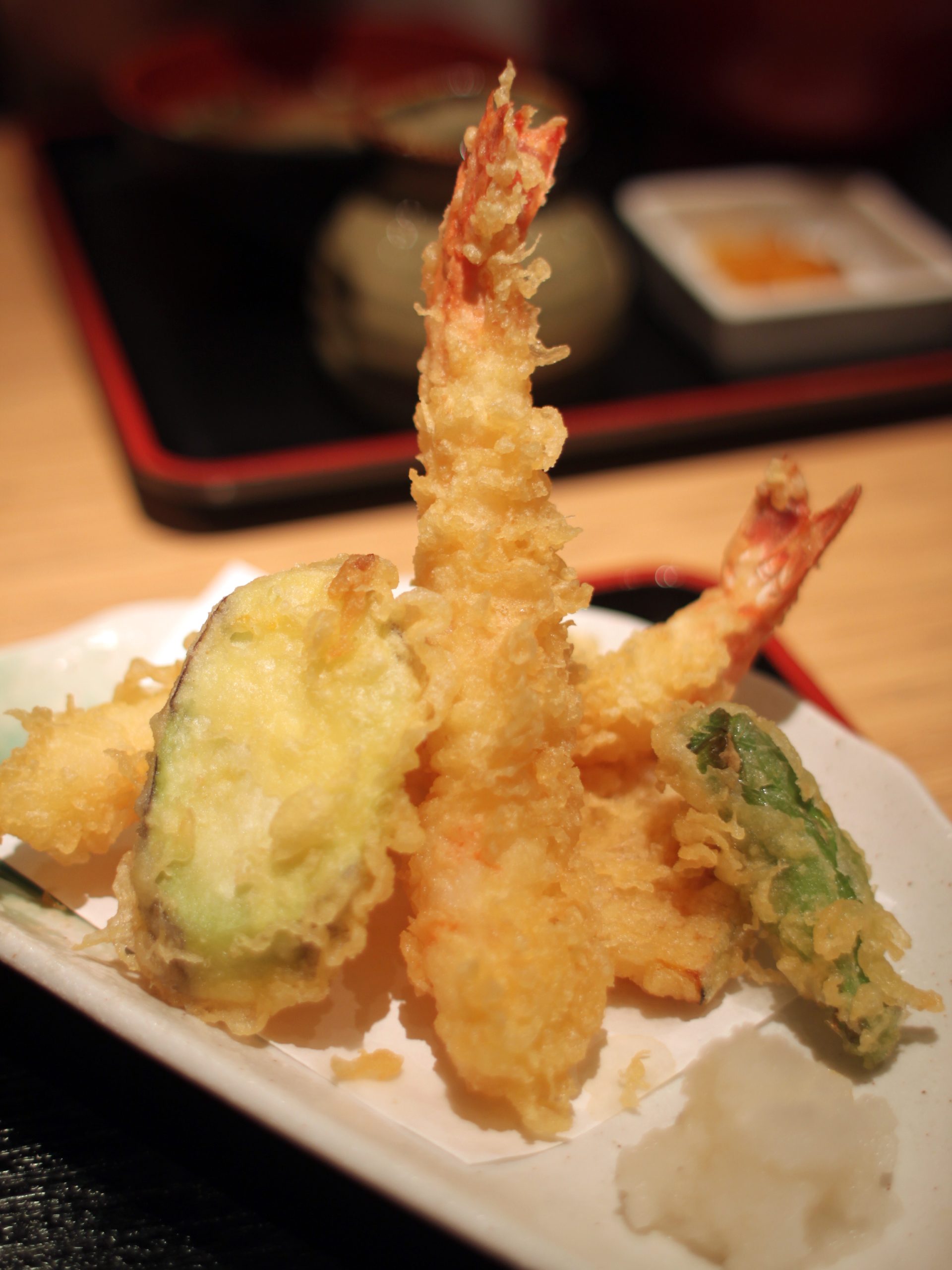
Tempura is fried food raised to a discipline: shrimp and vegetables dipped in an ice-cold, barely mixed batter and dropped into hot oil, where the coating puffs into something lacy, pale gold, and almost weightless. Done properly it is not greasy at all, and the vegetable inside stays sweet and just-cooked. The ingredient list is short, which means the whole thing rests on temperature and restraint. Understand those two ideas and home tempura stops being a disappointment.
A Portuguese Arrival
Tempura is one of Japan’s most recognizable dishes and it came from abroad. In the sixteenth century, Portuguese Jesuits arriving at Nagasaki through the Nanban trade brought the Western technique of coating food in flour and frying it in deep oil, something Japanese kitchens had not done before. The name is debated: one explanation traces it to the Latin tempora, the periods when observant Catholics abstained from meat and ate fish instead, while another points to the Portuguese tempero, meaning seasoning. Oil was expensive, so tempura began as a luxury, became Edo street food as oil production grew, and gained its own specialist restaurants in the Meiji era.
Everything Cold
The first rule of tempura batter is temperature. Use genuinely ice-cold water, chill the flour, and keep the mixing bowl cold, sitting it in a larger bowl of ice if the kitchen is warm. The shock of very cold batter hitting very hot oil causes the water to flash into steam and blow the coating open into its characteristic light, porous crust. Cold also slows gluten development in the flour. Mix the batter immediately before frying rather than in advance, and if you are frying several batches, make the batter in two lots so the second stays cold.
Barely Mixing
The second rule contradicts every instinct: do not mix the batter properly. Whisk an egg yolk into the ice water, add the flour, and stir about ten strokes with chopsticks, stopping while dry patches and lumps remain visible. Overmixing develops gluten, and gluten produces a thick, chewy, bread-like coating instead of a delicate one. Low-protein cake flour helps for the same reason, and some cooks replace a portion with cornstarch or potato starch. The batter stays thin enough to drip freely off a piece of shrimp, leaving only a translucent film behind.
Choosing the Ingredients
Shrimp is the classic centerpiece, peeled with the tail left on and scored with small cuts along the belly so it fries straight instead of curling. Around it go vegetables chosen for how they behave in oil: sweet potato and kabocha squash cut thin, eggplant, shiitake mushrooms, green beans, lotus root, shishito peppers, and shiso leaves, which fry into fragrant green wafers. Cut everything thin and evenly, and dry each piece thoroughly, since surface water makes the batter slide off and the oil spit. Fry the vegetables first and the shrimp last so their flavors stay clean.
Frying
Oil temperature decides everything. Test it by dropping in a little batter: it should sink slightly, rise straight back up, and sizzle steadily. Too cool and the coating drinks oil; too hot and it browns before the inside cooks. Fry a few pieces at a time, because a crowded pot drops the temperature sharply, and skim the loose bits of batter between batches so they do not burn and darken the oil. Listen to the sizzle, which quietens as the moisture cooks off, and lift each piece out while it is still pale gold rather than deeply browned.
Serving Tempura
Drain on a rack, never on a flat plate, and serve immediately, since tempura is at its best within a minute or two of leaving the oil. The standard accompaniment is tentsuyu, a warm dipping sauce of dashi, soy sauce, and mirin, with a mound of grated daikon and sometimes grated ginger stirred in at the table. Some shops offer flaky sea salt or matcha salt instead, which suits vegetables particularly well. Beyond the plated version, tempura tops rice as tendon and appears in hot and cold soba and udon, both of which are Edo-era ideas that remain popular.
Common Questions
Why is my tempura heavy and greasy?
The batter was overmixed or too warm, or the oil was not hot enough. Use ice water and chilled flour, stir only about ten strokes leaving lumps, and fry in small batches so the oil temperature holds steady throughout.
What oil should I use?
A neutral oil with a high smoke point, such as vegetable or canola. Traditional shops often add a proportion of sesame oil for aroma, typically a light untoasted one. Keep the oil clean by skimming stray batter between batches.
Can I make tempura ahead?
Not really. Tempura softens within minutes, which is why restaurants serve it piece by piece straight from the pot. Prepare the ingredients and sauce in advance, then mix the batter and fry only when everyone is seated and ready to eat.
Tempura originated in the 16th century when Portuguese Jesuits brought the technique of coating food in flour and deep-frying to Japan through the Nanban trade at Nagasaki.