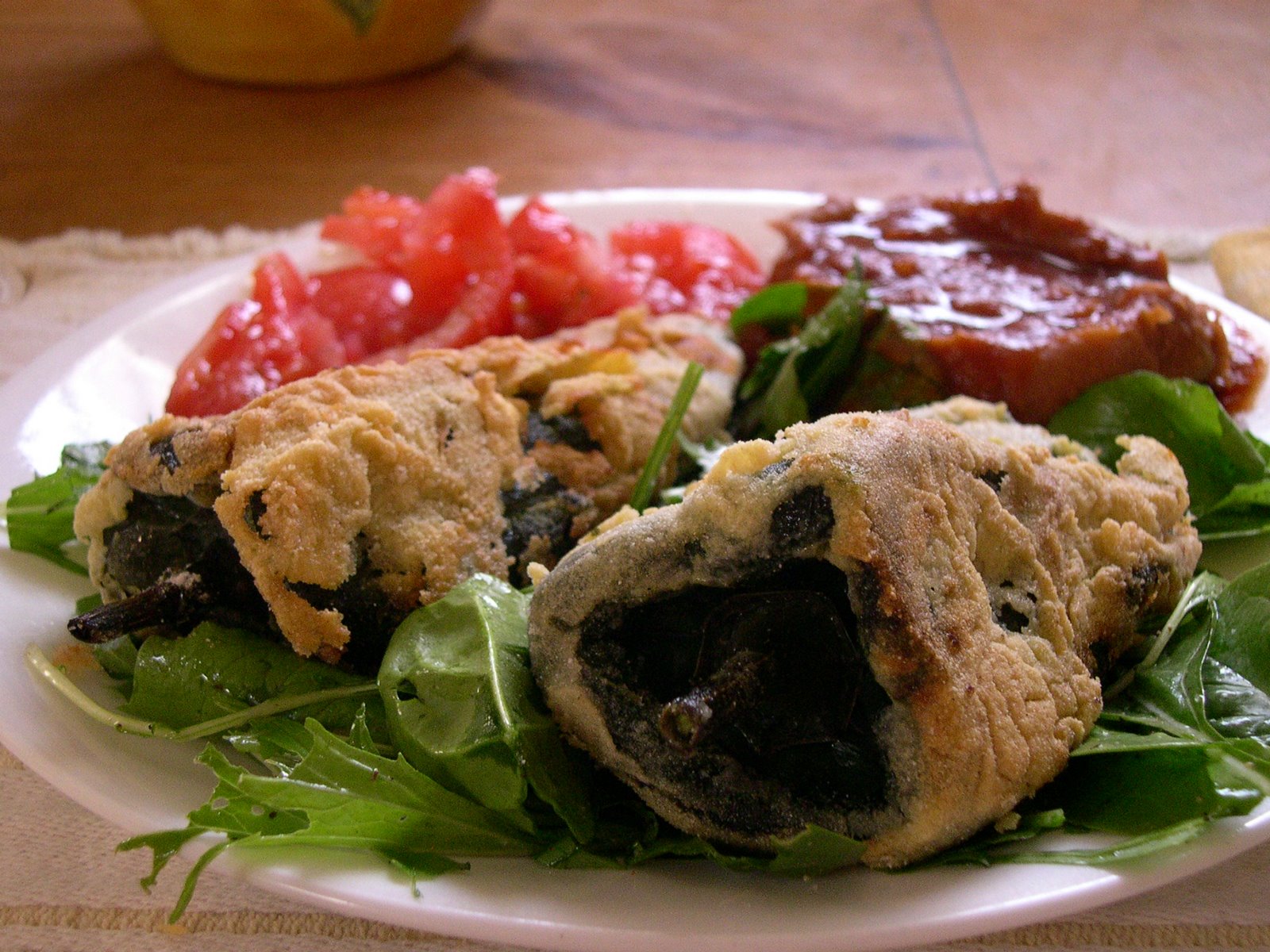
Chiles rellenos are one of the great dishes of Mexican home cooking: roasted poblano peppers stuffed with molten cheese, wrapped in a cloud-light egg batter, fried until golden, and served in a warm tomato sauce. Cut one open and the cheese pulls in strands from inside the tender, smoky chile. It takes a few careful steps, roasting, peeling, stuffing, and the airy batter, but none is difficult, and the result is a comforting, satisfying plate worth every minute of the effort.
A Dish From Puebla
The chile relleno, literally stuffed chile, originated in the city of Puebla, a region at the heart of Mexican cuisine. It was already described by the mid-nineteenth century as a green chile stuffed with meat and coated in egg, and it remains one of the country’s most traditional dishes. The classic pepper is Puebla’s own poblano, mild and full-flavored, and the classic fillings are melting cheese or picadillo, seasoned ground meat with fruit and nuts. Covered in a light egg batter and fried, then served in tomato sauce, chiles rellenos are a staple of Mexican tables and one of the most recognized dishes on menus abroad.
Roasting the Poblanos
Everything starts with roasting the poblanos, which gives them their smoky flavor and lets you remove the tough skin. Char the peppers directly over a gas flame, under a broiler, or on a grill, turning them until the skin is blistered and blackened all over. Then put them in a bag or covered bowl to steam for ten minutes; this loosens the skin so it slips off easily under your fingers. Peel away the charred skin, but keep the stem intact for a handsome presentation. Do not rinse them under running water if you can avoid it, since that washes away flavor. Handle the softened chiles gently so they do not tear.
Stuffing the Chiles
Once peeled, cut a single lengthwise slit in each poblano and carefully scrape out the seeds and veins, keeping the chile whole. The most popular filling is a good melting cheese such as Oaxaca, which pulls into strings, or Monterey Jack; picadillo, a savory mix of ground meat, raisins, and nuts, is the other classic. Stuff each chile generously but not so full that it cannot close, and press the opening shut, using a toothpick to hold it if needed. The chile stays plump but sealed, so the cheese stays inside during frying. A stretchy, well-melting cheese is what gives that satisfying molten pull when you cut in.
The Egg Batter
The signature coating is a fluffy egg batter that puffs up light and golden, and the technique is what makes it work. Separate the eggs and beat the whites to stiff peaks, then gently fold in the yolks, keeping as much air as possible. This airy batter, rather than a dense flour coating, is what gives chiles rellenos their characteristic soufflé-like puff. Dredge each stuffed chile in flour first, which helps the batter cling, then dip it into the beaten egg to coat it fully. Work in batches and coat each chile just before it goes into the oil, since the beaten whites deflate as they sit. A gentle hand keeps the batter cloud-like.
Frying and the Sauce
Fry the battered chiles in hot oil, spooning oil over the tops and turning them so they puff and turn evenly golden on all sides; a moderately hot oil cooks the batter through without burning it. Drain them on paper. The traditional sauce is a simple caldillo, tomatoes blended with onion and garlic and simmered with a little broth until lightly thickened and savory. Serve the chiles bathed in the warm sauce, or set them in a pool of it, so the smoky, cheesy chile meets the bright tomato. Some cooks briefly simmer the fried chiles in the sauce to soak up flavor, though this softens the crisp batter, so serve promptly.
Serving Chiles Rellenos
Serve chiles rellenos hot, one or two per plate, in their tomato sauce, with Mexican rice and warm tortillas or refried beans alongside to round out the meal. They are best straight from the pan while the batter is light and the cheese molten, since they soften as they sit. This is a dish that rewards a little organization: roast and stuff the chiles ahead, make the sauce ahead, and batter and fry them just before serving. A sprinkle of crumbled queso fresco or a dollop of crema on top is a nice finishing touch that suits the smoky, savory chile.
Common Questions
Which peppers should I use?
Poblanos are traditional and ideal: large, mild, and full-flavored with sturdy walls that hold a filling. Anaheim or New Mexico chiles also work. Poblano heat is gentle, so most people find the dish mild, with the roasting adding smoky depth rather than fire.
Why did my batter fall off?
Usually the chiles were wet, not floured first, or the whites were underbeaten or sat too long. Pat the chiles dry, dredge in flour so the batter grips, beat the whites to stiff peaks, and fry each chile right after coating it.
Can I make them ahead?
Roast, peel, and stuff the chiles and make the sauce ahead, then batter and fry just before serving, since the crisp coating softens as it sits. Leftover fried chiles reheat in the oven, though the batter loses its puff, so they are best fresh.
Chiles rellenos, stuffed chiles, originated in Puebla, Mexico, and were described by the mid-19th century: a roasted poblano stuffed with cheese or picadillo, coated in egg batter, and fried.