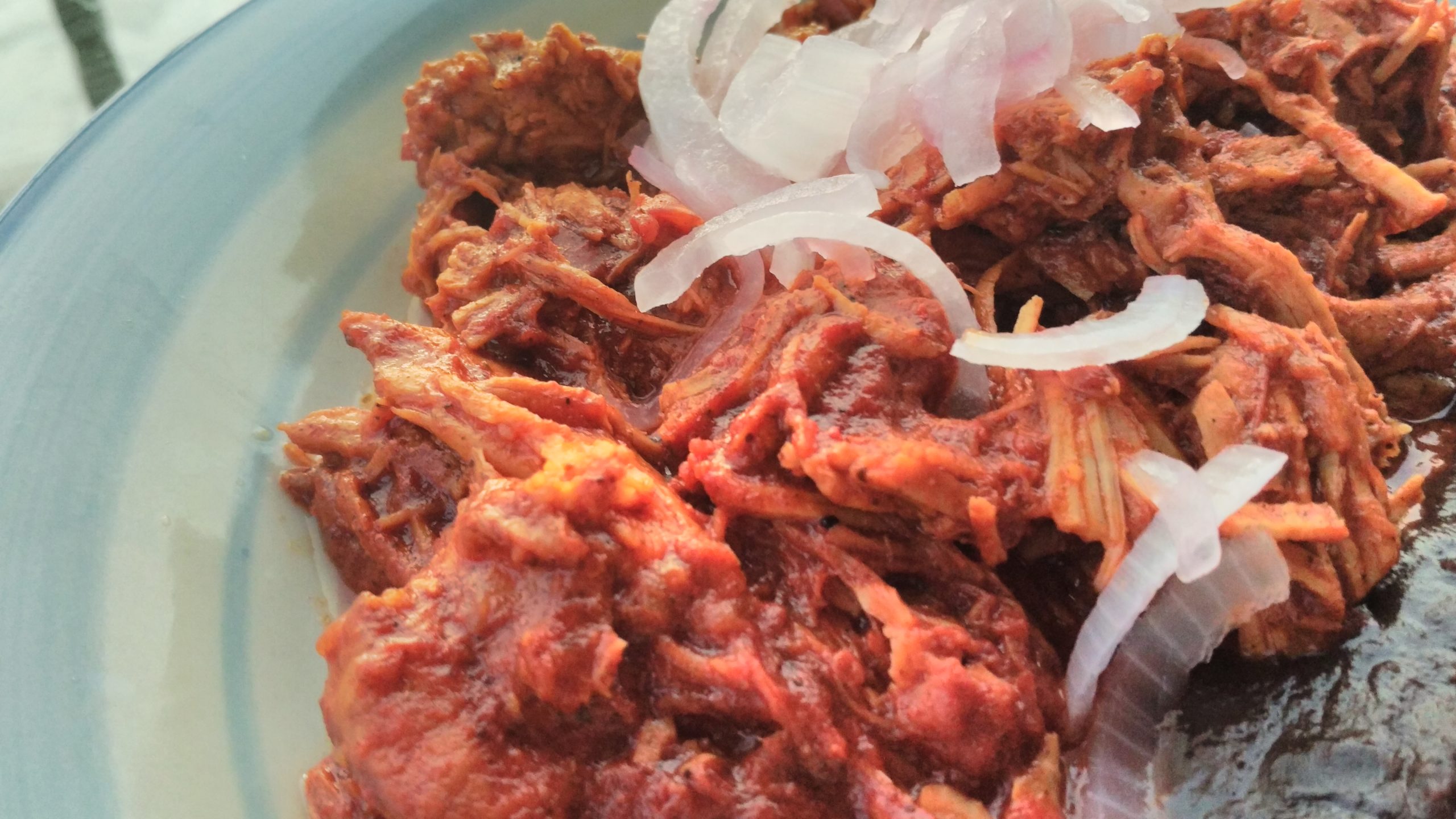
Cochinita pibil is the signature dish of the Yucatan: pork marinated in earthy achiote and tangy bitter orange until it glows burnt-orange, wrapped in banana leaves, and slow-roasted until it falls apart into juicy, tender shreds. Piled into tacos or tortas and topped with sharp pickled red onions, it is one of Mexico’s most distinctive and beloved dishes. The active work is minimal, mostly a marinade and a long, patient roast, and the flavor, tangy, spiced, and deeply savory, is unlike anything else.
An Ancient Mayan Dish
Cochinita pibil is a traditional Yucatec Mayan dish from the Yucatan Peninsula, where the cooking stands somewhat apart from the rest of Mexico. The name tells its story: cochinita means little or baby pig, and pibil refers to the pib, the earth oven in which the pork was traditionally buried and roasted over hot stones for hours. That underground cooking, a method unchanged since Mayan times, gives the dish its name and its deep, smoky tenderness. Today it is the region’s most famous dish, found everywhere from home kitchens to the markets of Merida and Valladolid, and beyond the Yucatan it has become a favorite across Mexico and abroad.
Achiote and Bitter Orange
Two ingredients define the flavor of cochinita pibil. The first is achiote, or annatto, the brick-red seed paste that gives the pork its characteristic burnt-orange color and an earthy, slightly peppery flavor; it is sold in blocks at Mexican and Latin markets. The second is bitter orange, the sour Seville orange whose juice marinates and tenderizes the meat. Where bitter oranges are hard to find, a mix of regular orange juice with lime or a little vinegar approximates their tang. Blend the achiote with the citrus, garlic, and warm spices into a vivid marinade, coat the pork, and let it sit for hours or overnight so the flavor and color soak all the way through.
The Banana Leaf
Wrapping the pork in banana leaves is traditional and worth doing. The leaves seal in moisture so the pork steams and roasts in its own marinade, staying juicy through the long cook, and they impart a subtle grassy, herbal aroma that is part of the dish’s character. Soften the leaves briefly over a flame or in hot water so they turn pliable and do not crack, then line the roasting dish, add the pork and all its marinade, and fold the leaves over to enclose it. Banana leaves are sold frozen at Latin and Asian markets. If you truly cannot find them, a tightly covered dish still makes excellent cochinita, just without that grassy note.
The Slow Roast
Without a backyard pit, the oven does the job beautifully. Roast the wrapped pork low and slow, covered, for several hours, until the meat is meltingly tender and pulls apart with a fork. Low heat and time are what transform a tough shoulder into juicy, shreddable pork, so resist the urge to rush it with higher heat. A slow cooker or pressure cooker are common modern shortcuts that give tender results, though the oven roast with banana leaves stays closest to tradition. The pork is ready when it shreds at the touch of a fork and has soaked up the achiote and citrus. Shred it in its own flavorful juices.
The Pickled Onions
Cochinita pibil is always served with cebollas encurtidas, pickled red onions, and they are essential rather than optional. Thinly sliced red onions are pickled in lime or bitter orange juice with a little salt, often with a habanero for heat, until they turn bright pink, softened, and sharp. Their tangy crunch cuts through the rich, fatty pork and completes every bite, balancing the dish the way it is meant to be eaten. Make them while the pork roasts so they have time to steep and mellow. In the Yucatan, the habanero heat is embraced, but you can leave it out or serve it on the side for those who prefer a gentler plate.
Serving Cochinita Pibil
Serve the shredded pork warm, moistened with its juices, with the pickled onions piled on top and warm corn tortillas for making tacos, along with refried black beans on the side. It is also wonderful in tortas, the Mexican sandwich, or over rice. The dish feeds a crowd from one pot and, like most braises, tastes even better the next day once the flavors deepen, so it is ideal for making ahead. Leftover cochinita freezes well too. Set out the pork, warm tortillas, pickled onions, and a habanero salsa, and let everyone build their own tacos at the table.
Common Questions
What can replace bitter orange?
Bitter Seville orange is traditional, but a mix of regular orange juice with lime juice, or orange juice with a splash of vinegar, approximates its sour tang well. The acid tenderizes the pork and balances the rich achiote, so some sourness is important however you get it.
Do I need banana leaves?
They add moisture and a distinctive grassy aroma and are traditional, sold frozen at Latin and Asian markets. Without them, roast the pork tightly covered so it stays juicy; the result is still delicious, just missing that subtle herbal note the leaves provide.
Can I make it in a slow cooker?
Yes. A slow cooker or pressure cooker gives very tender pork with far less attention, lining the pot with banana leaves if you have them. The oven roast stays closest to tradition, but both methods produce shreddable, flavorful cochinita pibil.
Cochinita pibil is a Yucatec Mayan slow-roasted pork dish from the Yucatan Peninsula, marinated in achiote and bitter orange, wrapped in banana leaf, and traditionally roasted in a pit called a pib.