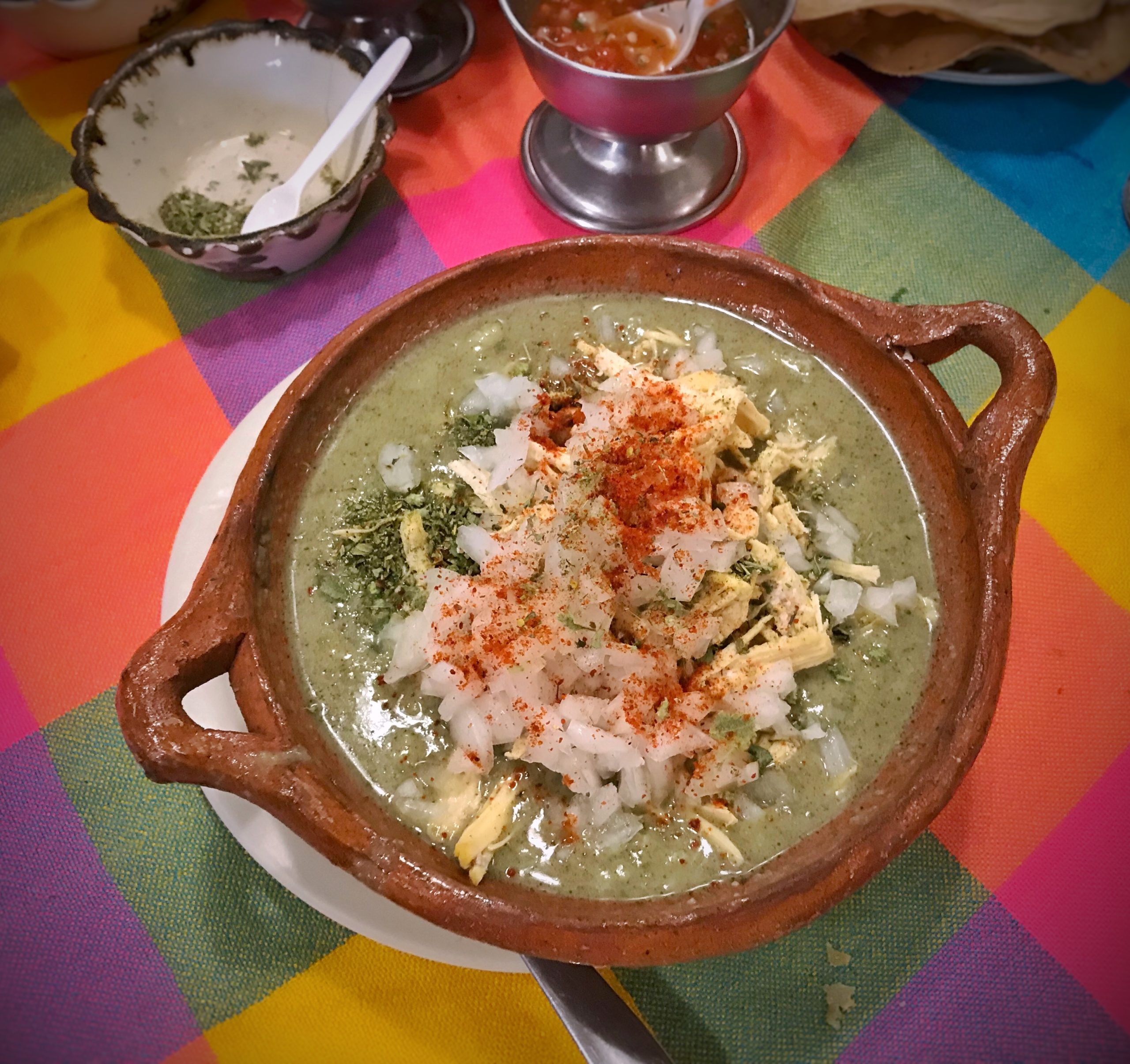
Pozole rojo is a celebration in a pot: tender pork and plump, chewy hominy in a deep red broth built on guajillo and ancho chiles, served with a parade of garnishes that each eater adds at the table. The stew itself is warming and rich; the raw cabbage, radish, onion, lime, and oregano scattered over each bowl make it bright and alive. It takes a few hours, mostly unattended simmering, and it feeds a crowd generously, which is exactly what it has done in Mexico for a very long time.
An Ancient Corn Stew
Pozole is one of Mexico’s oldest dishes, a corn stew from ancient Mesoamerica whose name comes from the Nahuatl for corn stew. Its heart is hominy: kernels of large white corn, traditionally the cacahuazintle variety, treated by nixtamalization, the alkaline soak developed by ancient Mesoamerican cooks that loosens the hulls, transforms the flavor, and makes the corn bloom into plump, chewy flowers in the pot. Corn was sacred in these cultures, and pozole was a dish of significance. Today it comes in three main colors, blanco, verde, and rojo, with the red version, tinted by dried chiles, among the most beloved and associated especially with Jalisco.
The Pork and the Broth
Pozole rojo is most often made with pork, and a well-marbled cut like shoulder gives tender meat and a rich broth; some cooks add pork shank or a little head meat for body, and chicken versions exist. Simmer the pork gently in salted water with onion and garlic until it is fully tender, skimming foam early on, which takes about an hour and a half. This simple simmer produces both the meat and the broth that carries the whole stew, so give it time and do not boil it hard. When the pork is done, it shreds or breaks into generous chunks that return to the pot.
The Red Chile Base
The rojo comes from dried chiles, classically guajillo for bright red fruitiness and ancho for sweet depth, neither of them fiercely hot. Toast the stemmed, seeded chiles briefly in a dry pan until fragrant, a few seconds a side, then soak them in hot water until soft. Blend them smooth with onion, garlic, and soaking water, strain the sauce, and then, the step that matters, fry it in a little hot oil until it darkens, thickens, and loses its raw edge. This fried chile sauce is the soul of the broth, giving pozole rojo its deep color and earthy, fruity backbone without aggressive heat.
Hominy and the Long Simmer
Hominy is the signature of pozole, and there are two roads to it. Dried hominy, soaked and simmered until it blooms open, gives the best texture and flavor but adds hours. Canned hominy, rinsed and drained, is entirely respectable and what many home cooks in Mexico and abroad use on a regular day. Add the hominy and the fried chile sauce to the pot of pork and broth and let everything simmer together for another thirty to forty-five minutes, so the kernels drink in the red broth and the flavors knit. Taste and season; the broth wants to be full, earthy, and balanced.
The Garnish Platter
Pozole is finished at the table, and the garnishes are as much a part of the dish as the stew. Set out finely shredded cabbage or lettuce, thin-sliced radishes, chopped white onion, lime wedges, dried oregano to crumble, and crisp tostadas on the side; chile flakes or a hot salsa suit those who want more fire. Each person tops their own bowl, adding crunch, freshness, and acid to the rich broth. This contrast of hot stew and cool, raw garnish defines pozole, so do not serve it bare. The tostadas, spread with crema or just salted, ride alongside.
Serving Pozole
Pozole rojo is a dish for gatherings: birthdays, holidays, New Year’s Eve, and any table with many chairs. Serve it in deep bowls, meat and hominy generous in each, broth ladled over, garnishes in the middle of the table. It is famously good late at night and famously restorative the morning after a celebration. Like most stews it improves overnight and freezes well, so a big pot is never a mistake; keep the garnishes fresh and cut them the day you serve. With warm tortillas or tostadas, it is a complete meal from one pot.
Common Questions
Canned or dried hominy?
Dried hominy, soaked and simmered until it blooms, gives the fullest texture and corn flavor but takes hours. Canned hominy, rinsed well, is a respected everyday shortcut that still makes an excellent pozole. Add either to simmer in the red broth.
How spicy is pozole rojo?
Mild to medium. Guajillo and ancho chiles bring color, fruit, and earth more than heat. Eaters who want fire add chile flakes or salsa at the table, which keeps one pot friendly to everyone. Seeding the chiles keeps it gentler still.
Can I make it with chicken?
Yes. Simmer bone-in chicken instead of pork for a lighter pozole, shredding the meat back into the pot. The chile base, hominy, and garnishes stay exactly the same. Cooking time drops to under an hour for the meat.
Pozole is a hominy stew from ancient Mesoamerica, built on nixtamalized corn; the red version, colored with guajillo and ancho chiles, is a celebration dish across Mexico.