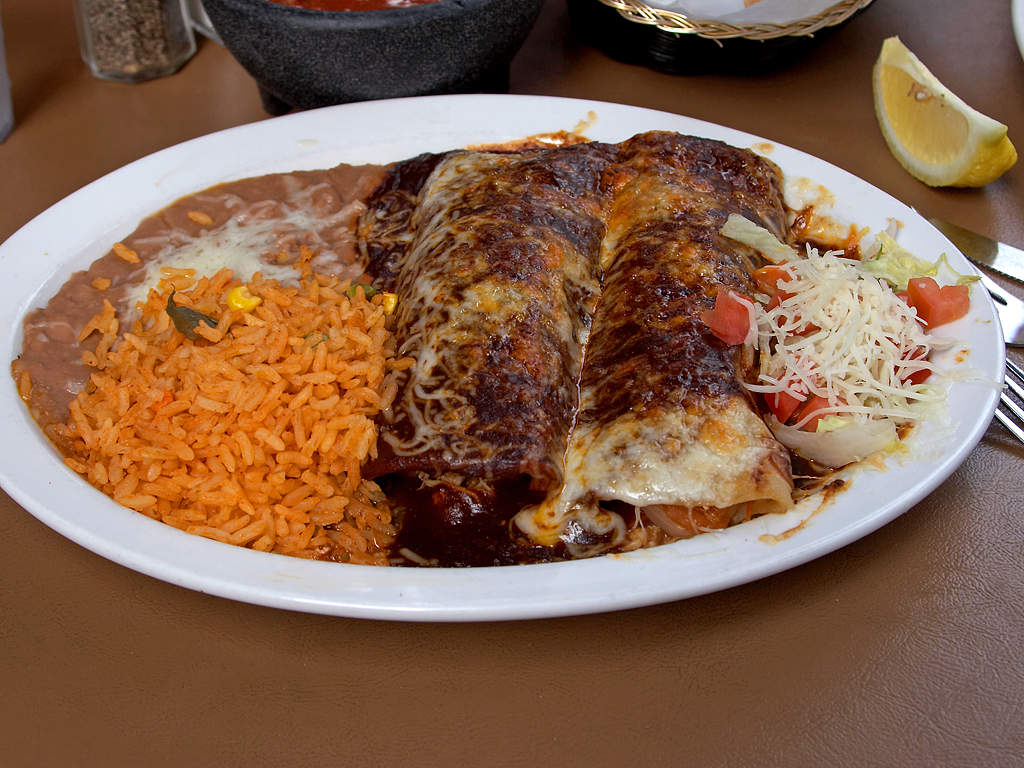
Enchiladas verdes are the bright, tangy side of the enchilada family: corn tortillas softened in oil, dragged through a simmering tomatillo salsa, rolled around shredded chicken, and finished with cool crema, salty queso fresco, and crisp raw onion. Real enchiladas are a quick assembly of warm components, closer to their street and fonda origins, and the green version, sharp with tomatillo and serrano, is one of the best arguments for making them at home the traditional way.
Seasoned With Chile
The word enchilada comes from the Spanish enchilar, to season with chile, and that is the dish at its core: a corn tortilla bathed in chile sauce. Tortillas dipped in sauces have deep roots in Mexican cooking, where the corn tortilla has been the foundation of the table since long before the Spanish arrived, and the enchilada grew into countless regional forms, rojas, verdes, suizas, potosinas, and more. Enchiladas verdes take their color and character from salsa verde, the green sauce of tomatillos and green chiles. Chicken is the classic filling, with cheese and onion close behind.
The Salsa Verde
The sauce is the dish, and it starts with tomatillos, the husked green fruits with a bright, tart snap. Husk and rinse them, then simmer or roast them with serrano chiles until soft and olive-green. Blend them with white onion, garlic, cilantro, and salt into a smooth, loose salsa, then cook it briefly in a little oil with chicken broth so it mellows and marries, ten minutes at a simmer. Taste it: it wants to be tangy and lively with a clean chile warmth. Roasting the tomatillos gives a deeper, slightly smoky salsa; simmering gives a brighter one. Both are traditional.
Softening the Tortillas
Corn tortillas straight from the package crack when rolled and dissolve under sauce, and the traditional fix is a brief pass through hot oil. A few seconds per side softens each tortilla, makes it pliable, and, importantly, seals its surface so it takes the sauce without turning to mush. Drain them on paper as you go. This small fried step is the difference between enchiladas with body and a tray of collapsed tortillas, so do not skip it. Fresh, good corn tortillas matter here too, since they are half the dish; flour tortillas belong to other recipes, not enchiladas.
Dip, Fill, Roll
With the salsa at a simmer and the tortillas softened, the assembly moves fast. Dip each tortilla into the warm salsa so both sides are coated, lay it down, add a line of shredded chicken, and roll it seam side down onto the plate or into a warm dish. Work one at a time and accept a little mess; sauced fingers are part of the tradition. When all are rolled, ladle more hot salsa generously over the top so the enchiladas are well covered. Made this way, enchiladas verdes go from components to table in minutes, warm, saucy, and tender.
The Toppings
The finish is the classic Mexican trio: a drizzle of crema, the pourable tangy cream; a generous crumble of queso fresco, the fresh salty cheese; and thin rings or slivers of raw white onion. Cilantro leaves and sliced radish are welcome additions, and avocado never hurts. These cool, salty, crisp toppings against the hot, tangy salsa are what make each bite complete, so treat them as part of the recipe rather than decoration. If queso fresco is out of reach, a mild feta comes close; sour cream thinned with a little lime stands in for crema.
Serving Enchiladas Verdes
Serve enchiladas verdes immediately, three per plate, with frijoles refritos or a simple rice alongside and lime wedges on the table. They are breakfast, lunch, or dinner in Mexico, and a fried egg on top turns them into a classic morning plate. They do not hold or reheat gracefully, since the sauced tortillas keep softening, so assemble them when everyone is ready to eat. The salsa and chicken, on the other hand, keep for days and freeze well, which makes the next batch a fifteen-minute affair. Once the rhythm is learned, it becomes a weeknight regular.
Common Questions
Can I bake them like a casserole?
You can, and Tex-Mex style does, but traditional Mexican enchiladas are assembled and served right away, not baked. The quick method keeps the tortillas tender instead of mushy and the salsa bright. Try it once and the difference is clear.
What if I cannot find tomatillos?
Canned tomatillos work in a pinch, simmered briefly with the aromatics before blending. Green tomatoes with extra lime imitate the tartness roughly. The dish depends on that tangy green base, so fresh or canned tomatillos are worth seeking out.
How spicy are they?
As spicy as your chiles. Two serranos give a lively medium heat; one, seeded, keeps it gentle, and jalapenos run milder still. The crema and queso fresco soften the heat on the plate, so season the salsa a touch bolder than you think.
Enchiladas take their name from the Spanish enchilar, to season with chile; the verdes version dips corn tortillas in a warm tomatillo salsa and fills them with chicken.