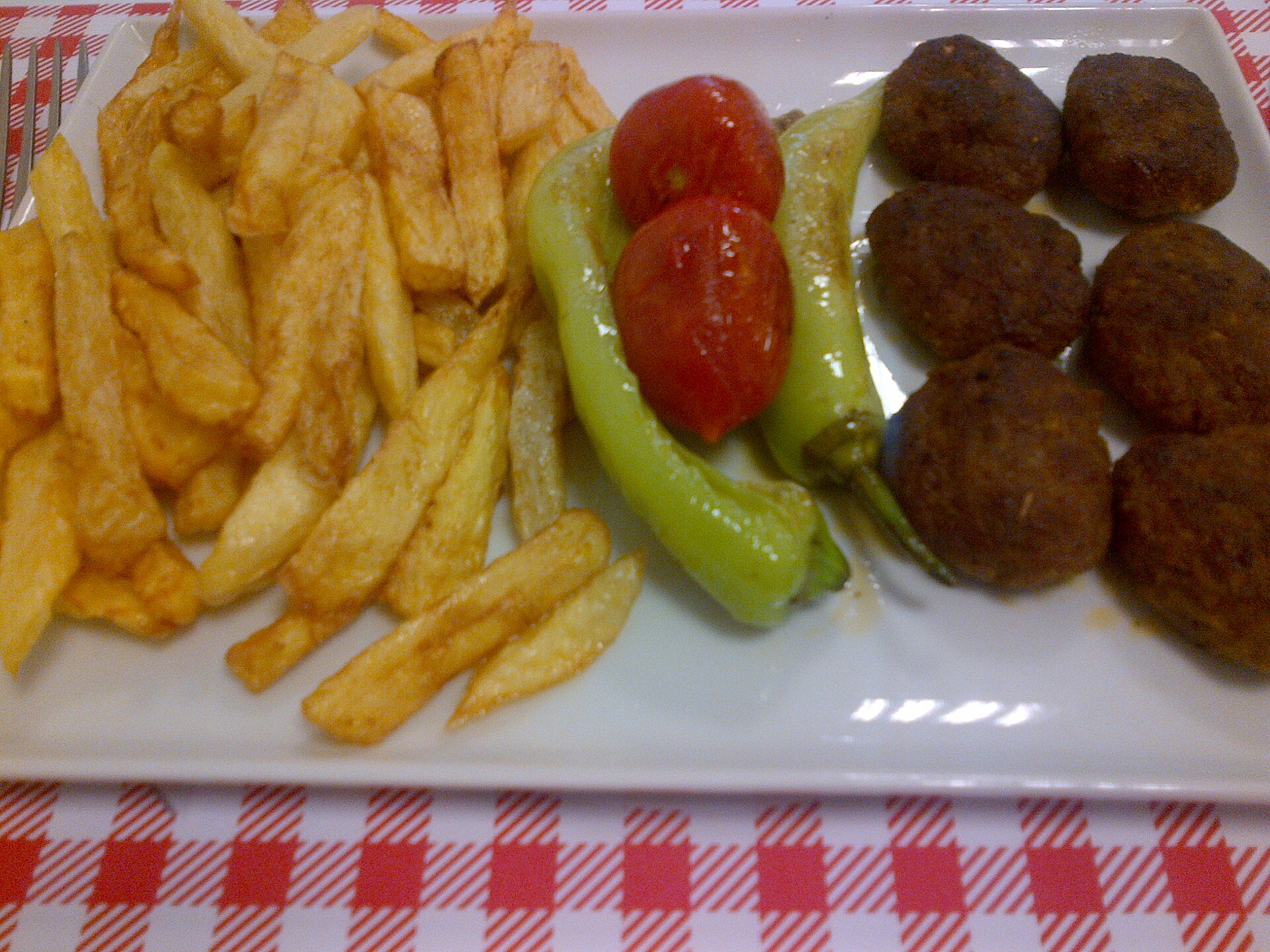
Kofte are Turkey’s beloved meatballs, and they are everywhere: grilled over charcoal at kebab houses, fried at home, simmered in tomato sauce, tucked into bread. At their simplest they are spiced ground meat, kneaded until it holds together, shaped, and grilled until charred outside and juicy within. Served with bread, sharp sliced onions, and grilled vegetables, they make a quick and satisfying meal. The technique is easy, but two steps, kneading the meat well and resting it, separate great kofte from meatballs that fall apart or turn dry.
A Meatball Family
Kofte is not one dish but a whole family of them, with countless regional versions across Turkey, part of a meatball tradition that runs through Ottoman and Central Asian cooking. There are grilled kofte, fried kofte, kofte simmered in sauce, raw kofte, and versions bound with bulgur. Cities and regions have their own named styles, each with a particular shape, spice mix, and method, and Turks take real pride in their local version. What they share is spiced ground meat, usually beef or lamb, worked into a mixture and shaped. This recipe is a straightforward grilled kofte, the kind found at ocakbasi grill houses.
The Meat and Mix
Kofte are made with ground beef, lamb, or a mix, and a little fat in the meat keeps them juicy; very lean meat makes dry kofte. The ground meat is mixed with grated onion, garlic, and warm spices like cumin and paprika, plus chopped parsley. Many recipes add soaked and squeezed bread and an egg to bind and lighten the mixture, though some grilled versions use meat almost alone. Grate the onion so it disappears into the mix and releases its juice. Season generously, since the meat needs it. The exact spicing varies widely by region and family, so adjust to taste.
Kneading and Resting
Two steps make or break kofte. First, knead the mixture hard for several minutes, working it until it becomes sticky, smooth, and paste-like. This develops the proteins and is what makes the kofte hold together on the grill and stay juicy inside rather than crumbling apart. It is more kneading than you might expect. Second, rest the kneaded mixture in the fridge for at least half an hour, or longer. This lets the flavors meld and firms the mixture so it shapes cleanly and holds on the grill. Skipping either step gives loose kofte that fall apart, so do not rush them.
Shaping and Grilling
Shape the rested mixture into small ovals, flattened patties, or logs around a skewer, depending on the style you want; wetting your hands helps stop it sticking. Then grill them over high heat, ideally charcoal for the smoky flavor that defines good kofte, though a hot pan or broiler works too. Sear them hard for a good char on the outside while keeping the inside juicy, turning once. Do not overcook them, since kofte dry out quickly past done. High heat and a quick cook give the best result: charred and smoky outside, moist and tender within. Grill some peppers and tomatoes alongside.
How to Serve Kofte
Kofte are served hot off the grill with a spread of accompaniments. The classics are fresh bread or flatbread, sliced raw onions tossed with sumac and parsley, grilled green peppers and tomatoes, and often a simple salad and yogurt or ayran to drink. You wrap a kofte with onion and salad in a piece of bread, or eat it off the plate with rice or bulgur pilav. The sharp, sumac-dressed onions against the rich grilled meat are a classic pairing. This is casual, generous food, meant to be shared with lots of little plates around the table.
Make Ahead and Variations
Kofte suit making ahead. The mixture actually benefits from resting, so mix it hours or a day in advance and keep it chilled until you grill. Shaped raw kofte freeze well, ready to grill from thawed, which makes them handy for quick meals. Beyond the grilled version here, try them simmered in a tomato sauce (sulu kofte), fried as flat patties, or served over yogurt and bread. The same basic mixture adapts to many dishes. Leftover cooked kofte reheat well and are good the next day in a sandwich. Keep a batch of the mix ready for easy dinners.
Common Questions
Why do my kofte fall apart?
The mixture was not kneaded enough or not rested. Knead it hard until sticky and paste-like, then chill it at least thirty minutes before shaping. Both steps help the kofte bind and hold together on the grill.
Beef or lamb?
Both are traditional, and a mix of the two is common. Lamb gives richer flavor, beef a milder one. Whichever you use, choose meat with some fat, since very lean meat makes dry kofte. The fat keeps them juicy.
Can I cook them without a grill?
Yes. A hot heavy pan or a broiler both work, giving a good sear. Charcoal adds a smoky flavor that is traditional, but a pan-seared kofte is still excellent. Cook over high heat and do not overcook them.
Kofte are Turkish meatballs of spiced ground meat, part of a broad family of dishes across Turkey with countless regional forms, grilled, fried, or simmered in sauce.