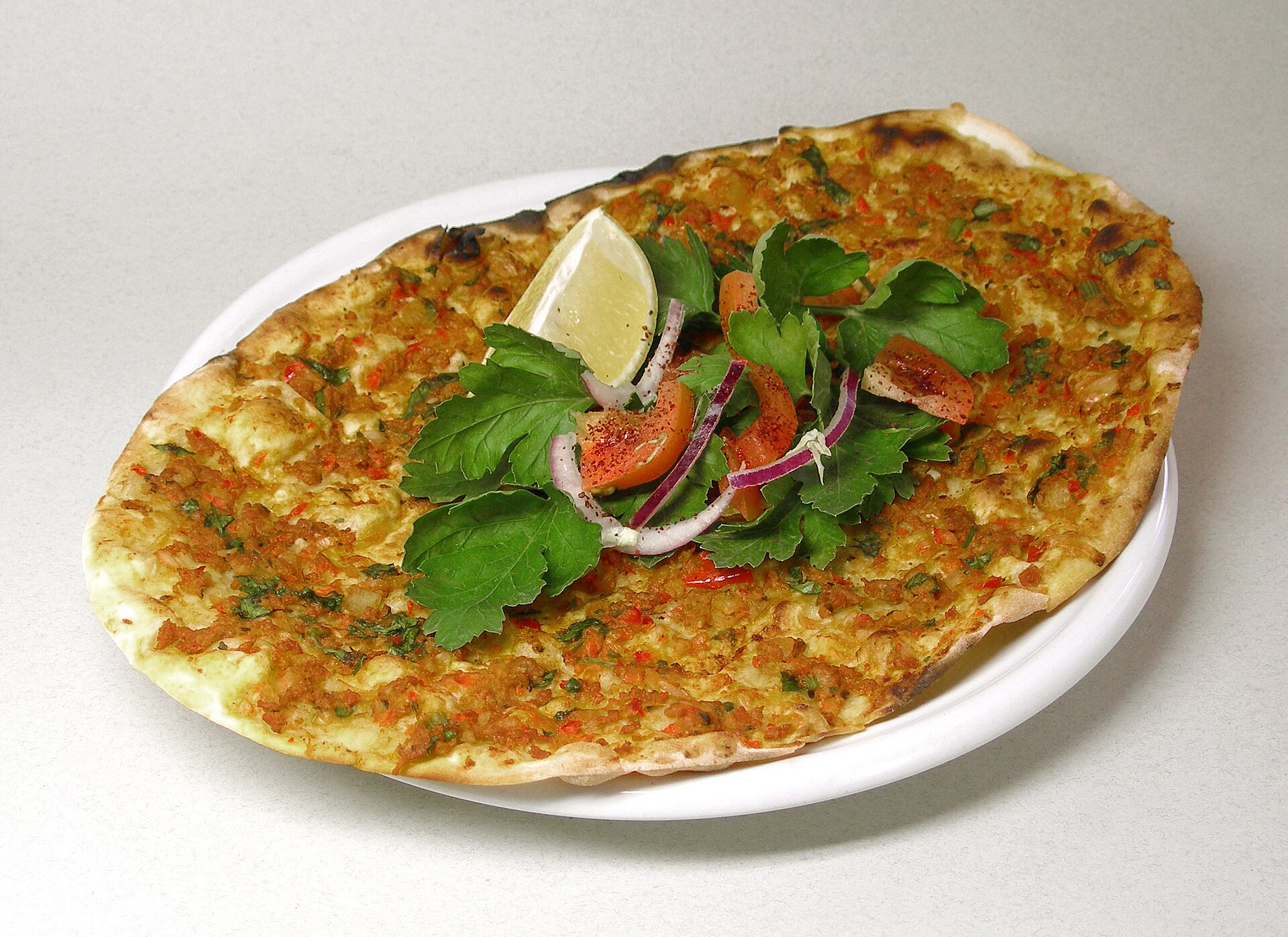
Lahmacun is one of the great street foods of Turkey: a paper-thin flatbread spread with a thin layer of spiced minced meat, tomato, and pepper, baked in a blazing oven until the edges crisp, then scattered with fresh parsley, squeezed with lemon, and rolled up to eat with your hands. Sometimes called Turkish pizza, it is really its own thing, thinner and lighter, with no cheese and a bright, fresh finish. It is quick to eat and deeply satisfying, and homemade lahmacun rewards a hot oven and a thin hand with the dough.
Meat With Dough
The name lahmacun comes from the Arabic lahm bi ajin, meaning meat with dough, which tells you its long history in the region. It has been eaten across the Levant for a very long time and is a particular staple of southeastern Turkey, around cities like Gaziantep and Urfa, before it spread throughout the country in the twentieth century. Gaziantep, a city famous for its food, is closely associated with lahmacun, and its version received European protected geographical status. It is a shared dish of the wider region, and versions are found in neighboring cuisines too. In Turkey it is everyday food, cheap and beloved.
The Dough
Lahmacun dough is a simple yeasted bread dough of flour, water, yeast, and salt, but the important thing is how thin you roll it. It must be rolled out very thin, almost translucent, into a round, because lahmacun is defined by its thin, crisp base. A thick, doughy base makes it heavy and bread-like, which misses the point entirely. Let the dough rise, then divide it and roll each piece as thin as you can manage without tearing. A little rest makes the dough easier to stretch. This thinness is what lets it bake fast and crisp in a hot oven.
The Meat Topping
The topping is a loose paste of ground lamb or beef mixed with finely grated onion, grated tomato, minced red pepper, tomato paste, chopped parsley, and warm spices like paprika, cumin, and pepper flakes. Grating the onion and tomato rather than chopping them keeps the mixture smooth and loose so it spreads thinly and evenly. Keep the mixture spreadable, not chunky. Season it well, since it is a thin layer and needs to carry flavor. In the southeast the topping is often quite spiced and can carry real heat from isot or Aleppo-style pepper, though you can adjust it to taste.
Spreading and Baking
Spread a thin, even layer of the meat mixture over each round of dough, taking it right to the edges. Keep the layer thin: too much meat steams rather than roasts and leaves the topping raw and the base soggy. Then bake in the hottest oven you have, ideally on a preheated baking stone or steel, which mimics the intense heat of the traditional wood oven. It cooks fast, in under ten minutes, with the thin meat layer roasting and the base crisping. High heat and speed are what give lahmacun its characteristic crisp base and just-cooked topping. Watch it closely so it does not burn.
How to Eat It
Lahmacun is eaten a specific way, and it matters. Straight from the oven, pile on a handful of fresh flat-leaf parsley, sometimes with sliced onion and sumac, then squeeze lemon juice generously over the top. Roll the whole thing up into a loose cylinder and eat it with your hands. The fresh parsley and sharp lemon against the rich, spiced meat are what make it, cutting the richness and adding brightness. Some add pickles or a fresh salad rolled inside. It is fast food in the best sense: eaten hot, rolled, and finished in a few bites, often with ayran to drink.
Serving Lahmacun
Lahmacun is best hot from the oven, when the base is crisp and the meat just cooked. Serve it with lemon wedges, plenty of parsley, sliced onion, and the traditional drink ayran, a salted yogurt drink that pairs perfectly. Made at home, the rounds can be baked in batches and eaten as they come out. Leftover baked lahmacun can be reheated briefly in a hot oven to re-crisp, though it is at its best fresh. You can also freeze the assembled raw rounds and bake them later. Make a stack and let everyone dress and roll their own.
Common Questions
Is lahmacun the same as Turkish pizza?
It is sometimes called that for its round shape, but it is thinner and lighter, with no cheese and no tomato-sauce base, and it is rolled and eaten by hand with parsley and lemon. Pide is the boat-shaped Turkish dish closer to a filled flatbread.
Can I make it without a baking stone?
Yes. Use the hottest oven setting and a preheated baking tray or inverted sheet pan. A stone or steel gives the crispest base by holding intense heat, but a very hot tray still works. The key is high heat and a thin base.
What meat is best?
Ground lamb is traditional in much of the southeast, though beef or a lamb-beef mix is common and works well. Choose meat with a little fat so the topping stays moist. Grate the onion and tomato in for a smooth, spreadable mixture.
Lahmacun is a thin flatbread topped with spiced minced meat, its name from Arabic meaning meat with dough, long common across the Levant and a staple of Turkey's southeast around Gaziantep and Urfa.