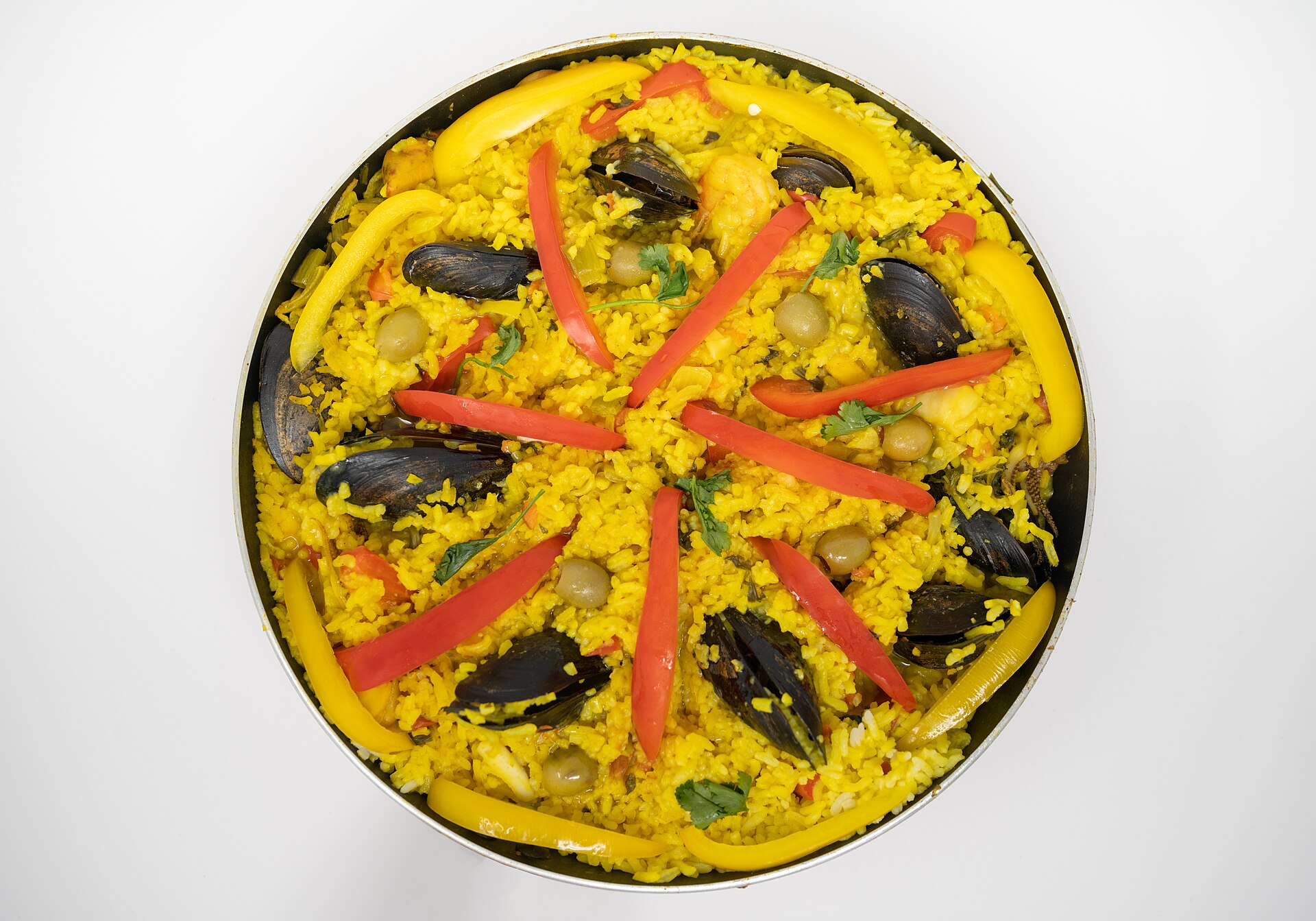
Paella is Spain’s most famous dish and its most misunderstood. A real one is not a jumble of rice and everything in the fridge; it is saffron rice cooked in a wide, shallow pan until every grain is separate and infused with stock, with a toasted crust at the bottom that is the whole reward. It takes attention but little skill once you know the rules: the right rice, enough stock, and no stirring. Made well and served straight from the pan, it is a dish built for a table full of people.
A Dish From Valencia
Paella comes from the region around Valencia, on Spain’s eastern Mediterranean coast, where the rice fields and the coast meet. It takes its name from the paellera, the wide, shallow pan it is cooked in. There are two classic forms: Paella Valenciana, the original, made with chicken, rabbit, green beans, and white beans, and seafood paella, made with shrimp, mussels, and other shellfish. A mixed version combines meat and seafood. In Spain paella is a lunchtime dish, often a Sunday meal shared with family, not the anytime tourist plate it has become abroad.
The Rice Is the Point
Paella is a rice dish first and a seafood or meat dish second, so the rice matters more than anything. Use a Spanish short-grain rice like bomba or Calasparra, which absorbs a large amount of stock and flavor while staying firm and separate. Long-grain rice or risotto rice will not behave the same way; bomba is worth seeking out. The goal is dry, distinct grains, not a creamy or sticky mass. Do not rinse the rice. The amount of stock to rice is the key ratio, so measure it, since too much makes it soupy and too little leaves it undercooked.
Saffron and Sofrito
Two things build the flavor base. Saffron gives paella its golden color and distinctive aroma; steep the threads in warm stock to draw out their color before adding it to the rice. The sofrito is the other foundation, a slow-cooked base of onion, garlic, pepper, and grated tomato with paprika, cooked down until thick and jammy before the rice goes in. This is where much of the depth comes from, so take the time to cook it properly. Together the saffron stock and the sofrito flavor every grain of rice from the start.
The Golden Rule: Don’t Stir
Once the stock goes in and the rice is spread out, do not stir it again. This is the rule that separates paella from risotto. Stirring releases starch and turns the rice creamy, which is exactly what you do not want. Instead, spread the rice in an even layer, arrange the proteins on top, and let it simmer undisturbed so the grains cook separately and the liquid absorbs evenly. Resist the urge to poke at it. The pan needs to be wide enough that the rice cooks in a thin layer, which is why paella pans are broad and shallow rather than deep.
The Socarrat
The prize in a paella is the socarrat, the thin layer of toasted, caramelized rice that forms on the bottom of the pan. To get it, raise the heat for the last minute or two once the stock is absorbed, listening for a faint crackle and smelling for toasted rice, but stopping before it burns. The socarrat is scraped up and shared, the most fought-over part of the dish. It takes a little nerve to push the heat at the end, but a paella without socarrat is missing its best feature. Rest the pan a few minutes before serving.
Serving Paella
Paella is served from the pan it was cooked in, set in the middle of the table for everyone to eat from, traditionally each person working the wedge in front of them. Lemon wedges on the side are squeezed over seafood versions. It is a communal, celebratory dish, best made for a group, which suits the wide pan. Let it rest a few minutes off the heat before serving so the rice settles. There are no good leftovers of the socarrat, so eat that fresh, though the rest reheats acceptably. Gather people around and serve it hot.
Common Questions
What rice should I use?
A Spanish short-grain rice such as bomba or Calasparra, which absorbs plenty of stock while staying firm and separate. Do not use long-grain rice or risotto rice, which behave differently. Bomba is sold at specialty and Spanish groceries.
Why shouldn’t I stir it?
Stirring releases starch and makes the rice creamy like risotto, losing the dry, separate grains and the socarrat that define paella. Spread the rice out once and leave it alone to cook undisturbed.
Can I make it without a paella pan?
A wide, shallow pan or large skillet works, since the key is cooking the rice in a thin, even layer. A deep pot will not give the same result. The wide surface is what lets the liquid cook off and the socarrat form.
Paella comes from the region of Valencia on Spain's east coast, a saffron rice dish cooked in a wide, shallow pan and named for that pan, the paellera.