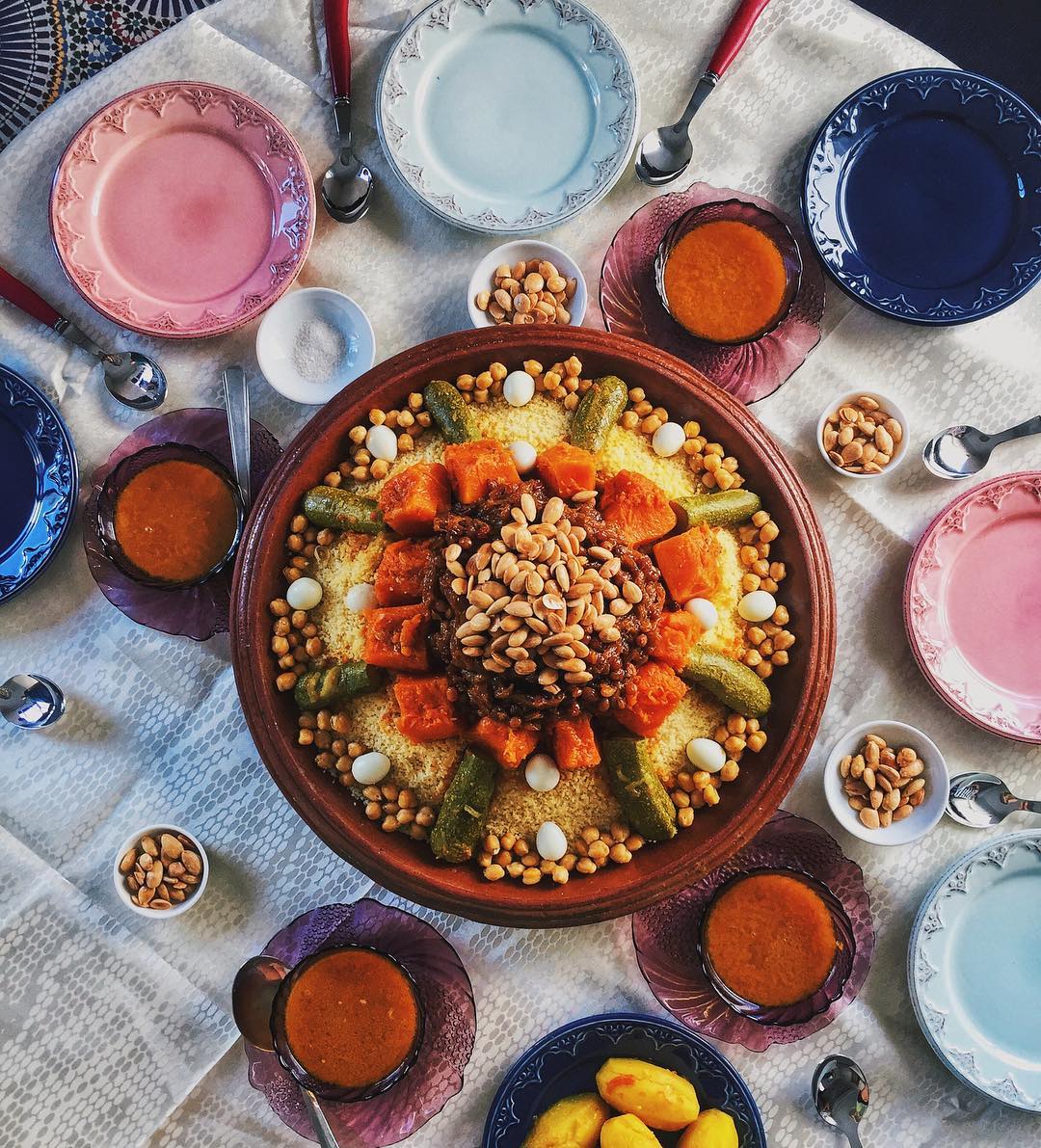
Couscous is the national dish of Morocco, and a proper one is a thing of care: mountains of light, fluffy steamed semolina topped with a fragrant stew of vegetables and tender meat, all served from one big platter to share. The couscous itself is not boiled but steamed, again and again, until each grain is separate and tender. It takes time and a little tradition, but it is the centerpiece of the Moroccan table, above all on Fridays, when families gather to eat it together after midday prayers.
Morocco’s National Dish
Couscous originated with the Imazighen, the Berbers of North Africa, and it is a staple across the whole Maghreb, from Morocco to Algeria, Tunisia, and beyond. In 2020 UNESCO added couscous to its list of Intangible Cultural Heritage, recognized jointly by several North African nations. In Morocco it is the national dish and a symbol of hospitality, served at weddings, celebrations, and gatherings, and traditionally eaten every Friday, the holy day, when families come together after prayers. The seven-vegetable version is the classic, though the vegetables and meat vary by region, season, and household.
The Grain
Couscous is not a grain in itself but tiny granules of rolled semolina wheat, which cook into something between rice and pasta. The one thing to understand is that traditional couscous is steamed, not boiled. Steaming over the simmering stew, then fluffing and steaming again two or three times, is what gives authentic couscous its signature lightness, with each grain separate and tender rather than clumped and gluey. The quick-cooking instant couscous on supermarket shelves just needs hot water and works for a fast version, but the steamed method is the real thing and worth doing at least once.
The Steaming Method
The traditional tool is a couscoussier, a two-part pot with a stew simmering in the bottom and a steamer basket of couscous on top, so the grains cook in the fragrant steam rising from the stew. You can improvise one with a pot and a fine steamer or colander lined so the grains do not fall through. The technique is to steam the couscous, tip it out and rake it with a little water and oil to separate the grains and break up clumps, then return it to steam again, repeating two or three times. Each round makes the couscous lighter and more tender.
The Stew and Its Vegetables
Underneath cooks the stew that flavors everything. Lamb or chicken is browned with onions and Moroccan spices, then simmered until tender, building a broth. The seven-vegetable tradition brings in a generous mix, often carrots, turnips, zucchini, pumpkin or squash, cabbage, and chickpeas, though the exact seven vary. The key is to add the vegetables in stages according to how long each takes to cook, so the hard roots go in early and the soft squash and zucchini later, and none turns to mush while others stay raw. The result is a stew where every vegetable is cooked just right.
The Spices
Moroccan couscous is warmly spiced rather than hot. Ras el hanout, the complex Moroccan spice blend whose name means top of the shop, is the signature, along with ginger, turmeric, saffron, and pepper. These give the stew its golden color and deep, aromatic flavor without much heat, since Moroccan food generally is fragrant rather than fiery. Some cooks finish with a sweet-savory tfaya of caramelized onions and raisins spooned over the top, a Friday specialty. The spicing should perfume the whole dish, so season the stew well and let it simmer long enough for the flavors to meld into the broth.
Serving From the Platter
Couscous is traditionally served communally from one large platter. Mound the steamed couscous into a dome, make a well in the center, and pile the meat and vegetables in it, then ladle some of the broth over to moisten, serving more broth on the side. In many Moroccan homes it is eaten by hand, from the section of the platter in front of each person, or with a spoon. The couscous needs to be fluffy enough to soak up the broth without turning soggy, which is why the broth is added at the table. Gather everyone around and share.
Common Questions
Can I use instant couscous?
Yes, for a quick version; just hydrate it with hot seasoned broth and fluff. It will not have the light, separate texture of traditionally steamed couscous, but it works on a busy day. The steamed method gives the authentic result.
What are the seven vegetables?
They vary by region and season, but often carrots, turnips, zucchini, pumpkin or squash, cabbage, onions, and chickpeas. The number seven is traditional and symbolic rather than fixed, so use what is good and in season.
What is ras el hanout?
Ras el hanout is a Moroccan spice blend that can contain a dozen or more spices, its name meaning top of the shop. It gives the stew its warm, complex flavor. It is sold at spice shops and many groceries.
Couscous is the national dish of Morocco, small steamed semolina granules that originated with the Imazighen, the Berbers of North Africa, traditionally topped with a stew of vegetables and meat.