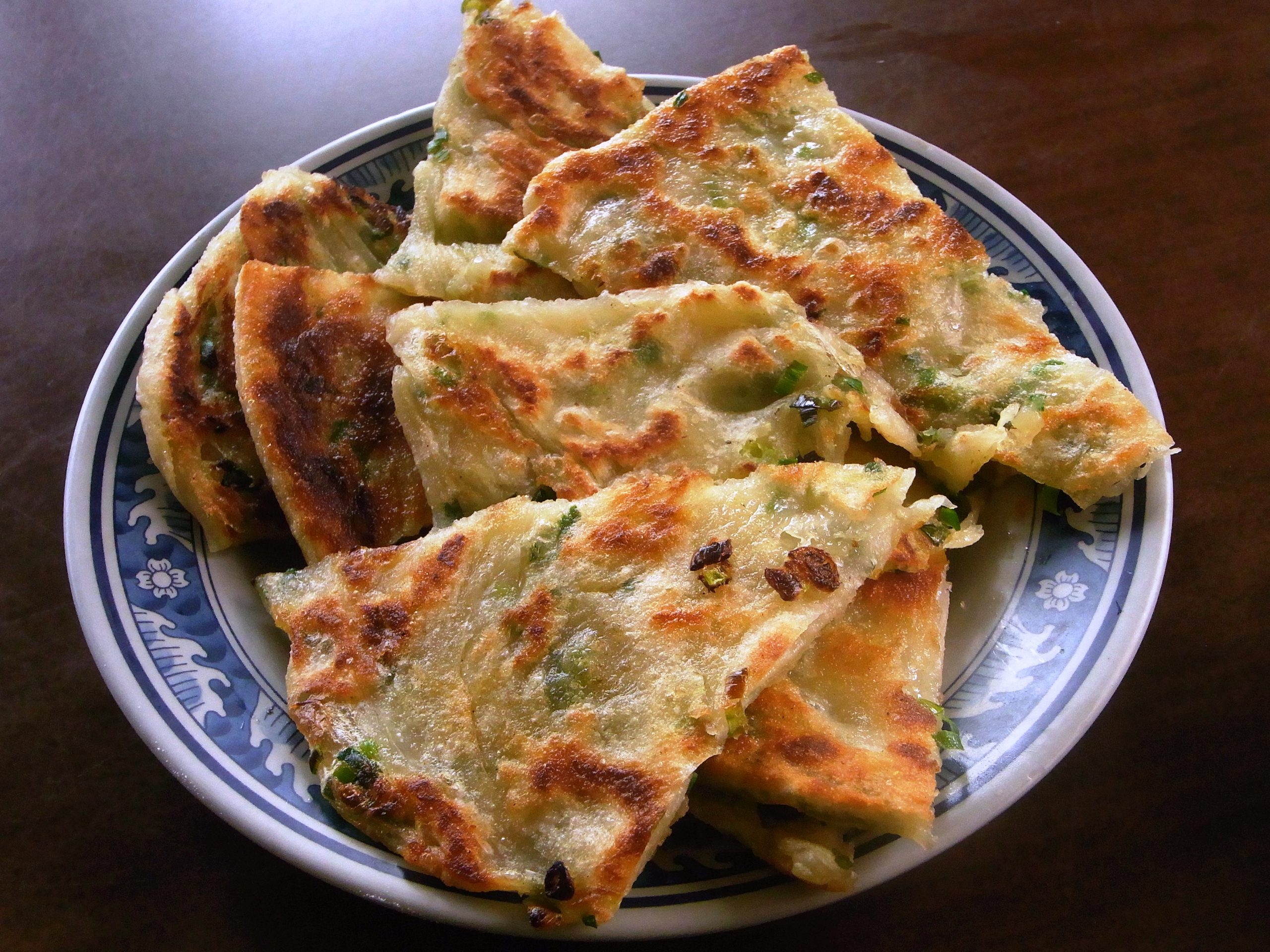
A proper scallion pancake shatters a little when you tear it: crisp at the surface, chewy inside, and layered so it pulls apart in flaky sheets threaded with scallion. There is no yeast and no rising involved. The layers come from a folding trick, a simple dough rolled thin, painted with an oil paste, scattered with scallions, rolled into a log, coiled like a snail, and flattened again. Chinese street vendors turn these out by the hundred; at home, four pancakes take about an hour, most of it resting time.
A Flatbread, Not a Pancake
The name in Mandarin is cong you bing, scallion oil flatbread, and it sits closer to a laminated flatbread than to anything from a Western griddle. It is sold on Chinese streets for breakfast, served in slices at family dinners, and stacked in freezer bags in supermarkets across Asia. Similar flaky breads appear across the continent, and the scallion pancake is China’s beloved entry: inexpensive, unleavened, and entirely dependent on technique rather than special ingredients.
The Hot-Water Dough
The dough uses a hot-water method common in Chinese flatbreads and dumpling wrappers. Pouring hot water into part of the flour cooks some of its starch and tames the gluten, which makes a dough that rolls thin without springing back and fries up tender-chewy instead of tough. Cool water added after brings the dough together. Knead until smooth, then rest it, covered, for at least 30 minutes; the rest relaxes the gluten and is not optional. A rested dough rolls like silk, an unrested one fights you.
The Oil Paste and the Coil
Layers need a barrier, and plain oil leaks out when rolled. The fix is a paste of oil mixed with a little flour, sometimes warmed, which stays put when you brush it over the rolled-out dough. Scatter the sliced scallions and a pinch of salt over the paste, roll the sheet into a snug log, and coil the log into a spiral, tucking the tail underneath. Rest the coils a few minutes, then flatten each gently with a rolling pin. Every ring of that spiral becomes a flake in the finished pancake.
Frying for Flake
Shallow-fry the pancakes in a skillet with a few tablespoons of oil over medium heat, about three minutes a side. Medium matters: too hot and the outside browns while the inner layers stay doughy. Two motions improve the result. Rotate the pancake now and then so it colors evenly, and in the final minute, press and scrunch it lightly with a spatula, which loosens the layers and opens the flake. It is done when both faces are deep golden and the edge feels crisp.
The Dipping Sauce
Scallion pancakes want a sharp dip to cut their richness. The standard is soy sauce and black vinegar in roughly equal parts, with chili oil, a pinch of sugar, or slivered ginger as welcome extras. Cut the pancakes into wedges like a pizza and serve them hot, since the flake is at its peak in the first ten minutes. They pair naturally with congee or soy milk at breakfast, or alongside soup as the bread of the meal.
Making Ahead
The recipe scales and freezes beautifully at the flattened-raw stage. Stack uncooked pancakes between squares of parchment, bag them, and freeze; they fry straight from frozen over medium heat with an extra minute or two per side. This is exactly how the supermarket versions work, except yours will carry more scallion and no preservatives. Cooked leftovers reheat acceptably in a dry skillet, but the freezer route gives a fresh-fried pancake every time and is worth the small effort.
Beyond the Basic Pancake
Once the coil technique is in your hands, variations open up. A pinch of five-spice powder or ground Sichuan peppercorn in the oil paste changes the pancake’s character entirely. Some cooks add a smear of toasted sesame paste with the scallions, and street stalls in parts of China fold a fried egg into the hot pancake to make a rolled breakfast sandwich. The same dough, oiled and coiled without scallions, becomes the plain flaky bread served with braises. One technique, learned once, keeps paying for years of breakfasts.
Common Questions
Why did my pancake come out dense instead of flaky?
Usually the oil paste was skipped or too thin, or the dough was rolled too thick before coiling. Roll the sheet thin, use a proper flour-oil paste, and flatten the coil gently so the layers survive.
Can I bake them instead of frying?
Baking dries them out and loses the crisp-chewy contrast; the shallow fry is part of the dish. If you want less oil, a well-heated nonstick pan with a thin film of oil still works far better than an oven.
Green parts or white parts of the scallion?
Mostly the green, sliced thin. The whites carry more water and can steam the layers apart; save them for the dipping sauce or another dish.
Cong you bing, the scallion oil pancake, is a street and home staple across China, its flaky layers built not with yeast but by rolling, oiling, and coiling a simple dough.