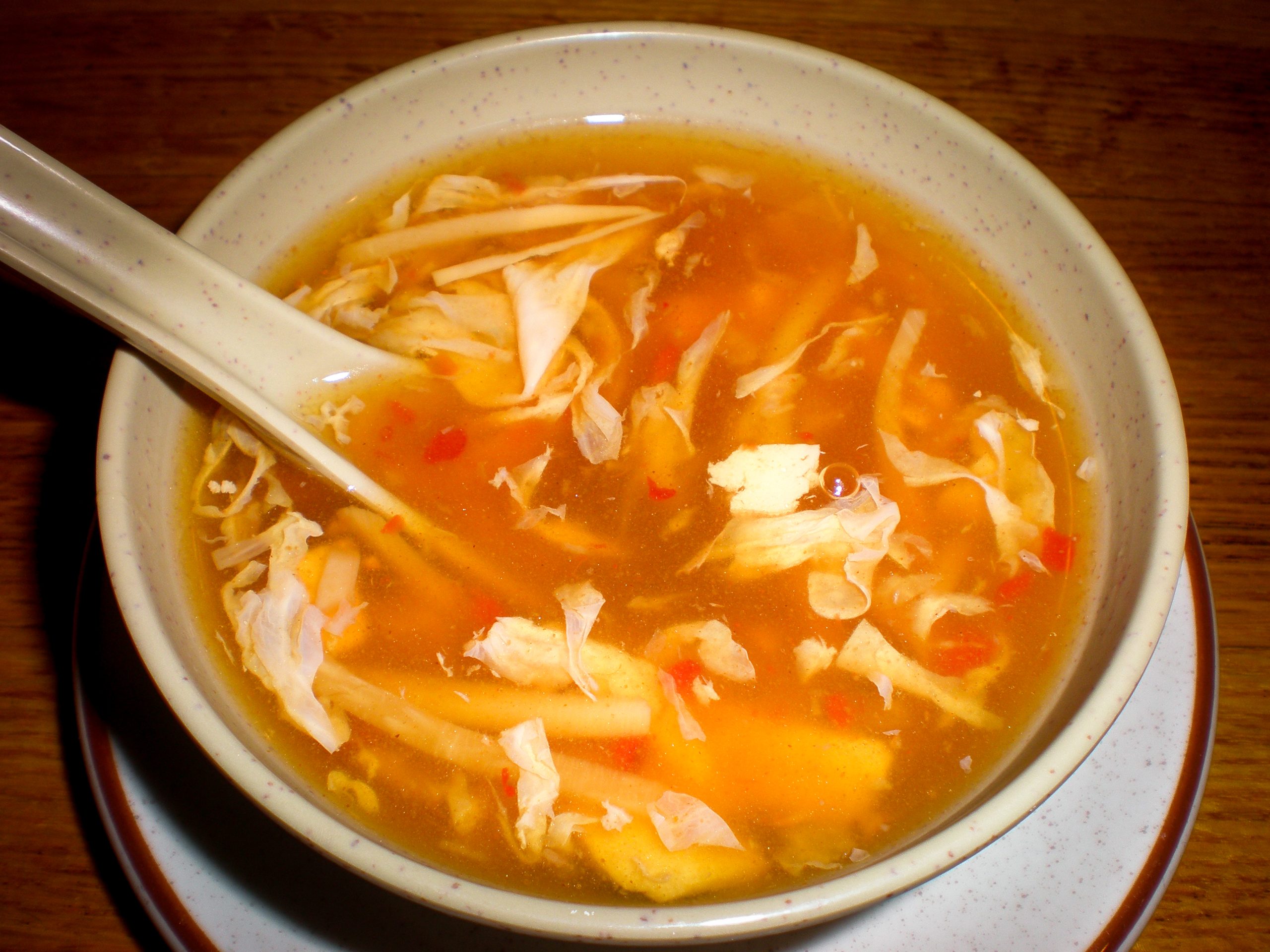
Hot and sour soup earns its name honestly: the heat is white pepper, sharp and warming rather than fiery, and the sour is black vinegar, dark and malty rather than puckering. Around that pairing floats a full bowl of textures, silky tofu, chewy mushrooms, crisp bamboo shoots, and ribbons of egg, all suspended in a broth thickened just enough to carry them. It takes half an hour, uses one pot, and beats the takeout version at its own game because yours will still be hot and still be sour when it hits the table.
A Soup With Many Homes
Versions of hot and sour soup appear across Chinese regional cooking, from Sichuan tables to northern kitchens, with the balance of pepper and vinegar shifting by region and household. The version the West knows arrived through Chinese-American restaurants, where it became a fixed opener alongside egg drop soup. The template is stable everywhere: a thickened savory broth, heat from pepper, sourness from vinegar, and a mix of tofu, mushrooms, and bamboo cut into matchsticks so every spoonful carries a little of each.
The Two Flavors That Rule the Pot
White pepper and black vinegar are not garnishes here; they are the dish. White pepper delivers a different heat than chili, higher and more aromatic, and pre-ground jars go stale fast, so grind it fresh if you can. The vinegar is Chinkiang black vinegar, with a dark, almost smoky sourness that white vinegar cannot imitate; rice vinegar plus a drop of Worcestershire is the nearest emergency stand-in. Both go in at the end, off the heat, because simmering dulls them. Taste, then push both a little further than feels polite.
Building the Body
The broth starts as chicken or vegetable stock and gains its signature silkiness from a cornstarch slurry. Add the slurry in two or three stages, stirring as the soup simmers, and stop when it coats the back of a spoon lightly; the target is velvet, not gravy. This staged thickening protects you from the gluey texture that sinks many takeout versions. The soup will also thicken a touch as it sits, so err thin at the stove.
What Goes In
Cut everything into thin strips so it eats well from a spoon. Firm tofu holds its shape; add it gently and stir little afterward. Shiitake mushrooms bring depth, and wood ear mushrooms, if you find them dried at an Asian grocery, add the bouncy crunch traditional to the soup; soak dried ones first. Bamboo shoots from a can, rinsed and sliced, supply crispness. Strips of pork are a common addition in China and a fine one, briefly velveted in a little cornstarch and soy before joining the pot.
The Egg Ribbon Finish
The egg goes in last and technique decides the result. Turn the heat low so the surface barely moves, then pour the beaten egg in a thin stream from height while stirring in slow circles. Wide, soft ribbons form and set in seconds. A fast-boiling pot shreds the egg into cloudy fragments, and vigorous stirring does the same, so this is a moment for patience. Once the ribbons set, the soup is done cooking; vinegar, pepper, and sesame oil follow off the heat.
Serving and Keeping
Serve the soup immediately, topped with scallions, as a starter or as a light dinner with rice or dumplings on the side. It keeps in the fridge for two days, though the starch loosens and the pepper fades; reheat gently and refresh the seasoning with another shot of vinegar and a fresh grind of white pepper. Do not freeze it, since the thickened broth and tofu both suffer. A soup this fast to make fresh does not need the freezer anyway.
Adjusting It to Your Table
The soup is a template that adjusts without breaking. More slurry gives a heavier body for a main-course bowl; less keeps it light before a bigger meal. Strips of velveted pork or chicken turn it into dinner on their own. A spoon of chili oil on top adds a second kind of heat over the white pepper base, common in Sichuan-leaning versions. Families in China argue over the right vinegar-to-pepper ratio the way families elsewhere argue over chili recipes, and the correct answer is whatever ratio empties the pot at your table. Start with this one, then move the two dials until it is yours.
Common Questions
Why does my soup taste flat compared to restaurants?
Almost always not enough white pepper and vinegar, or both added too early. Season off the heat at the end and keep tasting; the soup is meant to bite on both fronts.
Can I make it vegetarian?
Easily. Use vegetable stock and skip any pork. The tofu, mushrooms, and bamboo already carry the bowl, and a few dried shiitakes simmered in the stock deepen it further.
My egg turned cloudy instead of ribboned. What happened?
The pot was boiling or the stirring was too fast. Drop the heat until the surface is calm, pour the egg in a thin stream, and stir slowly once or twice. The ribbons set on their own.
Hot and sour soup is a staple across Chinese regional cooking, its heat coming from white pepper rather than chili and its sourness from dark black vinegar, a pairing that made it a takeout menu fixture worldwide.