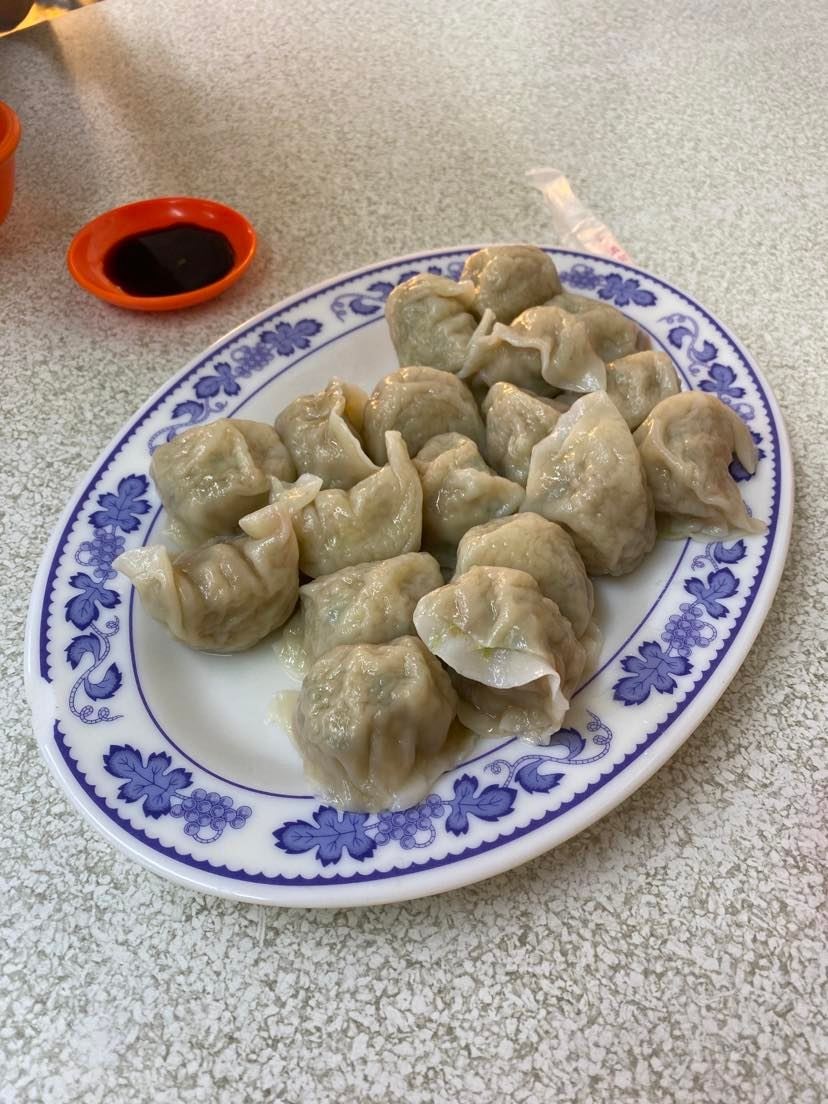
Jiaozi are the dumplings at the heart of northern Chinese home cooking: a juicy pork and cabbage filling wrapped in a thin round of dough, pleated shut by hand, and either boiled until they float or pan-fried into crisp-bottomed potstickers. One batch makes about fifty, which sounds like a lot until you watch them disappear. Dipped in black vinegar with a thread of chili oil, they are as good as anything you can make with your hands on a weekend afternoon.
The Dumpling of Family Tables
Across northern China, jiaozi are everyday food, sold in dedicated shops and boiled in home kitchens year-round. They also carry the biggest ceremonial job in the Chinese calendar: at Lunar New Year, families gather to fold dumplings together, often on New Year’s Eve, and eat them as the year turns. Their shape is said to recall old gold ingots, which makes them a symbol of prosperity. The folding session, with everyone around the table and flour on the counter, is as much the point as the eating.
Wrappers: Bought or Made
Fresh round dumpling wrappers from an Asian grocery are entirely legitimate and what many busy Chinese households use. They save an hour and behave predictably. If you want to make your own, the dough is just flour and water kneaded smooth and rested, then rolled into thin rounds with thicker centers; homemade wrappers are softer and stretchier, and pleating them is easier. For a first batch, buy the wrappers and put your attention on the filling and the fold.
A Filling That Stays Juicy
The classic filling is ground pork with napa cabbage, and two techniques decide whether it turns out juicy or dry. First, salt the minced cabbage, let it sit, and squeeze it hard; cabbage is mostly water, and unsqueezed it soaks the wrappers and tears them. Second, stir the seasoned pork in one direction until it turns sticky and almost paste-like. That stirring binds the filling so it holds its juices when cooked instead of leaking them. Season with soy, Shaoxing wine, sesame oil, ginger, scallion, and white pepper, then fold the cabbage in last.
The Fold
Set a modest spoon of filling in the center of a wrapper; overfilling is the beginner’s error that bursts dumplings. Wet the rim with a fingertip of water, fold the round in half, and pinch the middle shut. From there, pleat one side against the other, three or four pleats per side, working toward the corners, so the dumpling curves into a plump crescent that stands up on its belly. The first ten will look clumsy. By the thirtieth your hands will know the motion, which is exactly how everyone in China learned it too.
Boil or Pan-Fry
Boiled jiaozi, shuijiao, are the northern standard: drop them into a wide pot of boiling water, stir once so nothing sticks, and cook until they float, then about one minute more. Pan-fried potstickers, guotie, use the fry-steam method: brown the flat bottoms in an oiled skillet, pour in a quarter cup of water, cover, and steam until the water is gone, then uncover to re-crisp the base. Same dumpling, two textures. Serve either style hot, straight from the pot or pan.
Dipping Sauce and Freezing
The classic dip is simple: black vinegar, a splash of soy sauce, and chili oil to taste, with slivered ginger if you like. The vinegar matters more than the soy; jiaozi and Chinkiang vinegar are a fixed pair. Freeze any dumplings you do not cook raw, spaced on a floured tray until solid, then bagged. They boil straight from frozen with two extra minutes, which means one folding afternoon stocks weeks of ten-minute dinners. That trade is the real reason to make fifty at a time.
Folding as a Group Project
Fifty dumplings folded alone is a task; folded by four people, it is a party, which is precisely how Chinese families treat it. Set the bowl of filling, a stack of wrappers, a small dish of water, and a floured tray on the table and let everyone work. Children can spoon filling, and anyone can learn the half-moon pinch even if the pleats come later. Mismatched, funny-looking dumplings cook and taste exactly the same as pretty ones. The tradition of folding together the night before Lunar New Year survives because the work itself, hands busy and conversation loose, is worth as much as the meal.
Common Questions
Why do my dumplings break open in the water?
Either they were overfilled, the seal had a gap, or the boil was too violent. Use less filling than feels right, pinch the seam fully closed, and keep the water at a strong simmer rather than a rolling boil.
Can I make them vegetarian?
Yes. A filling of scrambled egg, garlic chives, and soaked glass noodles is a northern classic, and mushroom-cabbage-tofu mixtures work well. Season the same way and squeeze watery vegetables dry first.
What is the difference between jiaozi and wontons?
Different wrappers and different jobs. Jiaozi use thicker round wrappers and are eaten as the meal itself, boiled or fried. Wontons use thin square wrappers, are folded loosely, and are usually served in soup.
Jiaozi are eaten across northern China year-round and by families everywhere at Lunar New Year, when folding dumplings together the night before is a tradition in itself.