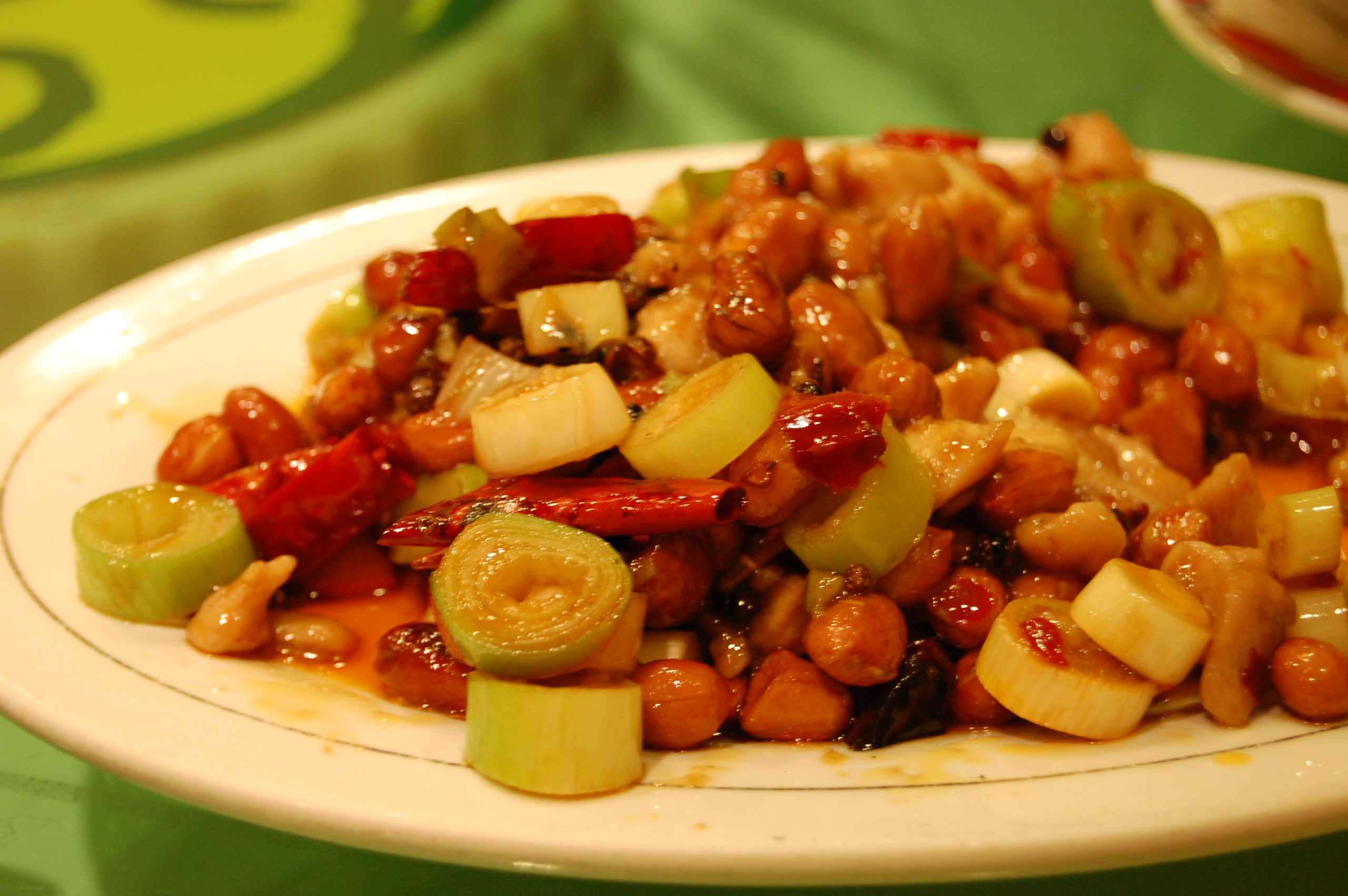
Kung pao chicken is the Sichuan stir-fry the rest of the world fell for: cubes of chicken tossed in a hot wok with dried chilies, Sichuan peppercorns, garlic, ginger, and scallions, glossed in a sauce that balances black vinegar, sugar, and soy, and finished with a handful of crunchy peanuts. The real version is faster, sharper, and less sweet than most takeout, and it cooks in about five minutes once the wok is hot. The work is in the cutting and mixing; the cooking is a sprint.
The Governor Behind the Name
The dish carries a title, not a place name. Ding Baozhen was a Qing dynasty official who served as governor of Sichuan in the late nineteenth century and held the honorary court title Gongbao, or palace guardian. The chicken stir-fry linked to his household took the title as its name: gongbao jiding, kung pao chicken in the older romanization. The dish survived him by well over a century and became one of Sichuan cooking’s defining exports, reworked in Chinese restaurants on every continent.
What Makes It Sichuan
Two pantry items mark this as a Sichuan dish. Dried red chilies, snipped into pieces and fried in the oil first, give heat and a toasted fragrance. Sichuan peppercorns bring the tingling, numbing sensation the region calls ma, which plays against the chili heat rather than adding to it. The third signature is black vinegar, ideally Chinkiang vinegar, whose dark, malty sourness anchors the sauce. Takeout versions often drop the peppercorns and lean on sugar; the original keeps the balance tilted toward hot, sour, and savory.
The Chicken and the Marinade
Boneless thighs are the better cut here, since they stay juicy through fierce wok heat, though breast works if you prefer it. Dice the meat into even, bite-size cubes so everything cooks in the same minute. A short marinade of soy sauce, Shaoxing wine, and cornstarch does two jobs: it seasons the chicken and gives it a thin starch coat that protects the surface and helps the sauce cling later. Fifteen minutes on the counter is enough; this is not an overnight marinade.
Wok Order Is Everything
Stir-frying is sequencing. The chilies and Sichuan peppercorns go into hot oil first, for twenty seconds, to perfume the fat; watch them closely, because burnt chilies turn the whole dish acrid. The chicken goes in next and cooks fast, spread in a layer and then tossed, until the cubes are opaque with browned edges. Garlic, ginger, and the white parts of the scallions follow for half a minute. Then the sauce, stirred again just before pouring since the cornstarch settles, goes in around the edge of the wok and thickens in seconds. Peanuts last, so they keep their crunch.
Getting Wok Heat at Home
Home stoves run cooler than restaurant burners, and the fix is simple: cook less at once. Use your widest pan, heat it until the oil shimmers hard, and if you double the recipe, fry the chicken in two batches rather than crowding it. A crowded pan steams instead of sears, and kung pao without sear is a braise in the wrong clothes. Everything else about the dish forgives a home kitchen as long as the pan stays hot and the ingredients are ready at your elbow.
Serving It
Kung pao chicken goes over steamed rice, which absorbs the glossy sauce, with something green and simple alongside, stir-fried greens or smashed cucumbers. In Sichuan it is one dish among several on a shared table. Leftovers keep two days and reheat well in a hot pan, though the peanuts soften overnight; a fresh small handful stirred in at reheat brings the texture back. Beer is the natural drink, since the ma la tingle makes cold and fizzy taste even better.
The Ingredients Worth Buying Once
Three bottles turn a home pantry into a Sichuan one, and all three are cheap at a Chinese grocery. Shaoxing wine seasons marinades and sauces across the whole cuisine. Chinkiang black vinegar carries this dish and dozens of others, from dumplings to cold noodles. Whole Sichuan peppercorns keep for a year in a jar and wake up when toasted in a dry pan for a minute before use. Buy them once and kung pao becomes a pantry dinner, along with mapo tofu, dan dan noodles, and most of the Sichuan repertoire you would otherwise order out.
Common Questions
How spicy is authentic kung pao?
Moderately hot with a numbing edge, not scorching. The chilies flavor the oil more than the sauce. Shake the seeds out of the snipped chilies for less fire, or add more whole ones for a bigger punch.
What can replace Shaoxing wine and black vinegar?
Dry sherry stands in for Shaoxing wine well. For Chinkiang black vinegar, balsamic cut with a little rice vinegar gets close. Both originals are cheap at any Chinese grocery and keep for ages.
Can I make it with something other than chicken?
Yes. Kung pao shrimp and kung pao tofu are both established variations; even the diced-vegetable version holds up. Keep the sauce, aromatics, and peanuts the same and swap the protein.
Kung pao chicken is named after Ding Baozhen, a Qing dynasty official who served as governor of Sichuan and held the honorary title Gongbao. The stir-fry associated with his household became one of Sichuan's most famous exports.