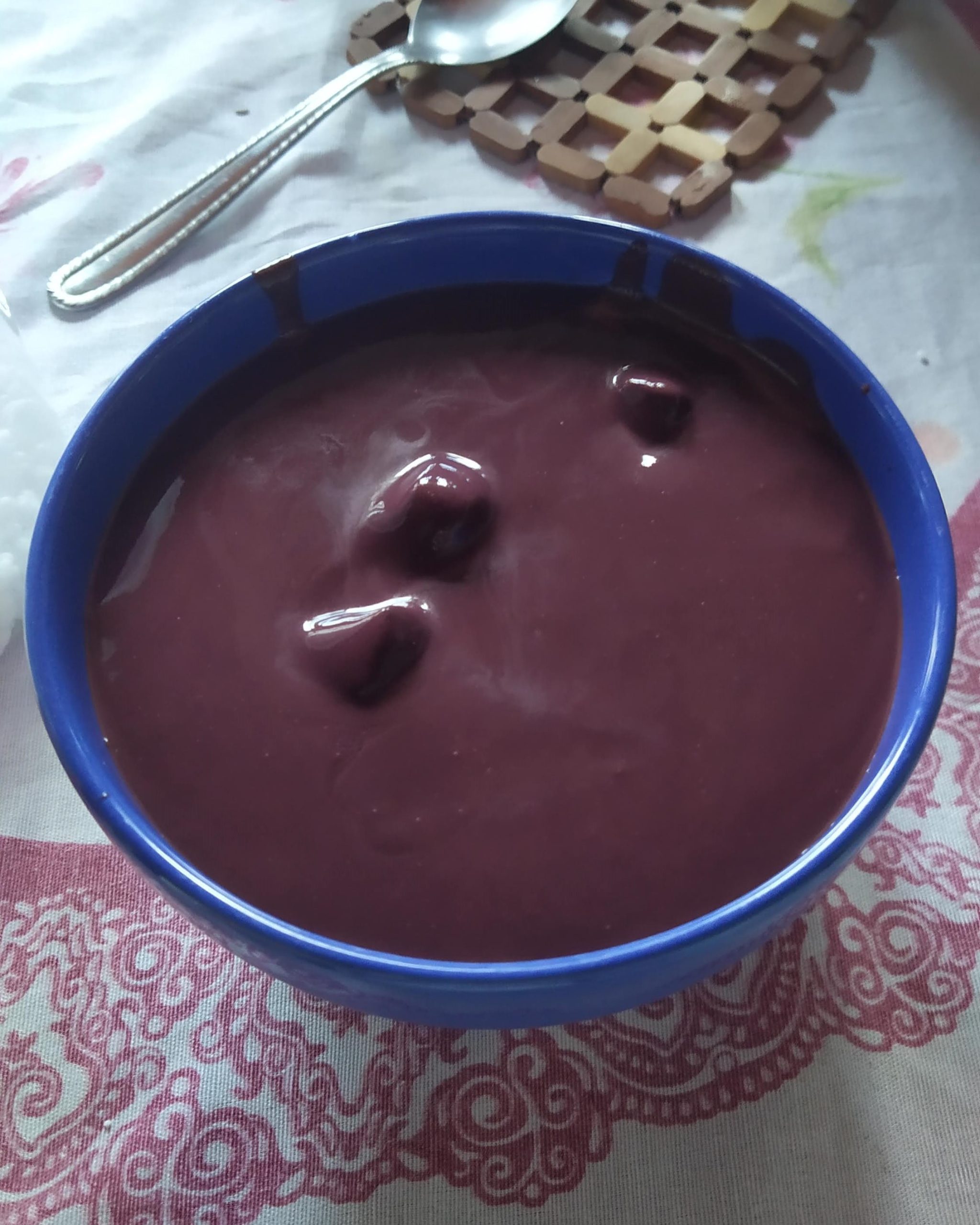
An acai bowl, acai na tigela in Portuguese, is a thick, frozen blend of Amazonian acai berries eaten with a spoon and piled with toppings. It sits somewhere between a smoothie and a sorbet: dark purple, cold, lightly sweet, and dense enough to hold a spoon upright. In Brazil it is energy food and dessert at once, sold at juice bars and beach kiosks, and it comes together at home in ten minutes with a strong blender and frozen acai pulp.
From the Amazon to the Beach
Acai is the fruit of a palm that grows across the Amazon basin, and it has been a staple food in the north of Brazil for generations, eaten there in savory ways with fish and cassava. The sweet frozen bowl is a later, southern invention. It spread through Rio de Janeiro, where surfers and gym-goers adopted acai as an energy food and blended it thick with banana and syrup. From those beaches the bowl traveled to the rest of Brazil and then around the world.
Buying Acai
Fresh acai spoils within hours of harvest, so outside the Amazon it is sold frozen, as unsweetened pulp in packets or as a sorbet-like block. Look for the unsweetened kind so you control the sweetness yourself. Freeze-dried acai powder exists too and works in a pinch, though the texture is thinner. Health food stores and Latin groceries carry the frozen packs; keep them solidly frozen until the moment you blend, because a thawed pack makes a thin bowl.
The Blend
The whole trick is keeping the blend thick. Break the frozen acai into pieces and blend it with a banana, a small amount of juice, and a spoon of sweetener. Use only enough liquid to get the blender moving, adding it a splash at a time, and stop the moment it turns smooth. A tamper helps push the frozen fruit down. The target is soft-serve thickness, dense enough to eat with a spoon and to hold toppings on the surface rather than sinking them. A frozen banana helps keep it cold and thick without extra juice.
Sweetening It
Unsweetened acai is tart and earthy, closer to a mild dark berry than to candy, so it needs a little sweetness. In Brazil the traditional sweetener is guarana syrup, made from the Amazonian guarana berry, which also adds a gentle lift. Outside Brazil, honey, maple syrup, or a pitted date blended in all work. Start with less than you think, taste, and add more, since the toppings bring their own sweetness and you can always drizzle honey on top at the end.
The Toppings
Toppings are half the appeal. The classic Brazilian bowl carries sliced banana and granola, and often a drizzle of honey and a handful of sliced strawberries. From there the field is open: other fresh fruit, shredded coconut, cacao nibs, nut butter, or chia seeds. Add them right before eating so the granola stays crunchy against the frozen base. Arrange them over the top rather than stirring them in, which is part of why the blend needs to stay thick enough to hold their weight.
Eating It Right Away
An acai bowl is a fresh-made food. It starts to melt within minutes, so blend it, top it, and eat it without delay. There is no storing a finished bowl; the pleasure is the cold, thick spoonful against the crunch of granola while it lasts. If you want to prep ahead, portion the frozen acai and set out the toppings, then blend to order. Made that way, a bowl is faster than a coffee run and far more filling.
Why Brazilians Eat It
In Brazil the acai bowl is treated as fuel as much as treat. Gyms and beach kiosks sell it to people before and after workouts, and it is common to see it eaten mid-afternoon as a filling snack rather than a dessert. The frozen pulp is calorie-dense and pairs naturally with banana and granola, which is part of why the surfer culture of Rio adopted it in the first place. That reputation traveled abroad with the bowl, where it now appears on cafe menus far from the Amazon. Made at home with unsweetened pulp, you control the sugar and the toppings, which is the difference between a genuinely good breakfast and a sugar bomb dressed up as one.
Common Questions
Why is my acai bowl runny?
Too much liquid, or the acai thawed before blending. Keep the pulp frozen hard, add juice a splash at a time, and lean on a frozen banana for body. Keep it thick enough to eat with a spoon.
Is acai sweet on its own?
No. Unsweetened acai is tart and earthy, more like a dark berry than a sweet fruit. That is why a spoon of honey or guarana syrup and sweet toppings go into the bowl.
Can I use acai powder instead of frozen pulp?
You can, blended with frozen banana and a little ice to get thickness. The texture is lighter than the frozen pulp gives, but the flavor comes through and the bowl still works.
Acai na tigela began in the Amazon, where acai palm fruit is a staple food, and spread south to Rio's beaches, where surfers turned it into the sweet, frozen bowl now eaten worldwide.