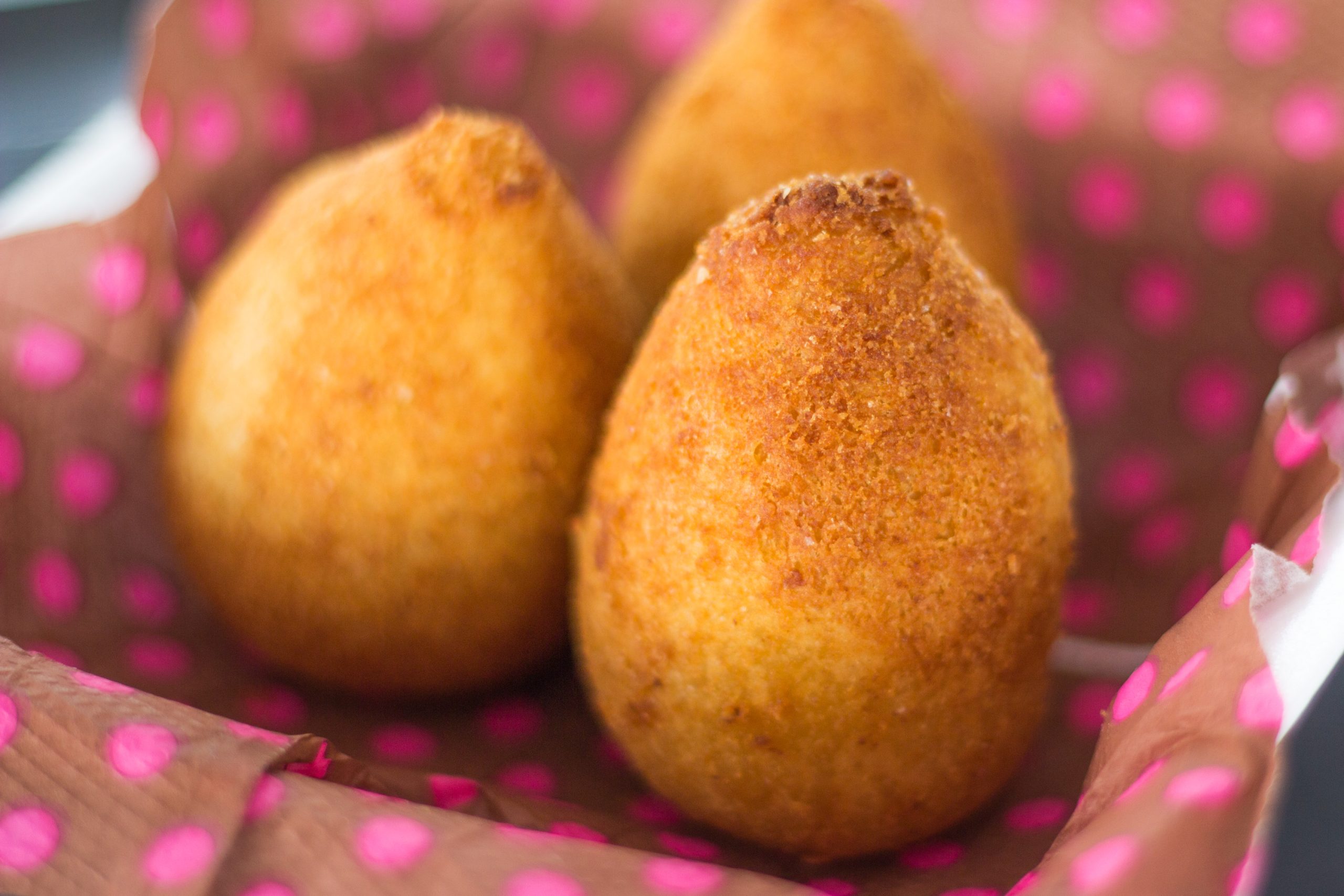
Coxinha is the teardrop-shaped chicken croquette that anchors every Brazilian snack counter. Under a crisp breaded shell sits a soft dough wrapped around shredded, seasoned chicken, often bound with a creamy cheese. The shape imitates a chicken drumstick, which is where the name comes from: coxinha means little thigh. Making them takes some patience with the dough and the shaping, but the payoff is a snack that Brazilians line up for at bakeries and devour by the dozen at parties.
Brazil’s Favorite Salgado
Coxinha belongs to the family of salgados, the savory fried and baked snacks sold at Brazilian padarias, the corner bakeries that double as coffee bars. Alongside pastel and kibe, coxinha is among the most popular, eaten as a mid-morning bite, a party finger food, or a quick lunch with hot sauce. The teardrop shape is its signature, a little peak pinched at the top that makes it instantly recognizable on any tray of snacks.
The Filling
The filling starts with chicken poached until tender, then shredded fine. Cook onion and garlic soft, fold in the chicken, season well, and add a creamy element to bind it. In Brazil that element is often catupiry, a soft, tangy cream cheese that melts into the meat. Outside Brazil, plain cream cheese does the job. The filling needs to be moist but not wet, since a runny center makes the coxinha hard to close and prone to bursting in the oil. Cool it fully before you shape.
The Dough
The shell is a cooked dough, closer to choux than to bread. You bring seasoned chicken broth and butter to a boil, add the flour all at once, and stir hard until it forms a smooth mass that pulls from the pan. Using broth rather than water builds flavor into the shell itself. Knead the warm dough until it turns elastic and pliable, which makes it easier to shape without tearing. Let it cool just enough to handle, and keep it covered, because dough that dries out cracks when you try to fold it.
Shaping the Teardrop
This is the step that takes practice. Take a piece of warm dough and flatten it in your palm into a thin disc. Place a spoon of the cooled filling in the center, then cup your hand and draw the edges of the dough up and around the filling, sealing it and pinching the top into a point so it looks like a drumstick. Any gaps let oil in and filling out, so close the seams carefully. Roll the shaped coxinha gently to smooth it before breading.
Breading and Frying
Dip each coxinha in beaten egg, then roll it in breadcrumbs for the crust that fries up crisp. The oil temperature matters more than anything: hold it at 350 F. Too hot and the shell browns before the inside warms through; too cool and the dough drinks oil and turns greasy. Fry a few at a time so the temperature stays steady, turning them until they are deep golden all over, about four minutes. Drain them on paper and let them sit a minute before biting, since the filling holds heat.
Serving and Make-Ahead
Coxinha is best hot from the oil, often with a squeeze of lime or a dab of hot sauce. For a party, shape and bread the whole batch ahead, keep them chilled, and fry in rounds as guests arrive. Shaped, unfried coxinhas also freeze well; fry them straight from frozen, adding a minute or two. That way you can make the fiddly part once and serve fresh, hot coxinhas whenever you want them.
Getting the Shape Right
The teardrop shape takes a few tries, and that is normal. The first coxinhas of your first batch will look lumpy, and they will still taste right. Keep the dough warm and covered as you work, since a cool, dry dough cracks the moment you fold it. Wet your hands slightly if the dough sticks. Aim for an even shell all the way around, thin enough to fry crisp but thick enough to hold the filling without splitting. The pointed top is tradition more than function, so do not fret if yours come out rounder than the ones at the bakery. By the end of a batch your hands learn the motion, and the last few will look the part.
Common Questions
Why do my coxinhas burst in the oil?
Either the seams were not sealed or the filling was too wet. Close the dough carefully with no gaps, and make sure the filling is thick and fully cooled before shaping.
What is catupiry, and what can replace it?
Catupiry is a soft, tangy Brazilian cream cheese used in many salgados. Plain cream cheese is the closest easy substitute and works well in the filling.
Can I bake them instead of frying?
You can bake breaded coxinhas at 400 F until golden, brushing them with oil first. The shell will be firmer and less crisp than fried, but it works for a lighter version.
Coxinha means little thigh, and its teardrop shape imitates a chicken drumstick. It became one of Brazil's most popular salgados, the savory snacks sold at every corner bakery and party.