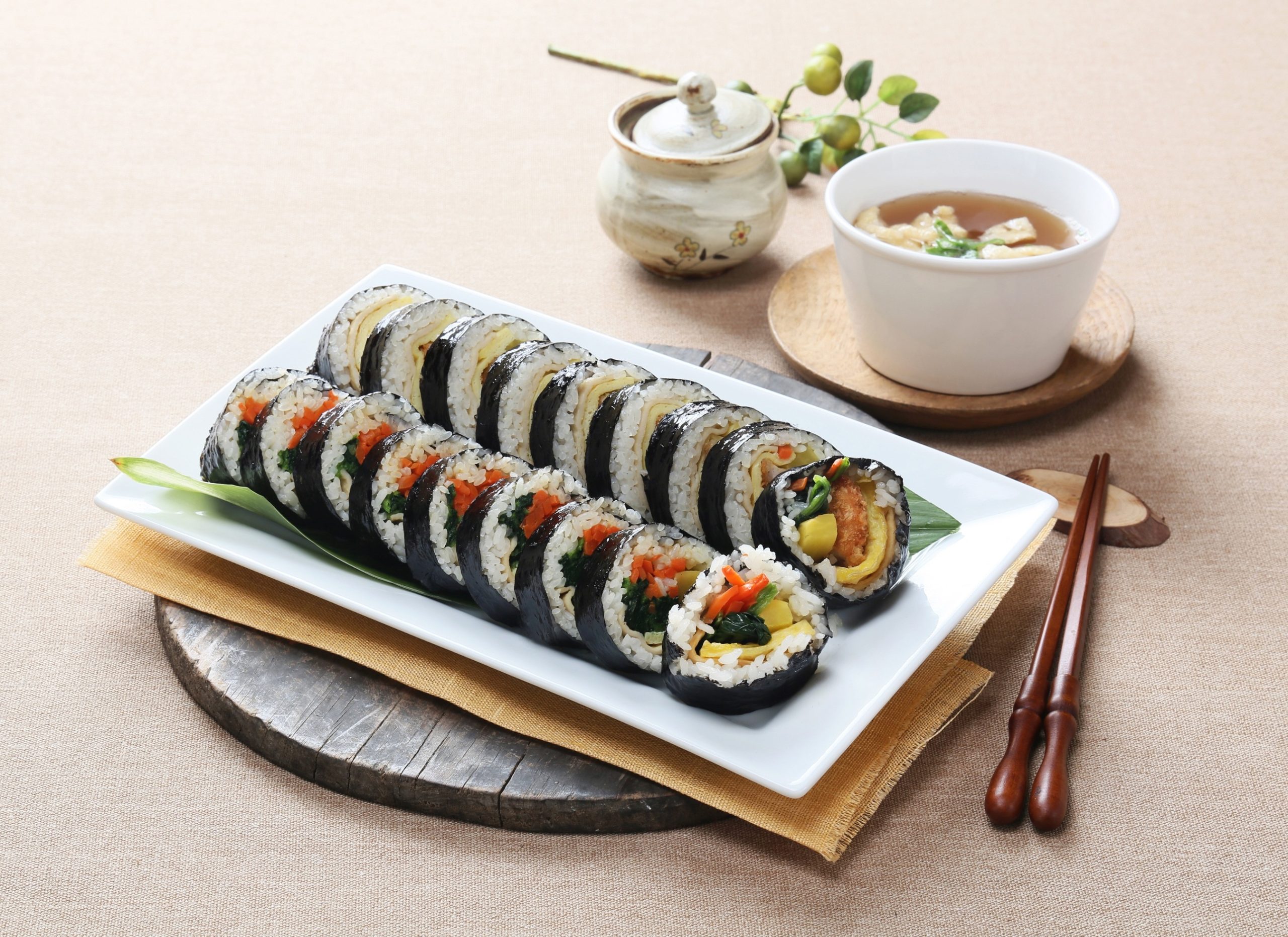
Kimbap is Korea’s favorite portable food: seasoned rice and a rainbow of prepared fillings rolled in seaweed and sliced into neat, colorful rounds. It is picnic food, lunchbox food, road-trip food, the thing Korean parents pack for field trips and gatherings. Though it looks like sushi, it is its own dish, with rice seasoned in sesame oil rather than vinegar and fillings that are cooked and marinated. Making it takes some prep, since each filling is made separately, but the result is a beautiful, satisfying roll built for sharing.
Seaweed Rice
Kimbap, sometimes spelled gimbap, means seaweed rice, from gim (dried seaweed) and bap (rice). Its origins are debated: one account ties it to Japanese norimaki introduced during the colonial period, while another points to older Korean traditions of wrapping rice and side dishes in seaweed. Whatever its exact roots, it has long since become a distinct and beloved part of Korean food, associated with childhood, picnics, and outings. It is worth saying plainly that kimbap is not Korean sushi; the seasoning, fillings, and character set it apart, as any Korean cook will tell you.
The Rice
The rice is the first thing that distinguishes kimbap from sushi. Where sushi rice is seasoned with vinegar and sugar, kimbap rice is seasoned with sesame oil, salt, and often sesame seeds, giving it a savory, nutty, slightly rich flavor instead of a tangy one. Use short-grain rice, which is sticky enough to hold the roll together, and season it while warm, then let it cool slightly before rolling. Do not overdo the sesame oil, or the rice turns greasy and slick. This simple, savory seasoning is a small change that gives kimbap its own identity.
The Fillings
Kimbap is defined by its colorful fillings, and the traditional ones are prepared and seasoned separately: strips of fried egg omelet, sauteed julienned carrot, blanched and seasoned spinach, bright yellow pickled radish (danmuji), and a protein like marinated beef bulgogi or fish cake, plus often cucumber. Each filling is cooked or seasoned on its own, which is the labor of kimbap but also its charm, since the different colors, flavors, and textures are the whole point. The idea is a spectrum of colors in each slice. You can vary the fillings, tuna, cheese, or fried pork cutlet are all popular, but keep them balanced.
Rolling
Roll kimbap with a bamboo mat, much like maki. Lay a sheet of gim shiny side down on the mat and spread a thin, even layer of seasoned rice over most of it, leaving a bare strip along the top edge to seal the roll. Arrange the fillings in neat lines across the rice near the bottom. Then roll the mat forward, pressing to form a tight, firm cylinder, and seal the bare edge. Pack it firmly so the roll holds together when sliced. A thin layer of rice and a snug roll are the keys; too much rice or a loose roll makes it fall apart.
Slicing and Finishing
Before slicing, brush the outside of the roll lightly with sesame oil, which gives it a glossy sheen and adds flavor. Then slice it into rounds with a sharp knife, and here is a useful trick: brush or wipe the blade with a little sesame oil or water too, and wipe it between cuts, so it slices cleanly through the seaweed and rice without dragging or squashing. Cut the rounds a bit under an inch thick. Arrange them cut side up to show off the colorful cross-section of fillings. A sprinkle of sesame seeds finishes them.
Serving Kimbap
Kimbap is made for eating on the go, at room temperature, which is why it is such classic picnic and lunchbox food; it does not need to be hot or cold. Serve it with kimchi or pickled radish on the side. It is best the day it is made, since the rice firms up in the fridge. A beloved trick for day-old kimbap is to dip the slices in beaten egg and pan-fry them, which revives the rice and adds a crisp, savory coating. Make a few rolls with different fillings and cut them into a colorful platter to share.
Common Questions
Is kimbap the same as sushi?
No. Kimbap rice is seasoned with sesame oil and salt, not vinegar, and the fillings are cooked and marinated rather than raw. The flavor and character are distinct. It looks similar because both roll rice and fillings in seaweed, but they are different dishes.
Why season each filling separately?
Preparing and seasoning each filling on its own gives kimbap its range of colors, flavors, and textures, which is its defining feature. It is the main effort in the recipe, but it is what makes each slice a balanced, multi-flavored bite rather than plain rice and vegetables.
What can I do with leftover kimbap?
Dip day-old slices in beaten egg and pan-fry them. This revives the firmed-up rice and adds a crisp, savory egg coating, turning leftovers into something arguably even better. It is a traditional way to use up kimbap that has been sitting.
Kimbap means seaweed rice, a Korean dish of rice and fillings rolled in dried seaweed; its origins are debated, tied both to Japanese norimaki and to older Korean seaweed-wrapping traditions.