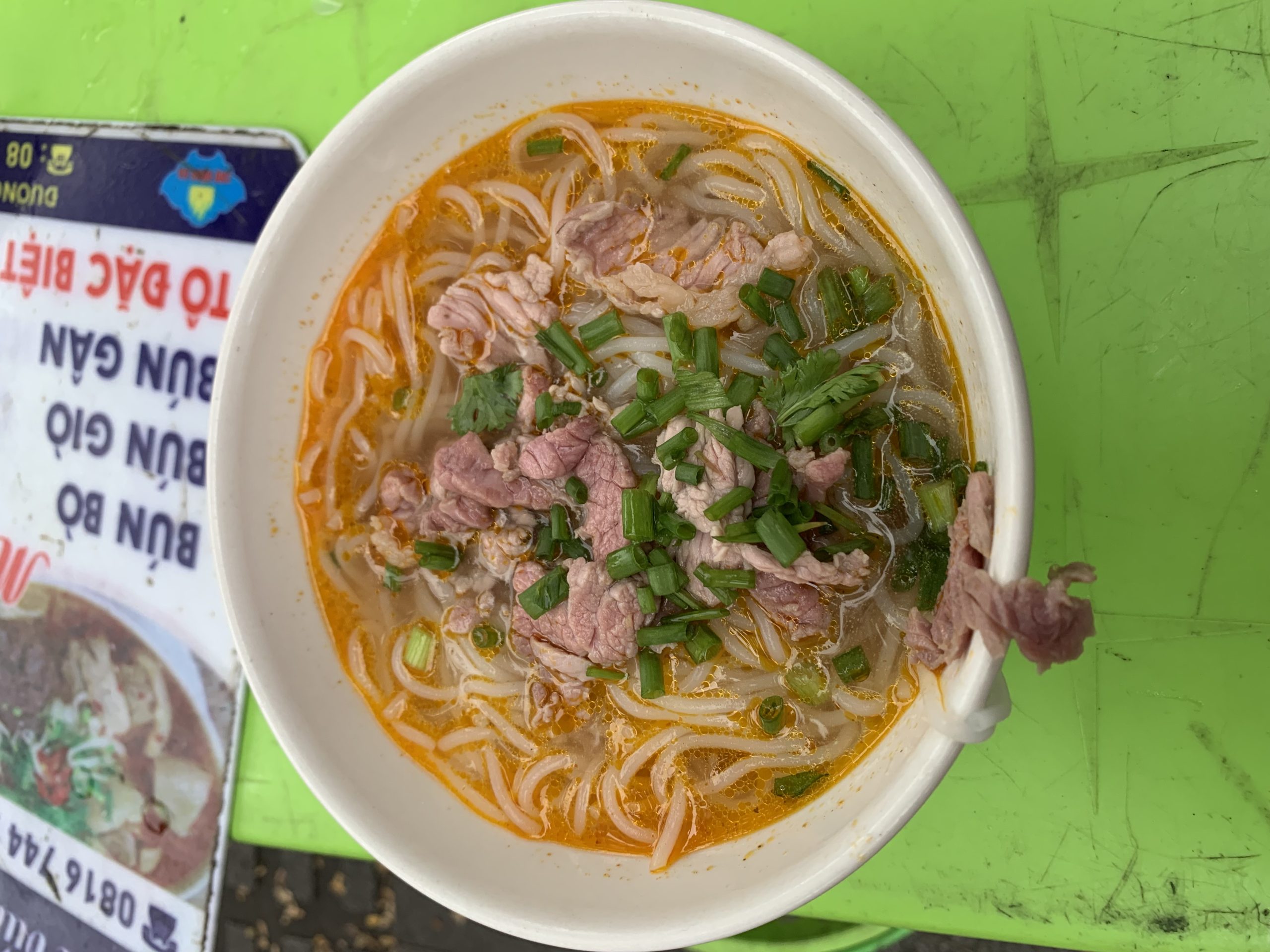
Bun bo Hue is, for many, the finest noodle soup in all of Vietnamese cooking: a bold, spicy, deeply aromatic broth of beef and pork bones simmered with lemongrass and shrimp paste, poured over thick round rice noodles and slices of tender meat, and finished at the table with a heap of fresh herbs and lime. Where pho is delicate and clear, bun bo Hue is intense and fiery, stained red-orange and layered with flavor. It takes time and a few special ingredients, and it rewards every bit of the effort.
The Soup of the Imperial City
Bun bo Hue takes its name from Hue, the city in central Vietnam that was once the imperial capital and is celebrated for its royal court cuisine. The dish is tied to that heritage, and by tradition it made its way from the elaborate kitchens of the court to the street stalls and homes of central Vietnam. Its name breaks down simply: bun for rice noodles, bo for beef, and Hue for its home city, distinguishing it from the bun bo of other regions. Central Vietnamese cooking is known for bold, spicy flavors, and bun bo Hue is its standard-bearer, a soup with a reputation for intensity that pho does not attempt.
Lemongrass and Shrimp Paste
Two ingredients give bun bo Hue its unmistakable character. Lemongrass, bruised and simmered in the broth, provides the bright, citrusy aroma that defines the soup. Hue shrimp paste, mam ruoc, adds a deep, savory, funky umami that is the soul of the dish; it is added as the settled clear liquid rather than the sediment, so the broth stays full-flavored without turning muddy. Together they set bun bo Hue apart from every other Vietnamese noodle soup. Both are worth seeking at a Vietnamese market, since substituting them away leaves a soup that is no longer really bun bo Hue. Fish sauce and a touch of sugar round out the seasoning.
The Broth
The broth is built slowly from beef bones, often shank and oxtail, together with a pork hock, which lends body and richness. Start by parboiling the bones and meat briefly, then draining and rinsing them, a step that removes scum and impurities so the finished broth stays clean and clear. Simmer them for a few hours with charred onion and ginger and the bruised lemongrass, skimming as needed, until the broth is deep and savory and the meats are tender. Patience here builds the foundation of the whole soup. The long, gentle simmer draws sweetness from the bones that balances the salt of the shrimp paste and fish sauce.
The Color and Heat
Bun bo Hue is famous for its red-orange broth and its chili heat, and both come at the end. A chili-and-annatto oil, made by warming annatto seeds and chili in oil, is stirred into the broth to give it that signature glowing color and a warm heat; annatto brings the color and chili the fire. Central Vietnamese food is spicy by reputation, so the soup carries real heat, though you can adjust it to your taste and let each eater add more. This finishing oil floats in shimmering pools on the surface and signals, before the first spoonful, that this is a bolder soup than pho.
Noodles and Toppings
The noodles are a key point of difference: bun bo Hue uses thick, round rice noodles, chewier and more substantial than the flat noodles of pho, and this hearty noodle is part of the dish’s identity. Boil them separately and divide them into bowls. The toppings are generous: slices of the simmered beef shank, pieces of tender pork hock, and rounds of chả lụa, the Vietnamese pork sausage, with cubes of congealed pork blood in the most traditional versions. Arrange the noodles and meats in each bowl, then ladle the hot, fragrant broth over the top so everything is bathed and steaming, ready for the fresh finish that comes at the table.
Serving Bun Bo Hue
Bun bo Hue is served with a large platter of fresh accompaniments that each person adds to their bowl: shredded banana blossom, bean sprouts, Vietnamese perilla and other herbs, sliced raw onion, lime wedges, and extra chili or sate. These add crunch, freshness, and acidity to balance the rich, spicy broth. Squeeze in lime, pile on herbs, and eat it hot. It is a substantial one-bowl meal, traditionally eaten in the morning in Hue but enjoyed any time elsewhere. Like most broths it deepens overnight, so leftovers of the broth are a treat, reheated with freshly boiled noodles and a new herb platter.
Common Questions
How is bun bo Hue different from pho?
Both are Vietnamese beef noodle soups, but bun bo Hue is spicier and bolder, flavored with lemongrass and shrimp paste, with thick round noodles and a red-orange broth. Pho is milder and clearer, spiced with star anise and cinnamon, and uses flat noodles. They are quite distinct.
Do I have to use shrimp paste?
Hue shrimp paste (mam ruoc) is the defining flavor, so it is hard to make authentic bun bo Hue without it. Add the settled clear liquid, not the sediment, for depth without muddiness. It is sold at Vietnamese markets and is worth seeking out.
What noodles should I use?
Thick, round rice noodles, sold fresh or dried at Asian markets and sometimes labeled bun bo Hue noodles. They are chewier and larger than pho’s flat noodles. If unavailable, a thick round noodle like a fat rice vermicelli is the closest substitute.
Bun bo Hue is a spicy rice noodle soup from the central Vietnamese city of Hue, linked to the former royal court, built on beef and pork bones, lemongrass, and shrimp paste.