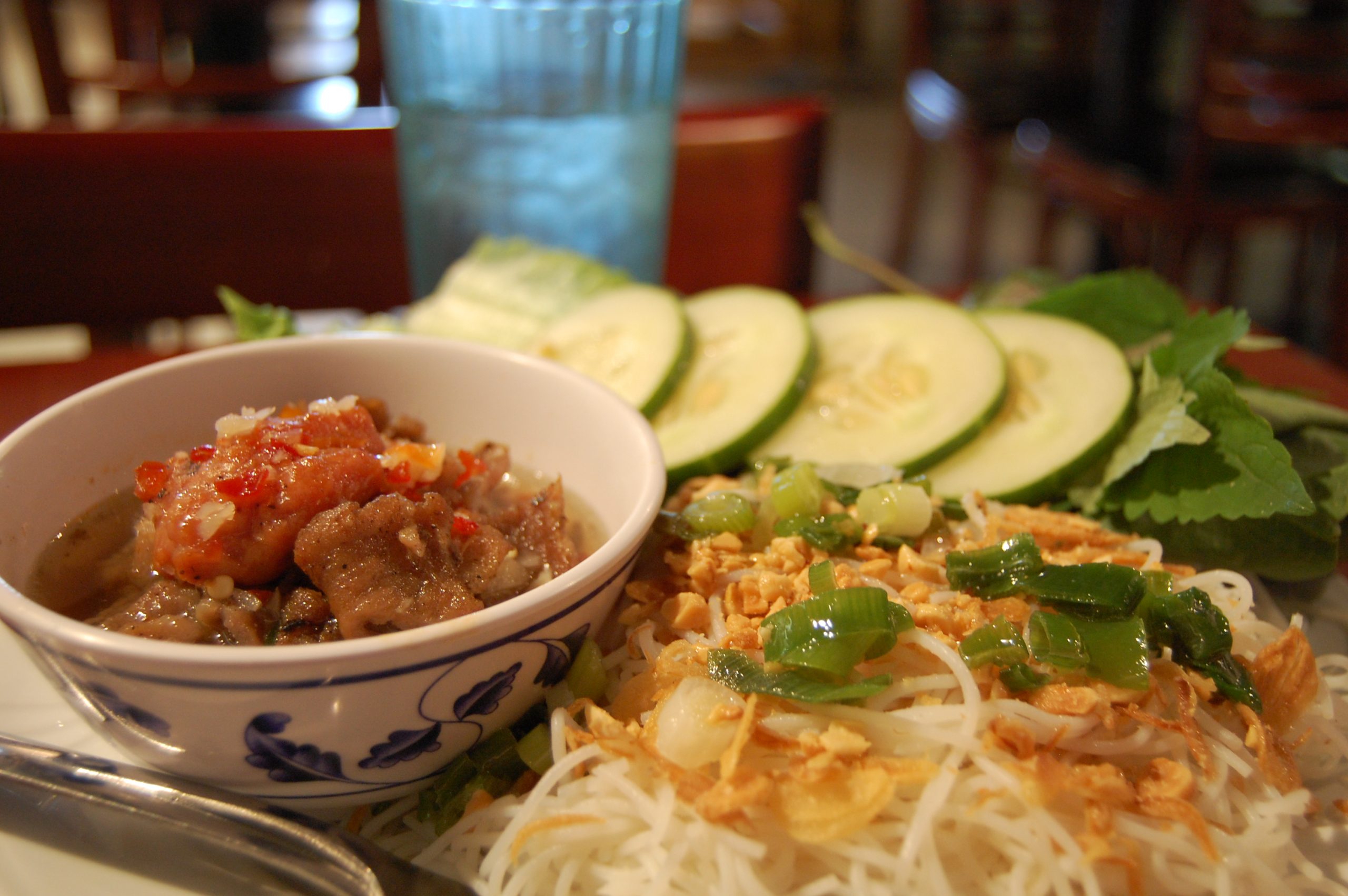
Bun cha is Hanoi on a plate: smoky pork patties and slices of grilled belly resting in a bowl of warm, sweet-sour fish sauce broth with pickled vegetables, served with cold rice vermicelli and a heap of fresh herbs. You eat it by dipping, pulling noodles and herbs through the broth with the pork, so every bite combines smoke, sweetness, acid, and freshness. It is a lunch dish in Hanoi, cooked over charcoal on the sidewalk, and it is one of the most rewarding Vietnamese dishes to make at home.
Hanoi’s Signature Lunch
Bun cha belongs to Hanoi, in Vietnam’s north, where the cooking favors clear flavors and balance over heat. The name joins bun, rice vermicelli, with cha, the grilled pork. At lunchtime the smoke of charcoal grills drifts through Hanoi’s old quarter as vendors fan the coals under pork patties and belly. The dish drew world attention in 2016, when President Barack Obama and Anthony Bourdain shared bowls of it at a small Hanoi restaurant, an image that traveled everywhere. It remains everyday food in its home city, cheap, smoky, and beloved, eaten at low tables on the sidewalk.
Two Kinds of Pork
Traditional bun cha uses pork two ways. First, cha vien: small, flat patties of ground pork seasoned with fish sauce, sugar, shallot, garlic, and pepper. Second, cha mieng: thin slices of pork belly in the same marinade. Both go over the fire until the edges char and caramelize, the sugar in the marinade helping them brown. The two textures together, springy patty and rich, crisp-edged belly, are part of the dish’s character, though a version with only patties still satisfies. Shape the patties small and flat so they cook fast and pick up maximum char in minimum time.
The Char
The defining flavor of bun cha is smoke. In Hanoi the pork grills over charcoal in small baskets, fanned until the fat drips and flares and the meat takes on a deep, smoky char. At home, a charcoal grill gives the truest result, and a gas grill, grill pan, or broiler on high all work, as long as the heat is fierce enough to char the edges. Do not cook the pork gently; pale, softly cooked pork misses the point. The slight bitterness of char against the sweet marinade and the sour broth is the flavor triangle the whole dish stands on.
The Broth
The bowl the pork lands in is a diluted, gently warmed nuoc cham: fish sauce, sugar, lime juice, and vinegar balanced with warm water into something you can almost sip, lighter than a dipping sauce but full of sweet-sour life. Into it go quick-pickled slices of green papaya or carrot, which add crunch and acidity. Taste and adjust until no single note dominates; the balance is personal, and Hanoi vendors each guard their own. The hot grilled pork goes straight into this warm broth, where it releases its smoky juices. This bowl is the center of the meal, and everything else visits it.
Noodles and Herbs
Alongside the broth bowl come cold rice vermicelli, cooked, rinsed cool, and drained into loose nests, and a generous platter of greens: soft lettuce, mint, cilantro, and perilla if you can find it. These stay separate. To eat, you take some noodles and herbs with your chopsticks, dip them into the warm broth with a piece of pork, and eat, rebuilding each bite. The cold noodles against the warm broth and hot pork is deliberate and refreshing. Do not dump the noodles into the bowl all at once; the bite-by-bite dipping is how bun cha works.
Serving Bun Cha
Serve each person a bowl of warm broth loaded with grilled pork, with the noodles and herb platter shared in the middle. Extra chili and garlic on the side let each eater sharpen their bowl. In Hanoi, fried spring rolls (nem) are a common add-on, dipped in the same broth, and they make a fine addition at home. Bun cha is a lunch dish by tradition but makes a relaxed dinner. The components hold well separately, so grill the pork last and assemble at the table, where the dipping and mixing become part of the meal.
Common Questions
Do I have to use charcoal?
Charcoal gives the truest smoky flavor, but a gas grill, grill pan, or broiler on high heat works well. What matters is fierce heat and real char on the pork edges. Gently cooked, pale pork misses the character of the dish.
Is the broth eaten like soup?
Not exactly. It is a light, warm, sweet-sour bath for the pork, used for dipping noodles and herbs bite by bite. Some sip it at the end. It is milder and more diluted than a regular dipping sauce, closer to a light broth.
What if I cannot find green papaya?
Use carrot, kohlrabi, or daikon, sliced thin and quick-pickled in vinegar and sugar. The role is crunch and acidity in the broth, and any of these fills it well. Green papaya is traditional but not essential.
Bun cha is a Hanoi dish of grilled pork patties and pork belly served in a bowl of sweetened, diluted fish sauce with pickled vegetables, eaten with cold rice vermicelli and fresh herbs.