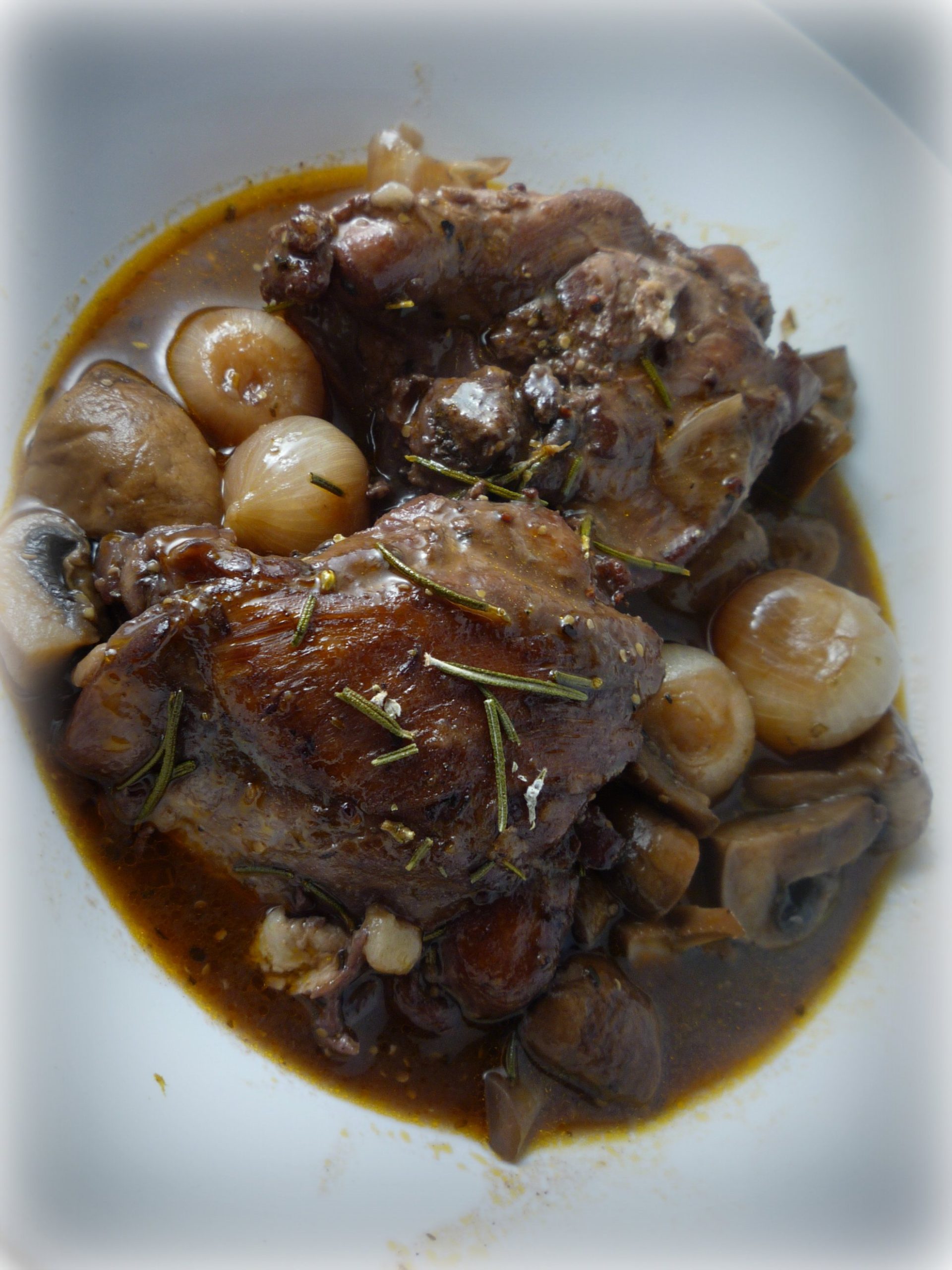
Coq au vin is French country cooking elevated by nothing more than time and a bottle of red wine. Chicken braises slowly with bacon lardons, mushrooms, pearl onions, and garlic in enough Burgundy to cover, until the meat turns silken and the wine reduces into a glossy, deeply savory sauce. It is the dish that taught generations of home cooks, on both sides of the Atlantic, that braising is mostly waiting, and that waiting is a skill worth having. Serve it over potatoes or with bread, pour glasses from a second bottle, and dinner slows down the way it is supposed to.
The Rooster in the Name
Coq means rooster, and the dish began as the French farm solution to a specific problem: an old bird too tough for roasting. Hours of gentle braising in wine broke down that sinewy meat into something luxurious, and the technique outlived the problem. Nearly every French wine region claims a version made with its own bottle, coq au riesling in Alsace among them, but the red-wine version associated with Burgundy became the standard bearer. Julia Child’s television demonstrations in the 1960s carried it into American kitchens, where it has stayed ever since. Modern chickens cook far faster than the original rooster, which is the one way this dish has gotten easier with time.
Choosing the Chicken and the Wine
Thighs and drumsticks, bone in and skin on, are the right cut. Dark meat stays juicy through two hours of braising where breasts dry out and shred, and the bones feed the sauce. As for the wine, the rule is simple: cook with a bottle you would drink. A Burgundy or another Pinot Noir is classic and gives the sauce a silky, red-fruited depth; a Côtes du Rhône or a medium-bodied Merlot works honorably. Skip anything labeled cooking wine, which is salted and thin. The wine reduces by more than half, concentrating whatever character it started with, good or bad.
Lardons First, Everything After
The cooking order builds the flavor. Diced lardons or thick bacon render first, leaving their fat in the pot and their crisped selves set aside for the finish. The chicken browns in that fat, skin side down and unhurried, until deeply golden; browning is the single biggest flavor decision in the recipe. Onion and garlic soften in what remains, flour dusts over everything to thicken the eventual sauce, and then the wine and broth go in with a scrape of the pot bottom. The chicken returns, the liquid comes to a bare simmer, and the pot holds there, partially covered, for about ninety minutes to two hours.
Mushrooms and Pearl Onions Deserve Better
The classic garnish of browned mushrooms and glazed pearl onions goes in during the last half hour, not the first, and ideally gets its own sauté beforehand. Mushrooms dumped raw into a braise turn gray and waterlogged; halved and browned hard in butter first, they hold their shape and bring a roasted edge to the sauce. Pearl onions peel far more easily after a one-minute blanch in boiling water. Frozen pearl onions, already peeled, are a shortcut nobody at the table will detect. Stir the reserved lardons back in at the end so they keep some crispness.
Finishing the Sauce
When the chicken is tender, judge the sauce. It needs to coat a spoon lightly; if it runs thin, lift out the chicken and boil the liquid down for a few minutes, or whisk in a knob of butter mashed with flour, the classic beurre manié, and simmer briefly. Taste for salt last, since the lardons and reduction both concentrate it. A scatter of fresh parsley over the finished pot adds the only color the dish needs. The sauce is the soul of coq au vin; give it these final two minutes of attention.
Serving and the Day-Two Secret
In France the braise arrives with boiled or mashed potatoes, buttered noodles, or simply a torn baguette for the sauce. A green salad after, in the French manner, resets the palate. The famous secret is that coq au vin improves overnight, as the wine mellows and the chicken drinks in the sauce, so cooking it a day ahead for guests is not a compromise but an upgrade. It keeps three days refrigerated and freezes well for two months.
Common Questions
Do I need to marinate the chicken in wine overnight?
Traditional recipes often do, and it deepens the color and flavor. This version skips it in favor of thorough browning and a long braise, which delivers most of the benefit without the planning.
Does the alcohol cook off?
Most of it. Long simmering drives off the majority of the alcohol, leaving the wine’s acidity and fruit. A trace remains, as in any wine braise, but the dish tastes of sauce, not of drink.
Can I make it with white wine?
Yes, and France beat you to it: coq au vin blanc, notably the Alsatian riesling version, is a lighter, equally traditional relative. Use a dry white and expect a golden, gentler sauce.
Coq au Vin, literally \'rooster with wine’, is a rustic French dish that originated in Burgundy. Historically, it was a way to tenderize tough old roosters by slow-braising them in red wine. Today, it\'s typically made with chicken, but the principle remains the same: long, slow cooking transforms simple ingredients into a deeply flavorful and comforting stew. The rich sauce, infused with bacon, mushrooms, and pearl onions, is the heart of the dish, making it a perfect example of French country cooking.