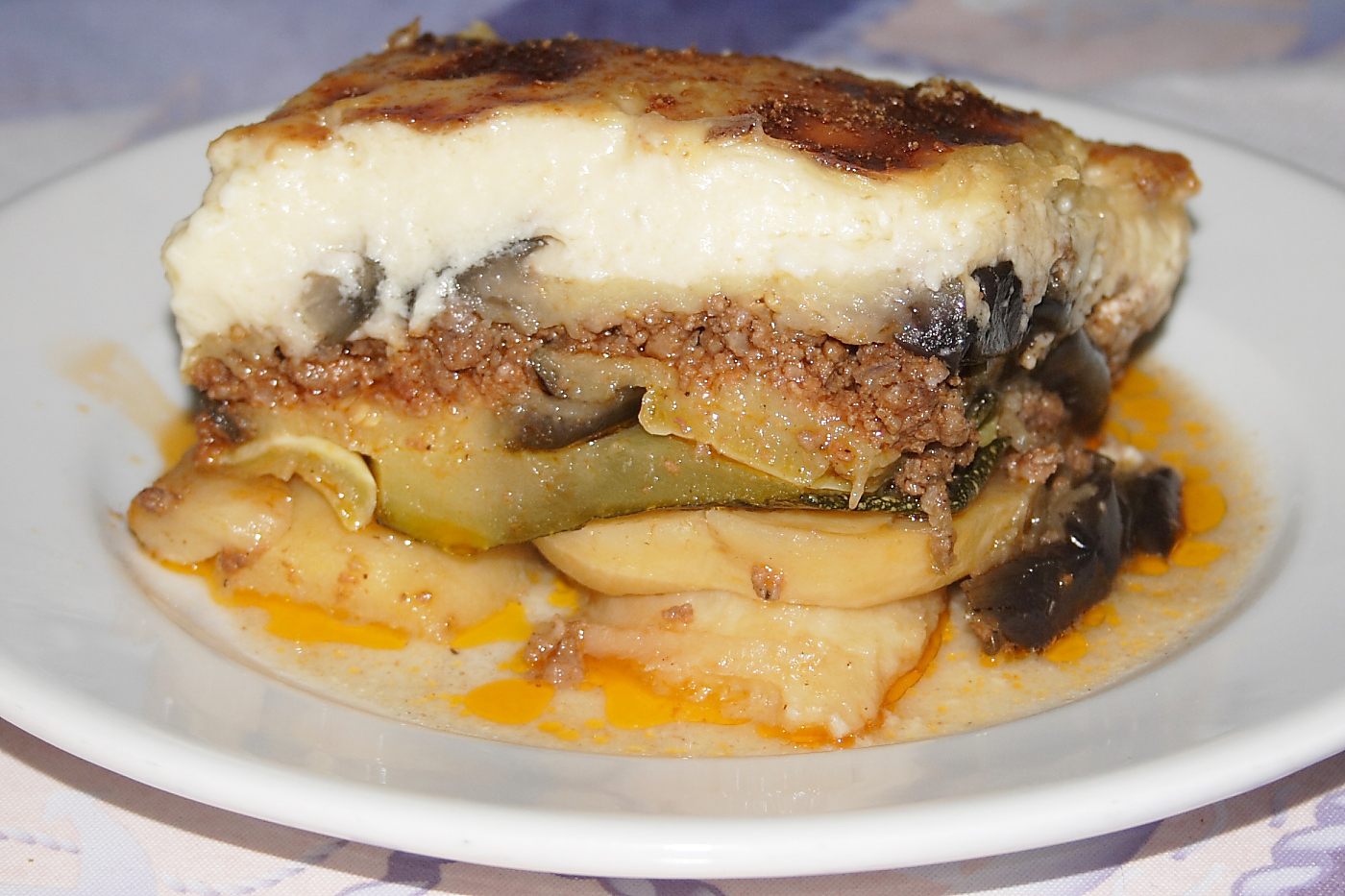
Greek moussaka is a casserole with architecture: a base of golden fried eggplant, a middle story of ground meat simmered with tomato, red wine, and warm spices, and a thick roof of béchamel that bakes into a bronzed, custardy crown. Cut properly, a square of moussaka stands on the plate in visible layers, and the first forkful delivers all three at once. It is the centerpiece dish of Greek family tables and tavernas alike, the thing yiayias are judged by, and a project worth an unhurried afternoon.
Older Dish, Modern Form
Layered eggplant and meat dishes exist across the eastern Mediterranean and the Middle East, and versions of moussaka appear from the Balkans to the Levant. The Greek form, with its distinctive béchamel top, is credited to Nikolaos Tselementes, the influential Greek chef whose 1920s cookbooks reshaped the national cuisine with French techniques. His addition of the white sauce turned a rustic bake into the tall, sliceable dish Greece now exports to the world. The cinnamon and nutmeg in the meat layer, though, are thoroughly Greek instincts, and they are what make moussaka taste like moussaka rather than lasagna’s cousin.
Taming the Eggplant
Three large eggplants, sliced a half inch thick, form the foundation. Salt the slices and let them sit in a colander for thirty minutes; the salt pulls out moisture, seasons the flesh, and softens any bitterness in older eggplants. Pat them thoroughly dry, then cook them until golden. Frying in olive oil is traditional and gives the richest result, though eggplant drinks oil enthusiastically. Brushing the slices with oil and roasting them at high heat is the lighter route most home cooks now take, and it sacrifices little. Undercooked eggplant never recovers in the oven, so cook the slices fully soft and colored at this stage.
A Meat Sauce With Warm Spices
Ground lamb is the traditional meat and beef the common substitute; a mix of the two gives depth without lamb dominating. The sauce follows a familiar path with a Greek accent: onion and garlic soften, the meat browns, red wine deglazes and simmers off, crushed tomatoes join, and then cinnamon and nutmeg go in and change the dish’s nationality. Simmer the sauce until it is thick and nearly dry, a good twenty to thirty minutes, because a wet meat layer slides apart when sliced and waters down the béchamel above it. Taste for salt at the end; the reduction concentrates everything.
The Béchamel Roof
Greek moussaka béchamel is thicker and richer than the French sauce it descends from, closer to a pourable custard. Butter and flour cook into a roux, milk whisks in gradually until smooth, and the sauce simmers until it coats a spoon heavily. Off the heat, a beaten egg yolk enriches it and helps it set into a sliceable layer in the oven; temper the yolk with a little hot sauce first so it does not scramble. A pinch of nutmeg and a handful of grated cheese, Kefalotyri in Greece or Parmesan elsewhere, finish it. Pour it thick over the assembled layers, a full inch, and smooth the top. More cheese on the surface bakes into the bronze crust everyone fights over.
Assembly, Baking, and the Mandatory Rest
Layer eggplant, then all the meat sauce, then remaining eggplant, then béchamel, in a deep baking dish. Bake at 350 F for about forty-five minutes to an hour, until the top is deeply golden. Then comes the step that separates neat squares from delicious rubble: rest the moussaka for at least thirty minutes before cutting. The layers set as they cool, and a moussaka cut hot collapses into a puddle, tasty but humbling. Greek households often bake it hours ahead and serve it warm rather than hot, which is when the flavors sit best anyway.
Serving and Storing
Moussaka is a complete meal needing only a sharp counterpoint: a Greek salad with tomatoes, cucumber, olives, and feta, or simply lemon-dressed greens. Crusty bread mops the dish. Leftovers keep four days refrigerated and reheat beautifully in the oven, with many partisans insisting day two beats day one. It freezes well too, whole or in portions, for two months; thaw overnight in the refrigerator before reheating covered.
Common Questions
Can I add potatoes?
Many Greek families lay a base of thinly sliced, par-cooked potatoes under the eggplant, which steadies the slices and stretches the dish. It is a fully traditional option, not a shortcut.
Can I make it vegetarian?
Yes. Replace the meat with brown lentils simmered in the same tomato-wine-spice sauce, or with a mix of mushrooms and lentils. The béchamel and eggplant carry the dish, and the vegetarian version is common in Greece during fasting seasons in oil-based forms.
Why is my moussaka watery?
Almost always underdried eggplant or an underreduced meat sauce. Salt and fully cook the eggplant, simmer the sauce nearly dry, and give the baked dish its full rest before slicing.
Moussaka is a quintessential Greek dish, a hearty and comforting casserole that embodies the flavors of the Mediterranean. While similar layered dishes exist in other Balkan and Middle Eastern cuisines, the Greek version is distinguished by its thick, creamy béchamel sauce topping. The preparation is a labor of love, involving salting and frying eggplant slices, simmering a rich, spiced lamb or beef ragu, and then carefully assembling the layers before baking to golden perfection. It\'s a dish that truly shines when made with care and patience.