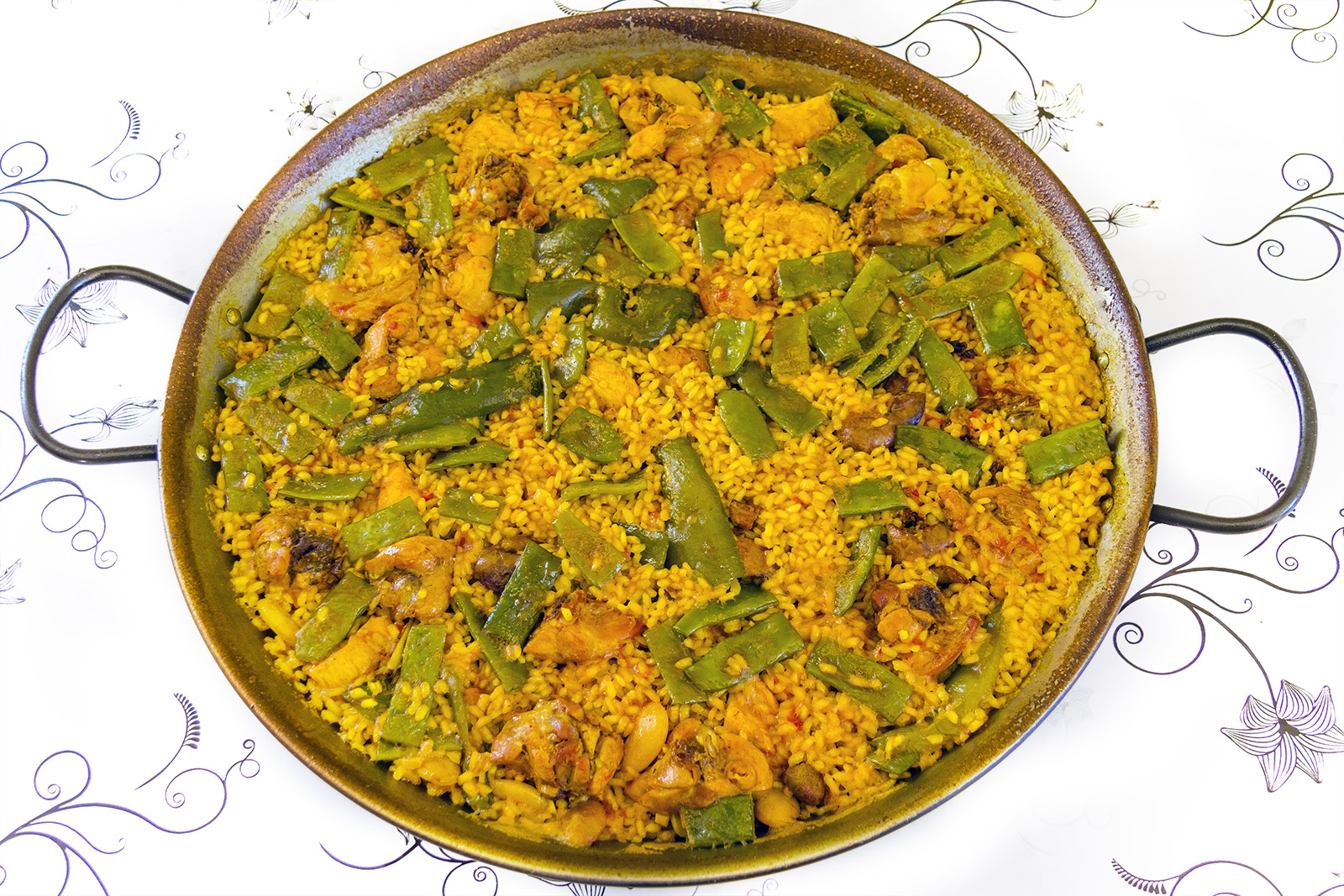
Paella valenciana is one of the most famous dishes on earth and one of the most misunderstood. The original from Valencia contains no shrimp, no mussels, no chorizo: it is a rice dish of chicken, rabbit, green beans, and big white garrofó beans, cooked in a wide shallow pan over an open flame until the grains stand separate and a caramelized crust called socarrat forms on the bottom. Valencians grow up eating it at Sunday lunch, cooked outdoors by whoever in the family holds the paella duty, and they defend its ingredient list with the seriousness other regions reserve for football.
From the Fields of Valencia
Paella grew out of the rice fields around the Albufera lagoon south of Valencia, where farm workers cooked lunch over wood fires in a flat pan using what the land provided: rice, garden vegetables, snails, rabbit, and later chicken. The word paella refers to the pan itself. Seafood versions developed along the coast and abroad, and they are delicious, but in Valencia they carry different names, and mixing seafood with meat in one pan, the so-called paella mixta, is the version locals tease tourists about. This recipe is the inland original, and its flavor comes from browned meat, sweet paprika, saffron, and the rice itself.
The Rice Is the Star
Everything else on the pan exists to flavor the rice. Bomba and Calasparra, the short Spanish varieties this recipe calls for, absorb up to three times their volume in liquid while staying firm and separate, which is exactly the behavior paella requires. Long-grain rice stays too aloof and risotto rice turns creamy; neither works here. The ratio runs about two and a half to three parts broth to one part Bomba. Once the rice spreads evenly across the pan and the broth goes in, the cardinal rule takes effect: no stirring. Stirring releases starch and makes paella into something else. The rice cooks undisturbed, first at a strong boil, then at a simmer, for about eighteen to twenty minutes total.
Building Flavor Before the Rice
A proper paella spends most of its cooking time before the rice appears. The chicken and rabbit brown slowly and thoroughly in olive oil, twenty unhurried minutes, until deep golden; this browning is the backbone of the dish. The green beans and garrofó follow, then the grated tomato fries down into a jammy sofrito with the sweet paprika, which needs only seconds in the oil before liquid arrives, since paprika scorches fast. Saffron threads, steeped in warm water to pull out their color, go in with the hot broth. Salt the broth confidently; once the rice is in, correcting the seasoning becomes impossible without stirring.
Chasing the Socarrat
Socarrat, from the Valencian word for scorched, is the thin layer of rice that toasts and crisps against the pan bottom in the final minutes. It is the most prized part of the dish, and cooks fight over it. To build it, raise the heat for the last one to two minutes once the liquid has disappeared, listening for a faint crackle and pulling the pan off before crackle turns to burnt smell. Nerve is required. If your pan is wider than your burner, rotate it during cooking so the socarrat forms evenly, or finish over two burners.
The Pan and the Fire
A true paella pan is wide, shallow, and thin-walled, designed to maximize the rice’s contact with the pan and let liquid evaporate fast. A forty-centimeter pan serves six. Lacking one, use your widest shallow skillet and cook a smaller batch; depth is the enemy, because thick layers of rice steam instead of toasting. Valencians traditionally cook over orange-wood fires, which perfume the rice and cover the whole pan in even heat. A grill or a large burner is the home substitute. After cooking, the pan rests, loosely covered with a cloth or foil, for five minutes before serving. Valencians eat it directly from the pan, each person working a wedge from edge to center, with lemon wedges and nothing else.
Common Questions
Rosemary or no rosemary?
A sprig of fresh rosemary, added with the broth and fished out before serving, appears in many Valencian family versions and perfumes the rice beautifully. It is a matter of household taste rather than doctrine, so try the pan both ways and pick your side.
I cannot find rabbit. What replaces it?
Use all chicken, preferably thighs, and the paella remains excellent. Rabbit contributes a slightly gamey depth, and it is worth trying when you find it, but no Valencian would send back an all-chicken pan made well.
What is garrofó and what substitutes for it?
Garrofó is a large, flat white bean grown in Valencia. Canned butter beans or large lima beans, drained and rinsed, are the standard substitutes and come remarkably close.
Why did my rice come out mushy?
Too much liquid, the wrong rice, or stirring. Measure the broth, use Bomba or Calasparra, spread the rice thin, and keep your spoon out of the pan once the boil begins.
Paella is more than just a dish; it\'s a communal experience, a symbol of Spanish culinary heritage. While many variations exist, Paella Valenciana is considered the original, hailing from the rice-growing region of Valencia. It traditionally features chicken, rabbit, and sometimes snails, cooked with green beans, garrofó (a type of white bean), and saffron-infused rice in a wide, shallow pan called a paellera. The most coveted part is the \'socarrat\'—the crispy, caramelized layer of rice that forms at the bottom of the pan, a sign of a perfectly executed paella.