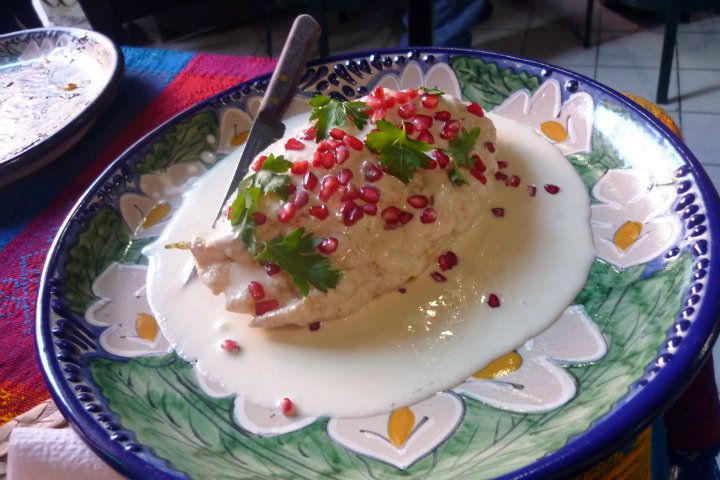
Chiles en nogada is the most patriotic dish in Mexican cooking and one of its most elegant: a roasted poblano pepper stuffed with a sweet-savory picadillo of pork, beef, and fruit, draped in a cold white walnut cream sauce, and scattered with pomegranate seeds and parsley. Green, white, and red, the colors of the Mexican flag on a single plate. It appears in Puebla and across Mexico in late summer, when fresh walnuts and pomegranates come into season, and eating it in August or September around Independence Day is a national tradition.
A Dish Wrapped in a Story
The popular account traces chiles en nogada to the Augustinian nuns of Puebla, who are said to have created it in 1821 to honor Agustín de Iturbide as he passed through the city after signing the treaty that sealed Mexico’s independence. Historians debate the details, as they do with most origin legends, but the association between the dish, Puebla, and Independence Day is beyond dispute. Restaurants in Puebla compete fiercely over their versions each season, and families guard recipes across generations. Whatever its precise birth, the dish reads as a celebration on a plate.
The Picadillo: Meat Meets Fruit
The filling is where this recipe departs from every other stuffed pepper you have made. Ground pork and beef brown together, then apple, peach, raisins, and slivered almonds fold in, along with onion, garlic, and tomato in most family versions. The fruit is not a garnish; it is half the point. Cooked down with the meat, it produces a filling that swings between savory and sweet in the same bite, which the walnut sauce then echoes. Dice the fruit small, about the size of the raisins, so every spoonful carries the full mix. Season with salt and a pinch of cinnamon if you like, then let the picadillo cool before stuffing, since a hot filling tears the delicate roasted chiles.
Roasting and Peeling the Poblanos
Large, flat poblanos with unbroken skin stuff most easily. Char them directly over a gas flame or under a broiler until the skin blisters black on all sides, then steam them in a covered bowl for ten minutes. The skins slip off with your fingers; avoid rinsing under water, which washes away roasted flavor. Cut a single slit down one side, remove the seeds and veins carefully, and keep the stem attached, which is traditional and holds the pepper together. Poblanos run mild, though the occasional rogue pepper carries real heat; there is no way to know until you taste.
The Nogada, a Sauce Worth the Peeling
Nogada comes from nogal, the walnut tree, and the sauce is a smooth blend of walnuts, crema, fresh cheese, and a little milk, served cold or at room temperature over the warm chile. The traditional labor of the dish is peeling the thin brown skin from every walnut, because the skins turn the sauce bitter and beige instead of sweet and ivory. Soaking the walnuts in milk overnight loosens the skins and mellows the nuts. Fresh-season walnuts, available in late summer, peel far more easily and taste creamier, which is part of why the dish is seasonal. Blend until completely smooth; a grainy nogada undercuts the whole production.
To Batter or Not to Batter
Puebla splits into two camps. One dips the stuffed chile in whipped egg batter and fries it (capeado) before saucing; the other serves the roasted chile bare under the nogada. The battered version is older and richer; the unbattered version, used in this recipe, is lighter and lets the pepper’s roasted flavor lead. Both are defended with passion in Puebla every season, so cook the one that suits your table and call it tradition either way.
Serving It Right
Chiles en nogada is served as a main course, one chile per person, at warm-not-hot temperature with the cool sauce poured over just before the pomegranate seeds and parsley go on. It is a rich plate that needs little beside it: white rice, a light soup to start, or simply good bread. In Puebla it anchors September menus on its own. Assemble at the last minute, because the sauce thins as it sits on the warm pepper.
Common Questions
When is the right season to make it?
Late July through September, when fresh walnuts, pomegranates, and the panochera apples and criollo peaches of central Mexico all overlap. Outside Mexico, any crisp apple and ripe peach work, and the pomegranate arils sold in cups extend the season into fall.
Can I make the components ahead?
Yes. The picadillo keeps three days refrigerated and the roasted, peeled chiles two days. Make the nogada the day you serve; walnut sauce oxidizes and loses its clean color overnight.
What substitutes for crema Mexicana?
Sour cream thinned with a spoonful of milk comes close. Crème fraîche works even better, with the same gentle tang and a richer body.
Is the dish spicy?
Rarely. Poblanos are mild, the fruit-laced filling is gently sweet, and the walnut sauce cools everything further. This is one of the least spicy classics in Mexican cooking.
Chiles en Nogada is a dish steeped in Mexican history and patriotism. Legend has it that it was created by nuns in Puebla in 1821 to honor Agustín de Iturbide, the military commander who signed the treaty granting Mexico independence from Spain. The dish proudly displays the colors of the Mexican flag: the green of the poblano pepper, the white of the walnut sauce (nogada), and the red of the pomegranate seeds. The filling, known as picadillo, is a complex mixture of shredded meat, fruits like apples and peaches, and spices, reflecting the blending of indigenous and Spanish culinary traditions.