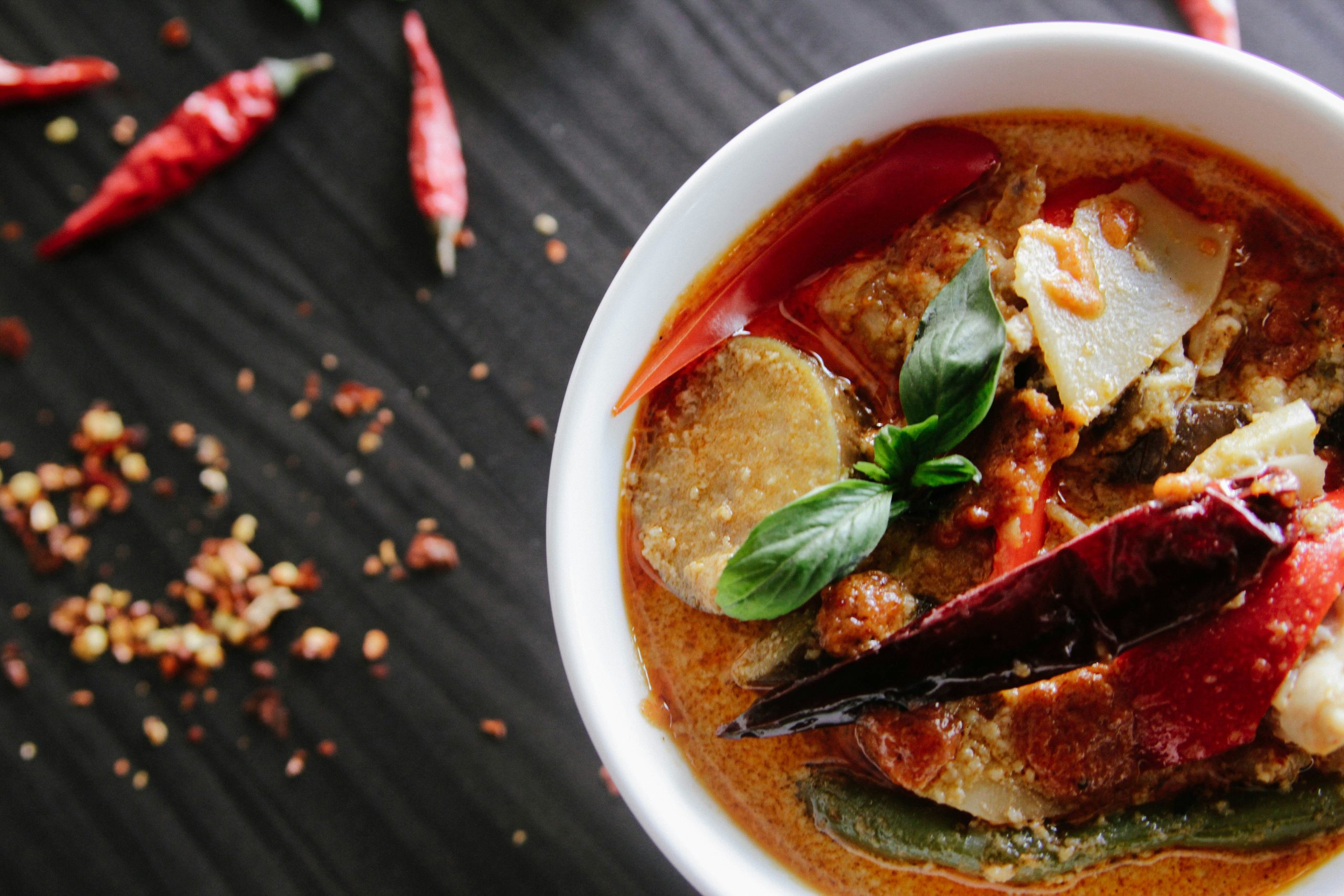
Gaeng keow wan translates roughly as “sweet green curry,” and the name describes the color, not the sugar. This is the hottest of the classic Thai coconut curries, built on a paste of fresh green chilies, lemongrass, galangal, and makrut lime, then mellowed with coconut milk, palm sugar, and fish sauce. Done right, it lands on the tongue in waves: creamy first, then herbal, then salty-sweet, with the chili heat arriving last and staying a while. It comes from the central plains of Thailand and remains one of the country’s most cooked dishes, at home and in restaurants alike.
The Paste Decides Everything
Every Thai curry begins with its paste, and green curry paste is a pounded blend of green bird’s eye chilies, lemongrass, galangal, garlic, shallots, makrut lime zest, coriander root, shrimp paste, and spices. Making it fresh in a mortar produces the brightest result, but a good commercial paste is a legitimate shortcut used in plenty of Thai kitchens. Brands imported from Thailand, such as Mae Ploy or Maesri, run hotter and more concentrated than Western supermarket versions, so start with less and adjust. Three tablespoons of a Thai brand gives this recipe a firmly spicy character.
Cracking the Coconut Milk
The defining technique of a Thai coconut curry is frying the paste in coconut cream rather than oil. Spoon the thick cream from the top of the can into a hot wok and cook it, stirring, until the fat separates and glistens. Thai cooks call this cracking the cream. The paste then fries in that released fat, which blooms the aromatics and cooks away their raw edge. Only after the paste smells fragrant and the oil takes on a green tint does the rest of the coconut milk go in. Skipping this step is the most common reason homemade green curry tastes flat and boiled instead of rich and layered.
Balancing Salt, Sweet, and Heat
Thai cooking works by balance, and the seasoning of this curry rests on two ingredients. Fish sauce carries the salt and a deep savory undertone; palm sugar rounds the edges and plays against the chili. Add both, then taste and correct. The finished sauce needs to taste slightly stronger than seems right on its own, because it will be eaten over plain jasmine rice that dilutes every spoonful. If the curry tastes harsh, more palm sugar softens it. If it tastes dull, more fish sauce wakes it up.
The Vegetables That Belong Here
Thai eggplants, small, round, and pale green, are the traditional vegetable in this curry. They hold a slight crunch even after simmering and soak up the sauce beautifully. Quarter them just before cooking, because they brown quickly once cut. Bamboo shoots add a mild, tender contrast. Outside Thailand, ordinary eggplant cut into chunks, or even green beans and zucchini, stand in without shame. The chicken goes in as thin slices so it cooks through in minutes and stays tender.
Lime Leaves and Thai Basil
Makrut lime leaves, torn to release their oils, simmer in the sauce and give the curry its unmistakable citrus perfume. Remove the leaves before serving or warn your guests, since they are too tough to chew. Thai basil, with its purple stems and anise-like flavor, goes in off the heat at the very end so it wilts without cooking. Italian basil is a different plant with a different taste; it works as a last resort, but the anise note of the Thai variety is part of the dish’s identity. Sliced red chilies scattered on top add color and a fresh bite.
Serving It the Thai Way
Green curry is served over jasmine rice or, in a pairing common across central Thailand, poured over khanom jeen, thin fresh rice noodles. The sauce in this recipe stays pourable rather than thick, which is authentic; Thai curries are closer to soup than to stew. A plate of raw vegetables or a simple cucumber relish on the side cools the palate between bites. Portion it generously, because the sauce disappearing into the rice is the whole point.
Common Questions
Can I make it with shrimp or tofu?
Yes. Shrimp cook in two to three minutes at the end. For tofu, use firm cubes and, to keep the dish fully vegetarian, replace fish sauce with soy sauce and confirm your curry paste contains no shrimp paste.
How spicy is this recipe?
With three tablespoons of Thai-brand paste, firmly medium-hot. Reduce to two tablespoons for a gentler pot, or stir in extra coconut milk at the end to tame the heat without losing flavor.
How long do leftovers keep?
Three days in the refrigerator. Reheat gently on the stove; a hard boil can split the coconut milk. The basil loses its color overnight, so add a few fresh leaves when serving again.
Green curry, or \'Gaeng Keow Wan\' (literally \'sweet green curry’), is one of Thailand\'s most beloved dishes. The \'sweet\' in its name refers to the specific shade of green rather than the flavor profile, though it does balance heat with the natural sweetness of coconut milk. The vibrant color comes from fresh green chilies pounded into a paste with lemongrass, galangal, and makrut lime. Unlike Indian curries that simmer for hours, Thai curries are cooked quickly to preserve the bright, fresh flavors of the herbs and vegetables.