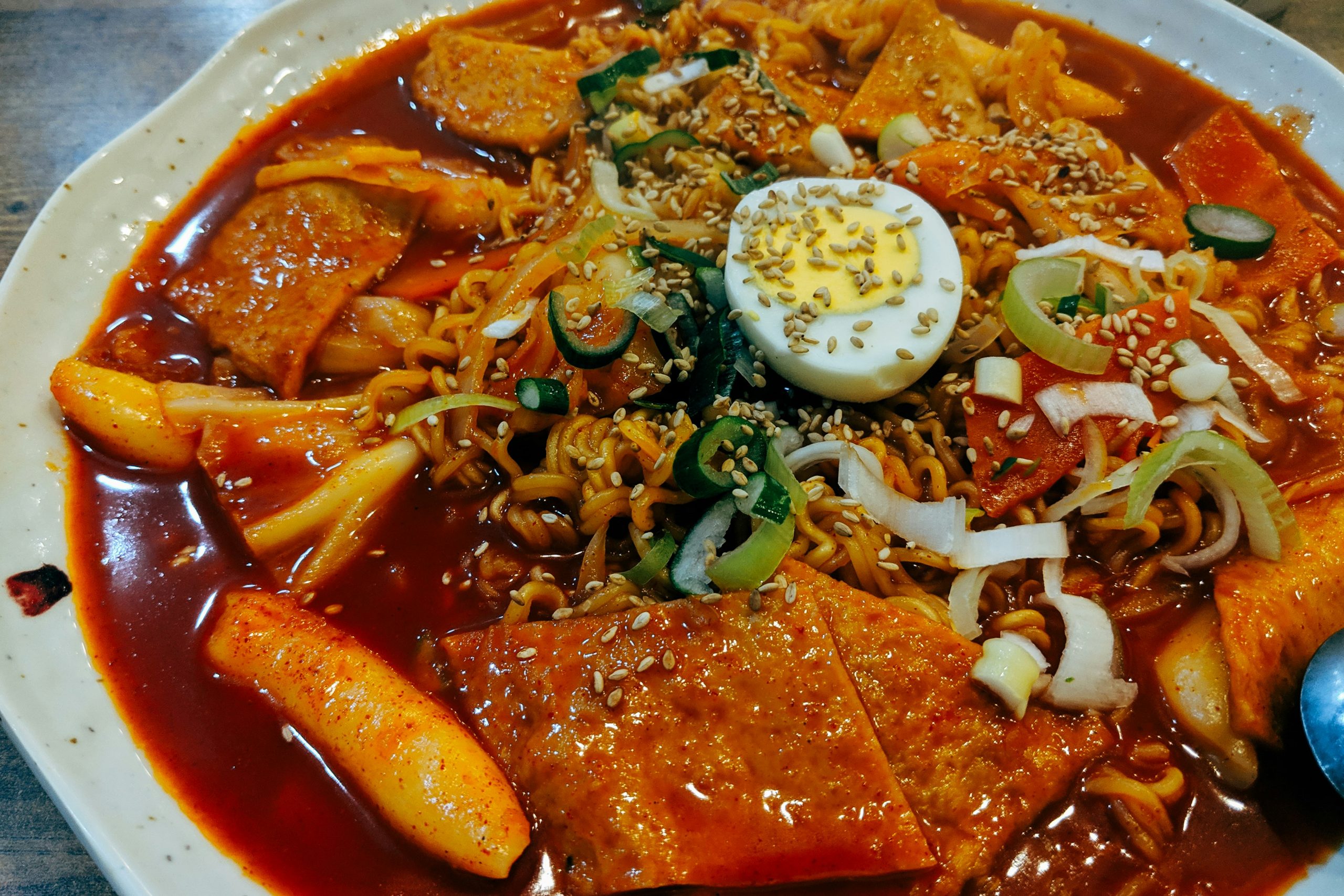
Kimchi jjigae is the stew Koreans make when the kimchi in the fridge has fermented past the point of eating raw. Instead of throwing that jar away, you cook it. Heat transforms the sharp, sour cabbage into something round and deeply savory, and a handful of pork belly and a block of tofu turn it into a full meal. In Korea this is weeknight food, cooked in one pot in about half an hour and brought to the table still bubbling, with a bowl of steamed rice on the side.
Why Old Kimchi Matters
The single most important ingredient in this recipe is kimchi that has fermented for at least three weeks. Koreans call heavily aged kimchi mukeunji, and it is prized for stews precisely because it tastes too sour on its own. Fresh, crunchy kimchi lacks the acidity that gives the broth its backbone. If your kimchi still tastes mild, leave the jar out at room temperature for a day or two before cooking, or add a splash of the brine from the jar to the pot. The juice that pools at the bottom of a kimchi container carries concentrated flavor, so pour it in rather than discarding it.
The Role of Pork Belly
Fatty pork and sour kimchi balance each other. As the pork belly fries in sesame oil, its fat renders into the pot and coats the kimchi, softening the acidity and giving the broth body. Lean cuts leave the stew tasting thin, so if pork belly is unavailable, choose pork shoulder over loin. Households across Korea also make this stew with canned tuna instead of pork; that version, called chamchi kimchi jjigae, is a pantry standby for busy evenings. Beef works too, though pork remains the classic pairing.
Gochugaru and Gochujang
Two Korean pantry staples season the pot. Gochugaru, coarse red chili flakes, adds clean heat and the deep red color the stew is known for. Gochujang, a fermented chili paste, contributes a sweeter, thicker layer of spice. The quantities in this recipe produce a medium heat; adjust both upward if you like your stew fiery. Neither has a true substitute, but both keep for months in the refrigerator and appear in dozens of other Korean dishes, so they earn their place on the shelf.
Building the Broth
Plain water makes a perfectly good kimchi jjigae, because the kimchi itself carries so much flavor. Anchovy stock makes a noticeably better one. Korean cooks simmer dried anchovies and a piece of dried kelp in water for about fifteen minutes to produce a light, savory base that deepens the finished stew without announcing itself. Another traditional trick is using the cloudy water left over from rinsing rice, which thickens the broth slightly. Whichever liquid you choose, resist the urge to shorten the simmer. The fifteen minutes of steady cooking after the stock goes in is what mellows the kimchi and marries the flavors.
Handling the Tofu
Soft tofu goes in near the end so it heats through without breaking apart. Lay the slices gently on top of the simmering stew rather than stirring them in. The tofu absorbs the surrounding broth during the final five minutes, and each slice arrives at the table creamy inside and coated in red. Firm tofu holds its shape better if you prefer a sturdier bite, but the soft variety is the traditional choice for this dish.
How to Serve It
Kimchi jjigae is served blazing hot, ideally in the same pot it was cooked in. In Korean homes the pot sits in the center of the table and everyone eats from it communally, spooning stew over individual bowls of short-grain rice. The rice matters: the stew is intentionally intense, seasoned to be eaten together with plain rice rather than on its own. A few simple side dishes, perhaps seasoned spinach or a fried egg, complete the meal. Scatter the sliced scallions over the top just before serving so they keep their fresh bite.
Storage and Leftovers
This is one of those stews that improves overnight. Refrigerate leftovers in a covered container for up to three days and reheat on the stove over medium heat. The kimchi keeps softening and the broth keeps deepening, so day-two jjigae often tastes richer than the original. If you plan to freeze a batch, remove the tofu first, because freezing changes its texture; add fresh tofu when you reheat.
Common Questions
Can I make it vegetarian?
Yes. Skip the pork, use water or mushroom stock, and check that your kimchi was made without fish sauce or salted shrimp, since most commercial kimchi contains one or both. Extra tofu and shiitake mushrooms fill out the pot.
My stew tastes too sour. How do I fix it?
Stir in half a teaspoon of sugar. A small amount of sweetness balances heavily fermented kimchi without making the stew taste sweet.
What kind of rice goes with it?
Steamed short-grain white rice is the standard. Its slightly sticky texture stands up to the assertive broth better than long-grain varieties.
Kimchi jjigae is what Koreans cook when the kimchi in the fridge has gone deeply sour — too sharp to eat raw. That age is exactly what the stew wants. The fermented funk softens into something round and complex when it hits heat. Pork belly and tofu round out the pot, absorbing the broth. It is everyday food, cooked in minutes and eaten straight from the pan with rice. Every Korean household has its own version; some add mushrooms, some use tuna instead of pork. The constant is old kimchi and a willingness to let it cook long enough to lose its edge.